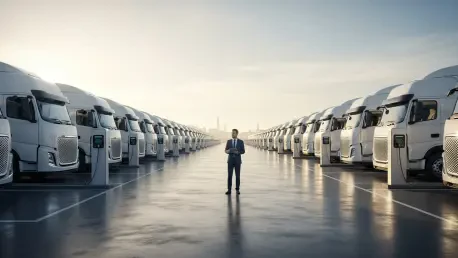

The thin line between a successful fiscal quarter and a catastrophic operational failure often rests on the volatile price of a single gallon of diesel or the sudden shift in local business rates. For many companies, the romantic notion of owning a massive fleet of heavy vehicles is being replaced by the cold reality of a balance sheet that can no longer support stagnant assets. Logistics managers are finding that the heavy machinery they once viewed as the backbone of their business is becoming a financial anchor.
As the industry grapples with these shifts, the traditional procurement model is undergoing a radical transformation. This evolution toward flexible financing is no longer just a trend for high-growth startups; it has become a fundamental survival mechanism for an industry caught between rising operational costs and aggressive green mandates. The move from ownership to utility represents a strategic pivot that prioritizes financial agility over the prestige of a company-owned motor pool.
A 2% Margin for Error: Why the Status Quo Is No Longer Sustainable
The commercial logistics sector operates on a razor-thin edge, where the difference between growth and insolvency is frequently dictated by external factors beyond a manager’s control. When profit margins hover at a precarious average of just two percent, there is virtually no room for the unexpected. A single adjustment in tax policy, a minor fluctuation in fuel duty, or a sudden change in business rates can effectively erase the earnings of an entire year. This fragility has prompted a fundamental reevaluation of asset management, as the heavy capital requirements of outright vehicle ownership increasingly look like a strategic liability.
Moreover, the psychological shift away from ownership is driven by the realization that locked-up capital is unproductive capital. In a volatile market, having millions tied up in the depreciating value of a truck fleet limits a company’s ability to respond to new opportunities. Modern fleet managers are questioning the wisdom of sinking massive amounts of liquid cash into a vehicle that may not meet the operational needs of the business in thirty-six months. The status quo, defined by decade-long asset cycles, is proving insufficient for a landscape where economic conditions can shift in a matter of weeks.
The Convergence of Economic Stress and Supply Chain Volatility
The current fiscal squeeze is intensified by a landscape of rising employment costs and geopolitical instability that makes procurement a moving target. According to data from the Road Haulage Association, operational expenses continue to climb while the lead times for new vehicles remain highly unpredictable. Small-to-medium enterprises are particularly vulnerable to these market shocks, as they often lack the deep financial reserves necessary to absorb sudden spikes in vehicle pricing or maintenance costs. This instability forces a move toward models that offer fixed costs and predictable expenditure patterns.
Furthermore, a significant structural shift in the way goods are moved is occurring due to the trend of nearshoring. Approximately 84 percent of manufacturers are currently planning to localize at least half of their supply chains, seeking to bring production closer to the final consumer to mitigate international disruption. This change in trade patterns means that the demand for traditional long-haul transport is softening, while the intensity of regional delivery and short-haul logistics is increasing. Consequently, fleets must be more specialized and adaptable than ever before to stay relevant in a localized economy.
Navigating the Regulatory Storm and the Technological Pivot
Compliance is no longer a peripheral concern but a primary driver of modern operational strategy. Fleet operators are currently navigating a “perfect storm” of regulatory requirements, including the Direct Vision Standard and the rapid expansion of Clean Air Zones across major urban hubs. These immediate pressures are being eclipsed by the Zero Emission Vehicle mandate and the looming 2040 deadline for all new heavy goods vehicles to be zero-emission. This roadmap creates a high degree of “compliance risk,” where a diesel asset purchased today might become legally restricted or economically unviable long before its physical lifespan ends.
The transition to electric and hydrogen drivetrains requires a complete rethinking of how fleets are specified and maintained. It is not simply a matter of swapping one fuel for another; it involves managing different route profiles and complex charging infrastructure. Because the technology is evolving so rapidly, the danger of being stuck with early-generation equipment that becomes obsolete is a major deterrent to outright purchase. In this environment, the ability to refresh technology cycles frequently is essential to maintaining a fleet that is both legally compliant and operationally efficient.
Shifting the Risk: Why Experts Are Prioritizing Liquidity Over Ownership
The strategic pivot from vehicle ownership to flexible financing is rooted in a desire to mitigate the “residual value risk.” This is the danger that a vehicle’s resale value will plummet due to sudden legislative changes or leaps in technology. Specialist transportation asset finance, such as operating leases and contract hire, allows businesses to utilize modern, compliant vehicles without the burden of depreciation. Industry trends show a clear move away from the historical norm of 50 percent outright vehicle purchases, as more operators prioritize the preservation of cash flow and established “planned renewal points.”
Leasing models provide a shield against the uncertainties of the secondary market. When a company leases a vehicle, the finance provider takes on the risk of what that truck will be worth in five years. This arrangement allows the fleet operator to focus on their core business of logistics rather than acting as a used-vehicle trader. By utilizing these flexible frameworks, businesses can establish a cycle of continuous improvement, ensuring they always have access to the latest fuel-saving technologies and safety features without the need for massive upfront capital.
Strategies for Building a Finance-Led Fleet Framework
Operators ultimately found that the most successful strategies involved a structured move toward financial agility. They began by auditing their specific route profiles to identify which delivery segments were most suitable for shorter-term leasing or electric vehicle adoption. By replacing large, unpredictable capital expenditures with fixed monthly payments, managers protected their balance sheets from the volatility of the broader market. This transition allowed for much more accurate cash flow forecasting, which in turn enabled businesses to invest their remaining capital in staff training and digital logistics platforms.
The industry realized that shorter commitment cycles were the most effective way to align with regulatory milestones and technological advancements. Fleet managers established renewal schedules that ensured they were never anchored to outdated equipment when new compliance standards or more efficient drivetrain models took effect. This proactive approach transformed the fleet from a collection of static assets into a dynamic tool that could be re-specified as market demands changed. By focusing on liquidity and operational flexibility, these companies secured a competitive advantage that ownership simply could not provide in an era of rapid transition.