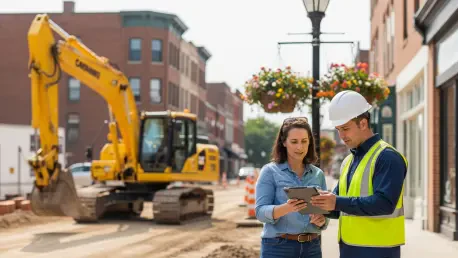

The delicate balance between essential urban modernization and the preservation of a town’s economic heart is currently being tested as the extensive infrastructure overhaul in Paris, Ontario, unfolds. As heavy machinery disrupts the flow of Grand River Street North, the community finds itself at a crossroads where the immediate survival of small businesses clashes with the long-term necessity of upgrading aging utilities. Local merchants, facing significant drops in customer foot traffic and daily revenue, have voiced urgent calls for direct financial relief to bridge the gap during the construction phase. However, the County of Brant is navigating a complex landscape of provincial regulations that restrict the type of assistance a municipality can provide to private enterprises. This friction highlights a broader challenge: how to implement critical improvements without permanently damaging the commercial fabric that defines the area’s unique cultural identity.
Legal Barriers: Navigating Restrictions on Financial Support
A primary obstacle preventing the municipality from offering direct monetary compensation is Section 106 of the Ontario Municipal Act, which explicitly prohibits the practice known as bonusing. This legal framework prevents local governments from providing financial aid, tax breaks, or grants to individual private businesses, as such actions could be seen as an unfair distribution of taxpayer funds for private gain. Consequently, when shop owners requested reimbursement for lost profits directly attributable to the roadwork, officials were forced to clarify that their hands were tied by provincial statutes. This restriction often creates a sense of frustration among business owners who feel that the government’s infrastructure priorities are being pursued at their personal expense. Understanding these legal limitations is crucial for managing expectations, as it forces the conversation away from direct bailouts and toward alternative methods of support that remain within the law.
Recognizing that financial hand-outs were off the table, the County of Brant pivoted toward a comprehensive mitigation strategy aimed at lessening the operational burdens placed on the downtown core. This approach focuses on enhancing visibility and accessibility through creative logistical solutions rather than direct fiscal transfers. By drawing on historical precedents and successful strategies from other regional construction projects, the county has sought to justify its supportive role as a facilitator of commerce rather than a source of insurance. This shift in focus led to the development of a resource-heavy support system designed to keep the merchant community viable until the project’s completion. These efforts are not merely about survival but about fostering an environment where businesses can still function despite the literal hurdles of a massive dig. The goal remains to maintain the attractiveness of the downtown district as a destination during this evolution.
Operational Logistics: Coordination Through a Dedicated Liaison
To bridge the widening gap between the merchant community and the engineering teams on the ground, the county introduced a specialized construction liaison to manage daily interactions. This individual serves as a vital link, attending all project-related meetings and relaying real-time updates regarding excavation schedules and road closures to business owners. By having a dedicated point of contact, shop owners no longer have to navigate the often-confusing corridors of municipal bureaucracy to get simple questions answered or to raise concerns about the project’s progression. This role is designed to be proactive, identifying potential points of friction before they escalate into major disruptions that could shut down a storefront for days. Effective communication acts as a psychological buffer for entrepreneurs who feel overwhelmed by the scale of the construction, providing them with the info necessary to plan their staffing levels with greater confidence.
Beyond serving as a communication channel, the liaison is responsible for coordinating the complex logistical needs that arise when a major street is essentially turned into a trench. Ensuring that product deliveries can reach storefronts safely and on time is a primary concern, as traditional loading zones are often blocked by heavy equipment and piles of aggregate. The liaison works directly with contractors to create temporary access points and timed windows for arrivals, minimizing the risk of supply chain interruptions that could further deplete a store’s stock. Additionally, this role oversees the management of waste collection and pedestrian safety, ensuring that the environment remains as clean and navigable as possible under the circumstances. By centralizing these duties, the county allows construction crews to focus on technical benchmarks while providing merchants with a responsive advocate who prioritizes their operational continuity and reduces stress.
Economic Strategy: Investment in Marketing and Public Engagement
While direct cash aid is strictly prohibited by provincial law, the county has successfully secured significant funding for indirect support through the Rural Economic Development program. These funds, supplemented by local tax-supported budgets, have been strategically allocated to enhance the visibility of the downtown district during this challenging period. A major component of this strategy involved doubling the operating budget of the Downtown Paris Business Improvement Area, an organization led by the merchants themselves. By empowering this local board with additional resources, the county ensures that recovery efforts are tailored to the specific needs of the local market rather than being dictated by a centralized administration. This financial strategy prioritizes broad, high-visibility investments that benefit the entire district as a whole, rather than providing uneven support to individual shops. This collective approach is designed to strengthen the district’s brand and attract shoppers back.
These additional resources are being funneled into expansive marketing campaigns that span television, social media, and traditional print media to remind residents and tourists that Paris is still a destination. To supplement the digital outreach, the county has financed a series of community events, such as walking tours and block parties, which are designed to draw people back into the downtown core despite the construction noise. By framing the “Downtown Dig” as a temporary phase in the town’s evolution, these events help maintain a sense of community spirit and normalcy during a period of physical upheaval. Furthermore, merchants are being encouraged to participate in professional development workshops that focus on adapting their business models to digital platforms or niche markets. This dual approach of driving traffic and improving business resilience aims to mitigate the loss of walk-in customers while building a more robust foundation for future commercial success.
Resilient Markets: Assessing the Impact on Local Stability
Despite the visible disruptions and the vocal concerns of many established merchants, local economic data has revealed a surprisingly resilient commercial landscape in the downtown area. Since the construction began, vacancy rates have actually seen a slight decline, a trend that stands in stark contrast to the narrative of an economic downturn. Notably, twelve new businesses have chosen to open their doors within the construction zone, suggesting that investors see long-term value in the modernized infrastructure and the town’s growth potential. While some existing businesses have unfortunately closed, county analysts point to a wider range of contributing factors, including a general national decline in consumer spending and rising operational costs that are not exclusively tied to the roadwork. This nuanced data suggests that while the project is a significant challenge, it is not the sole driver of the economic shifts, and that the area remains attractive to new ventures.
To boost merchant morale and improve the public’s perception of the construction site, the county is prioritizing the completion of visible milestones, such as the upcoming opening of a pedestrian promenade. This dedicated walkway is engineered to provide a clean, attractive, and well-lit path for shoppers, effectively bypassing the most disruptive areas of the excavation site. By making the downtown core more accessible during the peak summer shopping season, officials hope to recapture a significant portion of the foot traffic that usually defines the Paris experience. This promenade also serves as a proof of concept for how the town will look once the project is finalized, offering a glimpse into a more pedestrian-friendly and modernized urban environment. The success of this specific initiative is being closely monitored, as it represents a tangible effort to balance heavy-duty engineering with the aesthetic and functional needs of a retail streetscape.
Sustainable Growth: Lessons for Future Infrastructure Management
The strategies implemented during the infrastructure project in Paris demonstrated that while legal constraints restricted direct aid, proactive mitigation remained a powerful tool for municipal support. Officials successfully moved beyond simple updates by embedding liaisons and funding specialized marketing to keep the town’s brand alive during the most disruptive phases. These actions showed that maintaining open communication and creative logistics were just as critical as the engineering work itself. It was evident that tracking real-time vacancy and foot traffic data helped decouple construction impacts from broader economic trends, allowing for more accurate policy adjustments. The project highlighted that a municipality’s role was not just to build roads, but to act as a stabilizer for the local economy. By prioritizing the visibility of the downtown core, the county managed to sustain a level of investor confidence that many feared would vanish during the peak work seasons.
Moving forward, it was determined that municipalities facing similar large-scale disruptions needed to prioritize the creation of business resilience funds that could be deployed for localized marketing immediately. It became clear that integrating business impact studies into the pre-planning phase allowed for logistics like delivery windows to be solved before the first shovel hit the ground. Investing in digital literacy for merchants provided a secondary layer of protection, allowing them to pivot to online sales when physical access was restricted. Future infrastructure planning was viewed through a lens where the merchant experience was a primary engineering constraint rather than a secondary concern. These findings suggested that the modernization of physical assets did not have to come at the cost of commercial capital if partnership and data were prioritized. The experience in Paris established a new benchmark for how small towns navigate engineering and economic preservation.