
The traditional corporate ladder is shaking as executives attempt to bridge the gap between lean operations and high-growth demands by stripping away middle management layers. This strategic shift, often termed “delayering,” has pushed the span of control for remaining leaders up by approximately 20%, creating an environment where one person oversees more individuals than ever before. However, the assumption that fewer managers lead to higher efficiency is proving to be a costly miscalculation for many global organizations.
The Executive Paradox: Why Cutting Middle Management Backfires
A significant disconnect exists between the productivity expectations of senior leadership and the operational reality on the ground. While the removal of middle layers is intended to speed up decision-making, it often results in a bottleneck where the remaining supervisors are paralyzed by an unmanageable volume of tasks. Gartner projects that by 2028, 75% of organizations that recently downsized their management ranks will find themselves rehiring at least half of those positions to restore operational stability.
The failure of aggressive delayering stems from ignoring the vital role managers play in maintaining the organizational glue. When spans of control expand without technological support, the quality of guidance drops and projects stall. Companies are discovering that removing the “middle” does not remove the work; it simply piles it onto fewer, more exhausted individuals who lack the capacity to execute long-term strategic goals.
The Managerial Breaking Point in the Modern Workplace
Recent data reveals a stark reality where 80% of managers currently report feeling completely overwhelmed by their daily workloads. The shift toward hybrid environments and digital-first communication has increased the volume of messages and coordination required, leading to a state of permanent burnout. This pressure is so significant that 26% of managers have expressed a desire to step down from their leadership roles to return to individual contributor positions.
The weight of this administrative “tax” is the primary driver of the talent drain within management ranks. Leaders find themselves spending the majority of their time on logistics rather than on the creative problem-solving or team development they were hired to perform. When the burden of scheduling, tracking, and basic approvals eclipses the opportunity for strategic growth, the value proposition of being a manager disappears for the most talented employees.
From Busywork to Automation: Stabilizing the Foundation
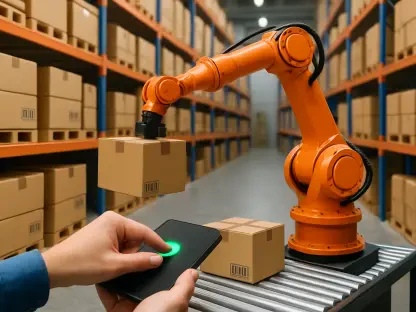
The emergence of agentic AI offers a stabilizing force by shifting the focus from simple generative responses to autonomous action. Unlike basic chatbots, agentic AI can understand context and execute “managerial minimum” tasks such as processing time-off requests, managing onboarding workflows, and optimizing complex calendar logistics without human intervention. This shift allows the organization to pursue delayering mandates without crushing the remaining leadership under the weight of routine operations.
By delegating these repetitive duties to digital agents, companies create a sustainable foundation for larger spans of control. Automation ensures that operational quality remains high even when a manager oversees a larger team, as the AI handles the friction of daily administration. This transition transforms the manager’s role from a high-level administrator into an overseer of automated systems, ensuring that nothing falls through the cracks while they focus on higher-level priorities.
Elevating the Role: Using Agentic AI for “Better Work”
As routine tasks disappear, the focus of management shifts toward becoming specialists in leading blended human-machine workflows. Agentic AI serves as a powerful partner in this evolution, providing leaders with conversation simulators and AI-driven coaching tools to sharpen their soft skills. These technologies allow managers to practice difficult performance reviews or conflict resolution scenarios in a risk-free environment, leading to more empathetic and effective real-world interactions.
Proactive performance management becomes a reality when AI-driven insights are used to identify team bottlenecks before they escalate into crises. These tools analyze data patterns across projects to highlight where resources are lagging or where employee engagement is dipping. This data-driven approach enables managers to intervene precisely where they are needed most, shifting their influence from reactive troubleshooting to proactive leadership.
The Human-Centric Shift: Orchestrating High-Value Outcomes
A significant risk in the automation of routine management is the potential decline in employee trust if daily interactions become too mechanical. As the digital layer takes over the “logistics of leadership,” the human manager must prioritize active and meaningful connection with their team members. The value of a leader is no longer measured by their ability to track attendance or approve expenses, but by their capacity to inspire, mentor, and foster a sense of belonging.
The role of the CHRO is now central to re-envisioning the manager as a conductor of both human and digital talent. Success in this new landscape requires a leadership philosophy that treats AI as a functional assistant, freeing the human lead to focus on high-value, people-centric outcomes. Organizations that fail to make this human-centric shift risk creating a sterile work environment where employees feel disconnected from the mission and their superiors.
Practical Strategies for Implementing Agentic AI in Leadership
The journey toward an AI-augmented leadership model began with identifying low-risk, high-reward administrative tasks for initial pilot programs. Organizations focused on automating time-intensive activities like resource allocation and reporting to demonstrate immediate value. This phased approach allowed managers to acclimate to the technology while proving that AI could handle the “Managerial Minimum” with high accuracy and reliability.
Managers were trained on frameworks for interpreting AI-generated performance insights, ensuring they acted on data with human nuance rather than following algorithms blindly. Guardrails were established to ensure that while AI could provide suggestions, the final decisions regarding people and career development remained firmly in human hands. The strategy proved successful as it redefined the managerial career path, making it more about strategic orchestration and less about surviving a never-ending list of chores.