
The widespread anxiety that once defined the initial arrival of sophisticated artificial intelligence has gradually given way to a more pragmatic understanding of how these tools function within a professional ecosystem. Instead of the sudden wave of mass unemployment that early skeptics predicted, the global labor market is witnessing a strategic evolution where technology handles specific, repeatable tasks while allowing human professionals to lean into higher-order decision-making. OpenAI CEO Sam Altman recently noted at the India AI Impact Summit that the industry is entering an “agentic” era, where software acts as a proactive digital partner rather than a passive information source. This shift implies that the greatest competitive risk no longer comes from the software itself, but from the widening divide between those who master these tools and those who remain tethered to legacy workflows. For the emerging workforce, AI is rapidly becoming a standard utility, much like high-speed internet, integrated so deeply into daily operations that a world without it would soon seem like a historical anomaly.
Data-Driven Realities: The Modern Labor Market
Rigorous empirical analysis of the current economic landscape reveals that the predicted “job apocalypse” remains a theoretical concept rather than a statistical reality in contemporary society. Research from the Yale University Budget Lab, which tracked labor market movements through late 2025, suggests that the massive disruption many feared has not materialized according to historical patterns. Instead, the data indicates that occupational shifts are occurring at a pace that is remarkably consistent with trends observed before the rise of advanced generative models. This stability suggests that while the capabilities of the technology have expanded exponentially, the integration of these tools into complex corporate structures takes significantly longer than the hype cycles suggest. The primary obstacles to total automation are often rooted in the nuances of human coordination, which software cannot yet replicate, ensuring that the human element remains the central pillar of productivity even as the technical tools available to employees become more sophisticated.
Beyond general employment statistics, the resilience of specific roles most exposed to automation offers a compelling counter-argument to the narrative of total displacement. Workers in highly technical or administrative positions, which were once thought to be the most vulnerable, are not experiencing disproportionate rates of unemployment compared to their less-exposed counterparts. Furthermore, entry-level college graduates are currently entering the workforce at a frequency and in roles that mirror the career starts of their predecessors from the early 2020s. This stability at the junior level indicates that the foundational layers of the labor market are not being hollowed out, but rather enhanced by new requirements for technical literacy. The real challenge for modern leadership is not managing a disappearing workforce, but navigating the intricate “exhaust tail” of organizational change. Success in this environment requires a focus on internal communication and culture, addressing the psychological barriers to adoption that often prove more formidable than any technical limitation.
Innovations: Recruitment and Workforce Development
The human resources technology sector is undergoing a profound transformation as it moves toward tools that prioritize candidate experience and long-term skill alignment over simple keyword matching. Recruitment platforms like Indeed have introduced sophisticated systems such as “Smart Screening,” which leverage behavioral data and skills-based assessments to generate a precise fit score for every applicant. These innovations have already demonstrated a 20% reduction in the average time-to-hire, allowing internal recruitment teams to focus on the qualitative aspects of a candidate’s personality rather than wading through thousands of mismatched resumes. This shift proves that AI can streamline the administrative burden of hiring without removing the essential human intuition required to build a cohesive team. By automating the preliminary stages of discovery, organizations can devote more resources to the final selection process, ensuring that new hires are technically capable and culturally aligned.
As structural labor scarcity becomes a permanent fixture of the global economy due to aging populations and changing demographics, the focus of talent management has shifted toward internal development. Major tech firms and global conglomerates are investing heavily in democratizing access to AI literacy through initiatives like the AI Professional Certificate programs and localized immersion projects for entrepreneurs. These efforts are designed to bridge the gap for workers who may feel left behind by rapid technological shifts, providing them with the necessary credentials to command higher wages and more secure positions. For instance, rural inclusion programs are now training artisans to use generative tools to scale their businesses, proving that the benefits of this technology are not confined to Silicon Valley. By treating AI as a skill to be taught rather than a threat to be avoided, companies are building a more resilient workforce that can adapt to future innovations while maintaining high levels of productivity and engagement.
Managing Challenges: Leadership and Operational Safety
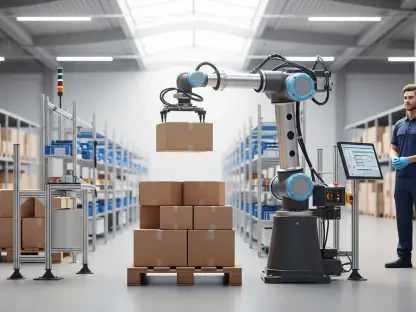
The rapid integration of digital partners into the physical workspace has brought a renewed focus on the intersection of operational efficiency and employee well-being. Increased staffing pressures and the demand for high-speed output can lead to higher injury rates and overlooked safety protocols if not managed with precision. Recent reports from environmental health and safety leaders indicate that nearly half of industry professionals have observed a correlation between labor shortages and an increase in workplace incidents. In response, many organizations are deploying AI-driven monitoring systems to identify near-misses and hazards before they result in actual injuries. This proactive approach to safety allows human supervisors to intervene in high-risk situations while the technology handles the constant, low-level monitoring of the floor. This synergy between human oversight and machine precision is becoming the gold standard for protecting frontline workers in high-pressure industrial and logistics environments.
The evolution of the professional world ultimately rests on the ability of senior leadership to blend technical innovation with deeply human-centric skills like pattern recognition and empathy. Recent executive appointments across the HR tech landscape signal a move toward scaling operations through a combination of sophisticated marketing strategies and AI-driven insights. Even traditional firms like IBM have defied the narrative of technical displacement by announcing significant increases in entry-level hiring for developers, recognizing that human talent is still the primary driver of innovation. To navigate this landscape effectively, organizations identified clear pathways for human-machine collaboration while maintaining a steady focus on the long-term career growth of their employees. Leaders who successfully integrated these tools did so by emphasizing communication and patience during the transition period. By fostering an environment where technology served human objectives, they ensured that the professional world remained a place where leadership and creativity continued to define the standard for excellence.