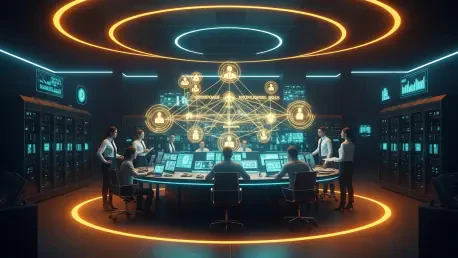

The traditional architecture of human resources is currently undergoing a fundamental reorganization as legacy systems fail to keep pace with the hyper-accelerated demands of a globally connected and technologically fluid labor market. For decades, the standard approach to talent management relied on rigid, hierarchical structures that viewed employees as fixed assets within a specific department or role. These legacy models operated under the assumption that professional growth was a linear, predictable progression facilitated by annual reviews and sporadic training sessions. However, the current economic environment has rendered these static frameworks obsolete, demanding a more dynamic and responsive method of workforce development. Organizations now prioritize agility and the continuous evolution of competencies over mere seniority or job titles, leading to the rise of specialized technology designed to bridge the gap between individual professional aspirations and overarching business objectives.
This transformative shift is largely fueled by a workforce that increasingly demands real-time feedback and a transparent roadmap for their professional futures. The modern professional is no longer satisfied with infrequent check-ins or generic development plans that do not account for their unique strengths or the rapidly changing market conditions. To address this, the AI Career Companion has emerged as a critical tool, providing a sophisticated interface that leverages data and predictive analytics to guide employees through their professional journeys. These systems do not merely track compliance or administrative milestones; they actively participate in the growth of the individual by identifying skill gaps, suggesting personalized learning opportunities, and highlighting internal career paths that might have otherwise remained hidden. By integrating these intelligent advisors into the daily workflow, companies are fostering a culture of continuous improvement and proactive career management that aligns the interests of the employee with the long-term success of the enterprise.
The Obsolescence of Static Corporate Structures: A Shift to Agility
The conventional career ladder, once the gold standard for professional advancement, is increasingly viewed as a relic of an industrial era that favored stability over adaptability. In the past, career development was often a black-box process controlled by management, where employees followed a predetermined trajectory with limited opportunities for lateral movement or unconventional growth. This vertical model assumed a level of organizational consistency that simply does not exist in today’s volatile market. When businesses rely on these outdated frameworks, they often struggle to identify the latent talents within their own workforce, leading to a mismatch between available skills and organizational needs. This misalignment frequently results in employee disengagement, as high-potential individuals feel restricted by narrow job descriptions that do not allow for the full utilization of their evolving capabilities.
To remain competitive in an environment characterized by rapid technological disruption, organizations are transitioning toward a skills-based talent model. This approach moves away from the concept of a person as a static role on an organizational chart and instead views them as a collection of dynamic, transferable capabilities. By focusing on skills rather than titles, companies can deploy their human capital more effectively, moving talent to where it is needed most without the friction of traditional departmental boundaries. This fluidity requires a sophisticated method of tracking and developing these skills in real time, a task that exceeds the capacity of manual HR processes. The move toward a skills-first philosophy represents a broader recognition that the ability to learn and adapt is the most valuable asset an employee can possess, necessitating a complete overhaul of how career development is structured and delivered.
The psychological contract between employer and employee is also evolving, with modern workers seeking a more collaborative and personalized relationship with their organizations. The expectation of lifetime employment has been replaced by a desire for lifetime employability, where individuals prioritize the acquisition of market-relevant skills over long-term tenure in a single position. When companies fail to provide these growth opportunities, they risk losing their most valuable talent to competitors who offer more robust development ecosystems. Consequently, the burden of career management is shifting from a centralized HR function to a decentralized, self-service model supported by intelligent technology. This democratization of professional development ensures that every employee, regardless of their level or location, has access to the resources and guidance necessary to navigate the complexities of the modern job market, fostering a more resilient and motivated workforce.
Defining the AI Career Companion: A New Category of HR Infrastructure
An AI Career Companion represents a significant departure from traditional learning management systems or performance tracking software, functioning instead as an intelligent, omnipresent advisor. Unlike older tools that primarily served as repositories for content or record-keeping, these companions utilize advanced algorithms and extensive data sets to provide hyper-personalized coaching and strategic guidance. They function by synthesizing vast amounts of information, including an individual’s work history, current project performance, learning preferences, and even external market trends, to offer actionable advice at the moment of need. This shift from reactive reporting to proactive guidance allows employees to make informed decisions about their professional trajectories, turning the abstract concept of career planning into a tangible, daily practice that is deeply integrated into the work experience.
The core functionality of these companions is built around the concept of career navigation rather than static planning. While a career plan might outline a series of steps to be taken over several years, career navigation functions much like a digital mapping system, adjusting the route in real time based on new data and changing conditions. For example, if a new technology emerges that alters the requirements for a specific role, the AI companion can immediately alert the employee and suggest the most efficient way to acquire the necessary certifications or experience. This real-time adaptability ensures that employees are always moving toward their goals in a way that is relevant to the current business landscape. By providing this level of clarity, organizations reduce the anxiety associated with professional uncertainty and empower their staff to take ownership of their own growth within the company’s framework.
From an organizational standpoint, the AI Career Companion acts as a bridge between the strategic needs of the business and the individual goals of the workforce. It provides a common language for discussing talent, based on objective data rather than subjective impressions or internal politics. When a manager and an employee discuss future opportunities, they can rely on the insights generated by the companion to identify the most logical next steps, backed by evidence of the employee’s readiness and the company’s requirements. This data-driven approach minimizes the risks associated with bias and favoritism, leading to more equitable outcomes and a more meritocratic culture. By aligning personal development with corporate strategy, these tools ensure that every training hour and every project assignment contributes to the overall health and agility of the organization, maximizing the return on investment in human capital.
Catalysts for Change: Addressing the Accelerated Skills Half-Life
One of the primary drivers behind the rapid adoption of intelligent career tools is the precipitous decline in the longevity of professional skills. In the current technological era, the “half-life” of a learned skill is estimated to be shorter than ever before, meaning that the knowledge acquired at the beginning of a career may be mostly obsolete within just a few years. This creates a perpetual state of flux where employees must constantly reinvent themselves to remain relevant. Traditional corporate training programs, which often take months to develop and deploy, are frequently outdated by the time they reach the broad workforce. AI Career Companions solve this problem by identifying emerging skill requirements as they appear in the market and immediately connecting employees with micro-learning opportunities or project-based experiences that provide the necessary upskilling in a fraction of the time.
The rise of the digital native in the workforce has also set a new standard for the user experience within corporate environments. These employees are accustomed to the high level of personalization and ease of use found in consumer technologies like social media and streaming services, and they expect the same level of sophistication from their professional tools. They have little patience for clunky, unintuitive HR systems that feel like a chore to navigate. AI Career Companions meet this expectation by offering conversational interfaces and proactive notifications that make professional development feel like a natural extension of their digital lives. This high level of engagement is crucial for the success of any workforce development initiative, as it ensures that employees actually utilize the resources available to them, rather than viewing development as a secondary or optional activity.
Furthermore, the fundamental shift toward remote and hybrid work models has complicated traditional methods of mentorship and on-the-job learning. In a physical office, much of a professional’s growth happens through observation, casual conversations, and immediate feedback from peers and supervisors. When these interactions are limited by physical distance, the “organic” development of talent can stall. AI Career Companions help fill this void by providing a digital source of guidance that is accessible regardless of an individual’s physical location. They can simulate the role of a mentor by providing reminders, suggesting networking opportunities with colleagues who have complementary skills, and offering feedback on performance based on digital work outputs. This ensures that the development of the workforce remains a continuous process, even in a decentralized and geographically dispersed organizational structure.
The Evolution of Career Pathing: Moving Toward Real-Time Navigation
The concept of career navigation represents a fundamental shift in how professionals interact with their long-term goals, moving from a rigid, destination-oriented mindset to a fluid, process-oriented one. Traditional career pathing often forced employees to choose a single direction early in their tenure, with little room for deviation or exploration of different interests. This approach is increasingly risky in an economy where entire job categories can be disrupted or created in a matter of months. Real-time navigation, powered by AI, acknowledges that the “destination” for an individual’s career is a moving target. By constantly analyzing the employee’s performance data and the organization’s evolving needs, the AI Career Companion provides a series of “recalculating” prompts that help the individual stay on the most productive and rewarding path, even if that path looks different than what was originally envisioned.
This navigational approach fosters a higher degree of organizational resilience by encouraging employees to develop a broad and versatile skill set. Instead of focusing solely on the requirements of their current job, individuals are encouraged to explore adjacent skills that increase their value across multiple departments. If a specific function within the company becomes automated or redundant, employees who have been guided by an AI companion will likely have already started developing the competencies needed for a transition into a new area. This proactive reskilling minimizes the need for large-scale layoffs and expensive external hiring, as the company can simply “navigate” its existing talent into new roles. This level of internal mobility is a hallmark of a mature, agile organization that understands the value of retaining institutional knowledge while constantly updating the skills of its workforce.
Moreover, real-time navigation enhances the individual’s sense of agency and psychological safety within the workplace. When employees can see exactly how their current efforts are contributing to their future opportunities, they are more likely to be engaged and committed to their work. The AI companion provides a transparent view of the requirements for advancement, removing the mystery and perceived unfairness that often surround promotion cycles. It allows individuals to experiment with different “what-if” scenarios, such as seeing what skills they would need to transition from a technical role to a management position, or from marketing to product development. This ability to explore and plan with data-backed confidence transforms the career journey from a stressful climb into an empowered and strategic exploration of one’s own potential.
Technical Foundations: The Intersection of Generative AI and Skills Intelligence
The effectiveness of modern career companions is rooted in the sophisticated integration of multiple technological layers, primarily generative artificial intelligence and comprehensive skills intelligence platforms. Skills intelligence acts as the foundational data layer, providing a living, breathing inventory of the capabilities present within an organization. Unlike traditional databases that rely on static resumes, these platforms use machine learning to infer skills from actual work products, project descriptions, and peer endorsements. This creates a much more accurate and granular map of the talent landscape, allowing the AI to identify “hidden” skills that an employee might possess but never formally documented. By understanding the true depth of the workforce’s capabilities, the AI can make much more precise recommendations for projects, training, and internal moves.
Generative AI provides the essential interface layer that makes this complex data accessible and actionable for the average employee. Through natural language processing, these systems can engage in nuanced, context-aware conversations that mimic the experience of talking to a human coach. An employee can ask complex questions such as, “How can I transition into a leadership role in the next eighteen months given my current technical background?” and receive a structured, step-by-step response that includes specific learning modules, suggested mentors, and internal projects to join. This conversational capability lowers the barrier to entry for career development, making it feel less like an administrative task and more like a supportive relationship. The AI can also generate personalized feedback on communication style, leadership presence, and other soft skills based on an analysis of digital interactions, providing a level of coaching that was previously cost-prohibitive to scale.
Predictive analytics and knowledge graphs complete the technological ecosystem by providing a forward-looking perspective on talent development. By analyzing millions of external career paths and industry trends, the AI can predict which skills will be most in demand in the coming years and which are likely to decline. This allows the companion to steer employees toward “future-proof” areas of expertise, ensuring that both the individual and the organization are prepared for upcoming market shifts. These systems can also identify “skill adjacencies”—connections between seemingly unrelated competencies—that allow for more creative and efficient career transitions. For instance, the AI might recognize that an employee with strong data analysis skills and high emotional intelligence is a perfect candidate for a burgeoning role in customer experience strategy, even if that employee had never considered such a move.
Strategic Organizational Value: Enhancing Retention and Operational Mobility
For the modern enterprise, the primary strategic benefit of implementing AI Career Companions is a dramatic improvement in employee retention and engagement. The cost of replacing a high-level employee can be substantial, often exceeding twice their annual salary when accounting for recruitment, onboarding, and the loss of productivity during the transition. By providing a clear and supported path for growth within the organization, companies can significantly reduce the “pull” of external opportunities. When employees feel that their current employer is genuinely invested in their long-term success and offers the tools to achieve it, their loyalty increases. This creates a virtuous cycle where the company’s investment in development leads to a more stable and experienced workforce, which in turn drives higher levels of performance and innovation.
Operational mobility is another critical advantage, as it allows companies to respond to market changes with unprecedented speed. In a traditional organization, moving talent between departments is often a slow and political process fraught with friction. AI Career Companions break down these silos by making talent visible across the entire enterprise. They can automatically match employees with short-term “gigs” or cross-functional projects that need their specific skills, regardless of which department they officially belong to. This internal marketplace for talent ensures that the most challenging and important problems are always tackled by the best-qualified people, rather than just those who happen to be available in a particular silo. This fluidity not only solves immediate business needs but also provides employees with diverse experiences that accelerate their professional growth.
Data-driven workforce planning is also revolutionized by the insights generated by these intelligent systems. Leadership teams no longer have to rely on anecdotal evidence or gut feelings when making decisions about future hiring or training investments. They can access real-time dashboards that show precisely where the organization’s skill gaps are and how they are changing over time. This allows for a more surgical approach to talent management, where resources are directed toward the most critical areas. For example, if the data shows a looming shortage of cybersecurity expertise, the company can use its AI companions to identify internal candidates with the foundational skills and interest to be reskilled into those roles, often months before the shortage becomes a crisis. This predictive capability transforms HR from a reactive administrative function into a proactive driver of business strategy.
Empowering the Individual: Equity and Personalization in Professional Growth
The democratization of high-quality career guidance is perhaps the most profound social impact of AI Career Companions. Historically, personalized coaching and executive-level mentorship were reserved for a small elite—the “high-potential” leaders or top-tier executives. The vast majority of the workforce was left to navigate their careers with little more than a generic handbook and an occasional performance review. AI technology changes this dynamic by providing every single employee with access to a sophisticated, data-backed advisor. This level of support can be life-changing for individual contributors, early-career professionals, or those in overlooked departments, as it provides them with the same quality of strategic advice previously available only to the C-suite. By leveling the playing field, organizations can uncover talent in places they never thought to look, fostering a more diverse and inclusive leadership pipeline.
Transparency and trust are fundamental components of this new development model. In many organizations, the criteria for promotions or prestigious assignments can feel opaque and influenced by internal politics or “who you know.” AI Career Companions remove this ambiguity by providing clear, objective data on what is required to reach a certain level or transition into a new role. When an employee knows exactly which skills they need to demonstrate and which certifications they need to earn, they feel more in control of their destiny. This clarity reduces the frustration and resentment that often lead to turnover. It also ensures that the organization’s stated values of meritocracy are actually reflected in its talent practices, as the AI focuses on capabilities and outcomes rather than social connections or background.
Furthermore, the personalization offered by these tools allows for a more holistic approach to career development that respects the individual’s personal life and well-being. An AI companion can take into account an employee’s specific constraints or preferences, such as a desire for a remote-first role, a need for a flexible schedule due to caregiving responsibilities, or an interest in pursuing a particular technical specialty that might not be part of their current job. Instead of offering a one-size-fits-all path, the AI can suggest career trajectories that align with the person’s entire life. This recognition of the employee as a whole person leads to higher levels of job satisfaction and mental well-being, as people no longer feel forced to choose between their professional growth and their personal priorities. In this way, technology serves as an enabler of a more human-centric workplace.
Navigating the Ethical Landscape: Security, Bias, and Explainability
As organizations integrate AI more deeply into their workforce development strategies, they must address a range of ethical challenges to ensure these systems are used responsibly and fairly. Data privacy is a primary concern, as the effectiveness of a career companion depends on its access to a significant amount of personal and professional information. Employees must feel confident that their data is being used for their benefit and that it is protected by the highest standards of security. Organizations must be transparent about what data is being collected, how it is being analyzed, and who has access to the resulting insights. Establishing a clear “ethical contract” regarding data usage is essential for maintaining the trust necessary for these systems to function effectively and for ensuring compliance with increasingly stringent global privacy regulations.
Algorithmic bias is another critical issue that requires constant vigilance. If the data used to train an AI system reflects existing societal or organizational prejudices, the system may inadvertently perpetuate or even amplify those biases. For example, an AI might suggest leadership paths more frequently to certain demographic groups if it has been trained on historical promotion data that was itself biased. To mitigate this risk, companies must implement rigorous auditing processes and use “bias-aware” algorithms that are specifically designed to promote fairness and equity. This involves not only technical solutions but also a diverse team of human experts who can oversee the system’s recommendations and ensure they align with the organization’s diversity and inclusion goals. The goal is to use AI as a tool for correcting human bias, rather than a mirror that reflects it.
The principle of explainability is also vital for the long-term success of AI-driven career development. When a system makes a recommendation—or, perhaps more importantly, when it suggests that an employee is not yet ready for a specific opportunity—it must be able to explain the reasoning behind that conclusion in a way that is understandable and actionable. A “black box” approach, where decisions are made by opaque algorithms without any justification, is likely to be met with skepticism and resistance. By providing clear evidence and logical pathways for its suggestions, the AI companion can serve as a true partner in growth rather than a detached judge. This transparency allows employees to engage with the feedback constructively, identifying exactly what they need to change or improve to reach their next milestone.
Forward-Looking Perspectives: The Emergence of Digital Career Twins
The evolution of professional development is now moving toward the creation of Digital Career Twins, a concept that offers a dynamic, multi-dimensional simulation of an individual’s professional potential. A Digital Career Twin is not just a static profile but a complex model that incorporates an individual’s skills, psychological traits, learning speed, and career aspirations. This allows employees to run sophisticated simulations of different career moves before making them in the real world. For example, a professional might use their twin to see how their long-term earning potential and job satisfaction would change if they pursued an MBA versus a series of specialized technical certifications. This predictive modeling provides a level of foresight that was previously impossible, allowing for much more strategic and confident decision-making at every stage of a career.
This technological progression is part of a broader shift toward a unified “workforce intelligence system” where the boundaries between different HR functions—such as recruiting, learning, performance, and succession planning—finally disappear. In this integrated environment, the data generated by an AI Career Companion flows seamlessly into the company’s strategic planning tools, while the company’s evolving goals are immediately reflected in the guidance provided to employees. This creates a perfectly synchronized ecosystem where the organization and its people grow in tandem. The focus shifts from managing a workforce to orchestrating a talent community, where the primary goal is to maximize the potential of every individual in service of a shared mission. This holistic approach represents the ultimate realization of the “Intelligence Era” in human resources.
Organizations that prioritized the integration of intelligent career systems successfully navigated the complexities of the modern labor market by transforming their approach to human capital management. The implementation of these tools provided the necessary infrastructure to move beyond rigid job descriptions, enabling a more fluid and responsive organizational structure. Leaders who embraced the data-driven insights offered by AI were able to identify and cultivate talent with a precision that was previously unattainable, leading to significant gains in both productivity and employee satisfaction. This shift did not replace the human element of mentorship and leadership; instead, it enhanced it by removing administrative burdens and providing a clear, objective foundation for professional growth. Moving forward, the most successful companies will be those that continue to refine this synergy between human intuition and artificial intelligence, ensuring that their workforce remains as dynamic and adaptable as the world in which it operates.