
The landscape of American commerce has shifted under the weight of a monumental achievement as Amazon officially overtakes Walmart in total annual revenue for the first time in history. Reporting a staggering $716.9 billion against Walmart’s $713.2 billion, the Seattle-based tech giant has ended a decade-long streak of dominance held by the Arkansas retail icon. This transition is not merely a statistical anomaly or a temporary fluctuation in market share; rather, it represents a profound divergence in how the world’s two largest companies envision the intersection of human labor and machine intelligence. While both organizations are aggressively pursuing automation to secure their future, they are doing so from opposite ends of the strategic spectrum. One is betting on a proprietary, infrastructure-heavy model that prioritizes technical leaness, while the other is doubling down on a philosophy that views technology as an augmentation of, rather than a replacement for, its massive human workforce.
Amazon’s Infrastructure-Heavy Approach to Efficiency
Driving Growth through Technical Leanness
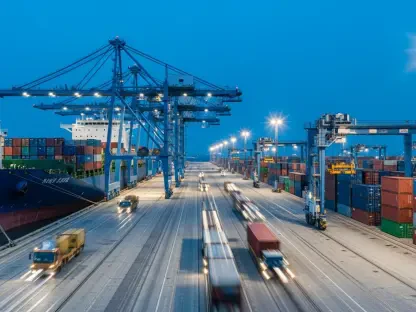
Amazon’s climb to the peak of the Fortune 500 is fundamentally anchored in its high-margin cloud and advertising sectors, which provide the immense capital necessary to dominate the global artificial intelligence landscape. Amazon Web Services (AWS) remains the crown jewel of this operation, generating over $128 billion in the current fiscal year and growing at a rate of 20% annually. This financial engine allows the company to invest over $200 billion into “physical” AI, focusing on the construction of massive data centers, the development of specialized Trainium and Inferentia chips, and the expansion of networking equipment. By controlling the entire technological stack from the hardware level up to the consumer-facing interface, Amazon ensures a level of operational independence that few competitors can match. This strategy moves beyond simple software implementation, aiming instead to build the very foundation upon which the next generation of the digital economy will operate.
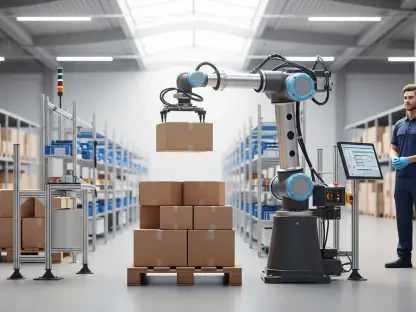
The pursuit of this infrastructure-centric model allows Amazon to treat technology as a primary asset rather than a secondary tool for business optimization. In this environment, the company is shifting its focus toward a vertically integrated ecosystem where every package moved and every cloud request processed is handled by proprietary systems designed for maximum efficiency. This heavy investment in hardware serves as a protective moat, making it increasingly difficult for rivals to compete on price or speed. However, this level of technical dominance requires a specific type of organizational focus that prioritizes long-term engineering goals over immediate human capital expansion. As a result, the company’s capital allocation is heavily skewed toward the machines and facilities that power its algorithms, signaling a future where the most valuable parts of the business are those that do not require a biological interface to function at peak capacity.
The Shift Toward a Leaner Corporate Culture
In tandem with its massive technological investments, Amazon has initiated a series of structural changes that emphasize a leaner, more agile corporate environment. By eliminating approximately 30,000 roles across its corporate and AWS divisions, leadership has signaled that the integration of advanced AI tools naturally leads to a decreased demand for traditional middle management and administrative functions. CEO Andy Jassy has described these reductions not as a reaction to financial instability, but as a deliberate cultural realignment designed to remove “bureaucratic layers” that slow down innovation. This “leaner by design” philosophy is a direct bet on the idea that AI can handle complex coordination and decision-making tasks that once required thousands of human hours. Consequently, the organization is evolving into a more streamlined entity where specialized technical talent is prioritized over generalist corporate staff.
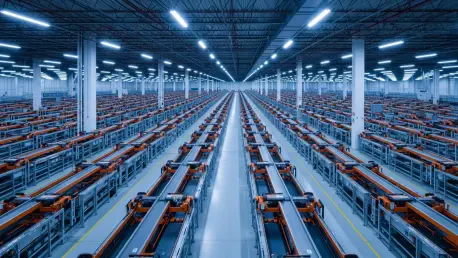
This radical restructuring has sparked significant debate among industry analysts regarding the long-term health of the company’s internal talent pipeline. While the financial markets have generally responded positively to the increased margins provided by a smaller headcount, HR experts question whether such a rapid reduction in force can truly be framed as a cultural fix rather than a cost-cutting measure. If thousands of employees are suddenly deemed unnecessary for the “new culture,” it suggests that the company is moving toward a model where human workers are viewed as flexible components that can be phased out as automation capabilities mature. Amazon’s strategy clearly envisions a future where the company operates as a high-tech utility, driven by a core group of elite engineers and researchers, supported by a vast, automated logistics network that requires minimal human intervention at the higher levels of strategy and management.
Walmart’s Human-Centric Integration Model
Empowering Associates through Strategic Partnerships
Walmart has chosen a fundamentally different path by maintaining its status as the nation’s largest private employer and adopting a “people-led, tech-powered” mantra. Rather than attempting to build every piece of AI hardware or software in-house, the retail giant has embraced strategic partnerships with external technology leaders like OpenAI. This allows Walmart to deploy cutting-edge generative AI tools directly into the hands of its 2.1 million associates without the multi-billion dollar overhead of proprietary chip development. By focusing on how AI can assist a store manager in inventory planning or help a pharmacy technician navigate complex insurance claims, Walmart is using technology to solve immediate operational friction. This approach treats AI as a utility that empowers the existing workforce, aiming to increase productivity and job satisfaction rather than looking for ways to reduce the total number of employees on the payroll.
The focus on digital empowerment is evident in the company’s wide-scale upskilling initiatives, which include providing free OpenAI certification programs and internal generative AI assistants for daily experimentation. Executive Vice President Donna Morris has emphasized that the goal is to make every associate “AI-literate,” ensuring that the workforce evolves at the same pace as the technology it uses. This strategy acknowledges that while machines are excellent at processing data, they lack the contextual understanding and physical agility required in a retail environment that serves millions of diverse customers. By integrating AI as a supportive layer, Walmart creates a resilient operational model that leverages the strengths of both parties. This collaborative approach suggests that the most effective way to scale a massive organization in the age of intelligence is to treat technology as a force multiplier for human talent rather than a direct competitor for it.
Prioritizing Soft Skills and Leadership Training
Recognizing that technical tasks are the most susceptible to automation, Walmart has pivoted its internal training programs to focus heavily on the “human” side of business. The “Manager Academy,” a cornerstone of this strategy, brings store and supply chain managers together for intensive, in-person training that emphasizes empathy, relationship-building, and complex problem-solving. The underlying theory is that as AI takes over routine data entry and scheduling, the value of a human leader shifts toward managing team dynamics and addressing unique customer needs that require emotional intelligence. This investment in soft skills ensures that as the retail experience becomes more digitized, it does not become less personal. By doubling down on the traits that machines cannot replicate, Walmart is attempting to future-proof its workforce against the inevitable march of automation in the logistics and administrative sectors.
Furthermore, Walmart’s commitment to a skills-based hiring model represents a significant departure from traditional credentialing, allowing associates to move up the corporate ladder based on demonstrated capability rather than just formal education. This creates a powerful incentive for employees to engage with new technologies, as they can clearly see a path to advancement through the acquisition of digital skills. By fostering an environment where continuous education is integrated into the workday, the company reduces the fear of displacement often associated with AI. Instead of a zero-sum game where technology wins and workers lose, Walmart is building a narrative of mutual growth. This model suggests that the competitive advantage of the future will not be found in having the fastest processors alone, but in having a workforce that is uniquely capable of applying those processors to solve human problems in real-time.
Navigating the New Corporate Paradigm
Analyzing Industry Trends and Workforce Realities
The diverging strategies of Amazon and Walmart highlight a critical tension in the modern economy regarding the actual readiness of AI to replace human labor. While the narrative of “AI-driven layoffs” has become common in corporate headlines, broader industry data suggests that many of these reductions are actually driven by traditional financial pressures rather than the full automation of roles. Research indicates that approximately 55% of organizations that conducted layoffs attributed to AI later expressed regret, with many eventually rehiring for those same positions within a two-year window. This suggests that while AI can perform specific tasks, it often fails to manage the “glue work”—the unstructured communication and troubleshooting that keeps complex systems running. Companies that follow Amazon’s leaner path without a robust plan for handling these hidden human functions may find themselves facing operational bottlenecks as their automated systems encounter real-world complexity.
This reality serves as a sobering reminder for executives who view AI as a simple “plug-and-play” solution for labor costs. The transition to an AI-enhanced organization is rarely linear, and the hidden costs of losing institutional knowledge can outweigh the immediate savings of a reduced headcount. For many businesses, the Walmart model of gradual integration and upskilling may offer a more stable path forward, as it allows the organization to discover the limitations of the technology in a controlled environment. By maintaining a human safety net, these companies can pivot more effectively when an automated system fails or when consumer preferences shift unexpectedly. The lesson of the current retail wars is that while technology provides the tools for scale, the ability to manage the transition without destroying organizational morale remains a vital leadership skill that cannot be automated or offshored.
Redefining the Strategic Role of HR
As the integration of intelligence tools becomes a permanent fixture of corporate life, the role of Human Resources has been elevated to that of a primary strategic architect. No longer confined to payroll and compliance, HR leaders must now work in lockstep with Chief Technology Officers to map out the future of work before the first lines of code are deployed. This involves a granular analysis of job descriptions to identify which tasks can be automated, which should be augmented, and which must remain entirely human. By shifting the focus from headcount management to “skills-based value,” HR can ensure that the organization remains competitive without sacrificing the talent that drives its core identity. This proactive approach is necessary to prevent the talent shortages that often follow aggressive, AI-motivated downsizing, ensuring the company retains the expertise needed to manage the machines.
In this new paradigm, the success of an AI rollout is measured not just by technical uptime or processing speed, but by how effectively the workforce adapts to the new tools. Strategic HR functions are now responsible for creating the “psychological safety” required for employees to experiment with and eventually master AI systems. When workers feel that technology is a tool for their advancement rather than a threat to their survival, they are more likely to find innovative ways to apply it to their daily tasks. This bottom-up innovation is often more valuable than top-down mandates, as it comes from those who understand the operational nuances of the business. Consequently, the organizations that will thrive in the coming years are those where HR has successfully rebranded AI as a career-enhancing asset, turning a potential source of friction into a catalyst for organizational growth.
Aligning Technology with Organizational Culture
The competition between Amazon and Walmart demonstrates that there is no singular “right” way to navigate the age of artificial intelligence, as both companies have achieved record-breaking success using opposite strategies. The choice between becoming “leaner by design” or “people-led and tech-powered” must be rooted in a deep understanding of a company’s foundational culture and long-term business goals. An organization that values rapid innovation and technical dominance may find Amazon’s model more effective, whereas a company built on customer service and massive scale may prefer Walmart’s human-centric approach. The most dangerous path for any executive team is to attempt a hybrid model without a clear vision, leading to a fragmented culture that neither empowers workers nor achieves technical excellence. Success requires a deliberate commitment to one philosophy and the discipline to see it through.
As these retail titans continue to evolve, their experiences will provide the data points necessary for the rest of the business world to chart their own courses. The primary takeaway is that the integration of AI is a choice about the kind of organization a leader wants to build, not an external force that dictates a single outcome. Whether a firm invests in silicon or in people, the ultimate goal remains the same: to create a sustainable, efficient, and profitable enterprise that can withstand the volatility of a tech-driven market. The winners of this era will be the ones who recognize that while the tools of commerce have changed, the fundamental need for a coherent strategy that balances machine efficiency with human talent remains as constant as ever. In the end, the most successful organizations will be those that view AI as a means to achieve a specific human vision, rather than an end in itself.
The historic revenue shift between these two giants was driven by a fundamental change in how corporate value is generated and maintained. Amazon’s success in overtaking Walmart was achieved by treating technology as a physical asset to be owned and scaled, while Walmart remained competitive by treating its workforce as a dynamic resource to be empowered. This rivalry has proved that massive revenue growth is possible under both paradigms, provided there is a clear alignment between technological investment and workforce management. Moving forward, organizations must prioritize the creation of a clear AI roadmap that addresses the cultural impact of automation as much as the technical requirements. The most effective strategies were those that avoided reactionary layoffs in favor of long-term skill development and infrastructure planning. Ultimately, the future of work was decided by a company’s ability to define the precise relationship between its people and its processors.