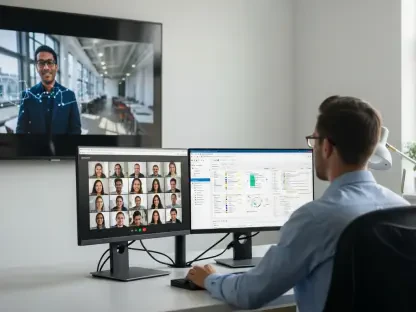

The traditional fortress separating the balance sheet from the payroll has finally crumbled under the weight of an autonomous technological revolution that demands total functional alignment between data and people. Enterprises now exist in a landscape where the distinction between digital infrastructure and human talent is virtually non-existent, forcing a radical realignment of corporate leadership and operational philosophy. The integration of agentic AI—systems capable of independent reasoning and execution—has fundamentally altered the calculus of workforce management. No longer can financial planning occur in a vacuum, isolated from the shifting competencies and psychological state of the workforce. Instead, a new integrated landscape has emerged where every technical deployment carries a human cost, and every talent decision has an immediate, measurable impact on fiscal health.
Mapping the strategic players in this new environment reveals a dramatic evolution in the roles of the Chief Human Resources Officer and the Chief Financial Officer. These two executives, once separated by different languages of “soft” and “hard” metrics, are now the co-architects of a hybrid human-AI operational model. As they navigate unprecedented technological disruption and persistent market volatility, their collaboration has become the primary indicator of organizational success. The CFO is increasingly concerned with the human-centric variables that drive efficiency, while the CHRO is becoming more fluent in the economics of automation. This merger of perspectives is essential for managing a workforce that is no longer just a collection of employees, but a sophisticated ecosystem of human intelligence and autonomous agents.
Synergies and Divergences in the Path Forward
Emerging Trends in Human-AI Workforce Integration
The transition from simple, rule-based automation to independent AI agents has rewritten the rules of organizational design. These agents do not merely follow instructions; they proactively manage workflows, identify inefficiencies, and execute tasks that once required significant human oversight. This shift has profound implications for labor costs, as the focus moves from headcount reduction to the optimization of high-value human activities. Organizations are discovering that the true value of AI lies in its ability to augment human creativity and strategic thinking, rather than simply replacing repetitive labor. Consequently, the structure of the workforce is becoming more fluid, with roles defined less by static job descriptions and more by the ability to orchestrate complex digital systems.
Evolving workforce behaviors reflect a growing demand for digital literacy and a deeply human-centric approach to technology adoption. Employees are no longer passive recipients of new tools; they are active participants in the digital transformation process, seeking roles that offer purpose and cognitive challenge. This shift in expectations requires leadership to prioritize transparency and psychological safety during the integration of new technologies. When employees feel that AI is a tool for their empowerment rather than a threat to their livelihood, adoption rates soar and innovation becomes a bottom-up process. However, a failure to address the human element during tech deployment often results in resistance, high turnover, and the erosion of the very efficiencies the technology was meant to provide.
Market Projections and the Economics of Transformation
Recent data indicate that the financial impact of AI-driven transformation has doubled over the past year, with the highest returns seen in companies that prioritize human-centered design. Market indicators suggest that the return on investment for technology is now inextricably linked to how well an organization prepares its people for change. Enterprises that invest heavily in upskilling and cultural alignment are outperforming their tech-only counterparts by a significant margin. This trend underscores a broader economic reality: while AI provides the engine for growth, human potential remains the fuel. Forecasts show that by the end of the decade, the most valuable companies will be those that have successfully synchronized their digital capital with a resilient and adaptable workforce.
The future performance of global enterprises is also being shaped by the emerging economics of AI “tokenomics” and the long-term value of digital sovereignty. As the cost of compute and specialized AI models fluctuates, financial leaders must develop sophisticated strategies to manage these new operational expenses. Simultaneously, the long-term economic value of a resilient workforce is becoming more apparent as companies face a global shortage of high-level digital talent. The ability to retain and develop internal talent while managing the costs of autonomous systems is the new frontier of financial strategy. This economic balancing act requires a forward-looking view that accounts for both the immediate expenses of technical infrastructure and the long-term dividends of a highly skilled, loyal workforce.
Overcoming Structural Friction and Cultural Debt
One of the most persistent friction points in modern organizations is the visibility gap between Finance’s focus on technical efficiency and HR’s focus on employee wellbeing. While the CFO tracks the rapid deployment of AI tools to lower operational costs, the CHRO often observes the hidden costs of this speed: burnout, anxiety, and a loss of organizational identity. When these two perspectives are not aligned, the organization risks achieving short-term gains at the expense of long-term stability. Bridging this gap requires a new set of shared metrics that account for the “human friction” generated by rapid technological change. Leaders must recognize that an exhausted workforce cannot effectively manage sophisticated AI systems, regardless of how advanced the software may be.
Strategizing against shadow AI is another critical area where functional collaboration is essential. Unauthorized AI use is frequently a symptom of employees trying to manage overwhelming workloads without proper institutional support. While Finance may view these unauthorized tools as a security and compliance risk, HR often sees them as evidence of an innovative but unsupported culture. Collaborative governance strategies must balance the need for security with the necessity of employee trust. By providing sanctioned, high-quality AI tools and clear guidelines for their use, organizations can mitigate the risks of shadow AI while fostering a culture of responsible experimentation. This approach turns a potential liability into a driver of shared progress and organizational transparency.
Navigating the AI Regulatory and Compliance Framework
The new landscape of digital governance is characterized by a complex web of emerging standards for AI ethics, data privacy, and labor laws. These regulations impact both financial reporting and human resources, as governments around the world seek to ensure that technology is deployed responsibly. Organizations must now account for the ethical implications of their algorithms and the privacy of the data used to train them. Failure to comply with these evolving standards can result in massive financial penalties and irreversible damage to brand reputation. Consequently, compliance has evolved from a back-office function to a strategic priority that requires the combined expertise of legal, financial, and HR departments to ensure every automated process aligns with both law and ethics.
Mitigating risk through transparent AI policies is vital for maintaining organizational integrity and avoiding the financial burdens of “cultural debt.” Cultural debt occurs when an organization prioritizes speed and technical adoption over the development of a healthy, ethical workplace culture. Over time, this debt accumulates interest in the form of employee distrust, legal challenges, and a decline in productivity. To avoid these pitfalls, leaders must implement clear, transparent policies regarding how AI is used to monitor, evaluate, or support the workforce. By being open about the goals and limitations of AI, companies can build a foundation of trust that protects them from the regulatory and financial consequences of unethical technology deployment.
Future Frontiers: From Functional Silos to Fluid Orchestration
The traditional C-suite hierarchy is being disrupted by a trend toward merging HR, Finance, and IT functions into a single, agile leadership structure. In this new model, the boundaries between departments are blurred, allowing for a more responsive approach to market changes. When data, money, and people are managed as a single ecosystem, the organization can pivot more quickly and allocate resources more effectively. This shift toward fluid orchestration is not just about changing job titles; it is about changing how information flows through the company. By breaking down functional silos, leaders can ensure that the financial strategy is always grounded in the reality of human capability, and the talent strategy is always aligned with fiscal objectives.
Innovation and global economic shifts are further influenced by constraints in digital infrastructure, such as limited GPU capacity and shifting energy costs. These technical realities now dictate the pace of human talent development, as organizations must decide which projects are worth the high cost of specialized compute power. Strategic investments are no longer just about buying the best software; they are about securing the digital and human infrastructure necessary to sustain long-term growth. As global economic conditions remain unpredictable, the ability to balance the high costs of digital innovation with the enduring value of human ingenuity will define the next generation of industry leaders. This holistic view of resources is the ultimate goal of functional integration.
Synchronizing the Vision for Sustainable Growth
The analysis of the integrated corporate landscape revealed that the success of modern enterprises depended heavily on the reconciliation of technical execution with cultural stability. It was discovered that organizations focusing exclusively on the financial metrics of AI deployment often overlooked the systemic risks of employee burnout and the erosion of trust. Conversely, HR initiatives that ignored the economic realities of AI infrastructure failed to gain the necessary executive support for long-term implementation. The most resilient companies were those that adopted a unified roadmap, treating digital capital and human potential as a single, powerful engine for growth. This alignment ensured that every technological advancement was supported by a workforce capable of leveraging its full potential.
Actionable steps for the coming years involved the creation of cross-functional task forces that integrated financial analysts, HR strategists, and technical architects into a single decision-making body. Organizations moved toward a model where “cultural debt” was measured with the same rigor as financial debt, ensuring that the human cost of transformation was always part of the ROI calculation. Leaders also prioritized the development of “AI fluency” across all levels of the hierarchy, moving beyond simple training to a deeper understanding of the ethical and economic implications of autonomous systems. By bridging the functional gap, these organizations transformed potential friction into a competitive advantage, ensuring that their growth was both rapid and sustainable in a world defined by the human-AI partnership.