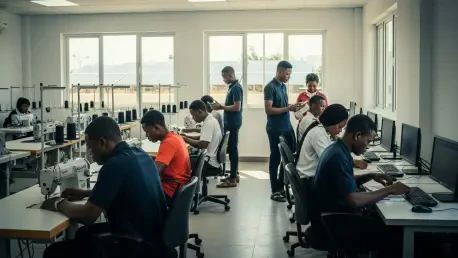

The sheer scale of the educational crisis in Nigeria is currently defined by one of the highest populations of children not enrolled in school anywhere on the globe. This systemic failure demands a fundamental departure from the traditional reliance on physical classrooms alone, urging a radical shift toward preparing the youth through practical and applicable expertise. As the formal academic structure struggles to accommodate millions, the integration of vocational training has emerged as a critical alternative for bridging the massive divide between basic literacy and economic survival. Organizations like Path to Possibilities have started to demonstrate the profound impact of this approach, providing a vital lifeline to those who have been marginalized by conventional schooling. By centering the educational experience on tangible skills, the nation can begin to reshape its human capital, ensuring that the next generation is capable of contributing to a complex and evolving economy.
Technical Education: Bridging the Employment Gap
A recent milestone achieved within the Ikota community has provided a compelling blueprint for how specialized trade programs can transform the lives of underserved youth. The successful conclusion of a year-long, tuition-free tailoring course allowed graduates to move directly from a state of educational exclusion into immediate, sustainable employment. By equipping these individuals with professional-grade tools, such as sewing machines and industry-recognized certifications, vocational initiatives have proven that education can function as a straight path toward economic independence. This model bypasses the traditional multi-year academic wait, allowing students to monetize their skills almost instantly upon completion. Furthermore, the psychological shift from being an out-of-school child to a certified professional fosters a sense of agency that is often missing from theoretical curricula. Such successes highlight the importance of training that addresses the specific needs of the market.
To address the broader educational crisis effectively, the Nigerian government must transition toward a diversified model that places human capital development at its core. This evolution requires moving away from an over-reliance on rote learning and toward the implementation of specialized vocational tracks that align with regional market demands and individual talents. Increasing public funding and demonstrating a genuine commitment to skill development are essential steps in re-engaging the millions of children currently trapped outside the formal school system. This strategic shift would involve integrating technical schools into the standard state framework, ensuring that a vocational diploma carries the same social and professional weight as a university degree. By validating diverse career paths, the state can create a more inclusive environment that captures the potential of every citizen. Establishing a national framework will ensure that the workforce remains competitive in the global arena.
Resource Accessibility: Creating Sustainable Learning Hubs
Community resource centers have become indispensable components of the educational landscape in regions where local state schools frequently lack basic infrastructure. These hubs provide a rare and necessary access point to libraries and modern computer laboratories, which are essential for developing the digital literacy skills required by the current job market. Beyond the provision of hardware, these centers serve as holistic safe spaces for vulnerable youth, offering essential workshops on professional readiness and personal development. They also address practical barriers that often lead to high dropout rates among girls, such as the consistent lack of access to sanitary products. By providing these basic necessities, the centers ensure that female students can attend their training sessions without interruption, fostering gender equity in technical fields. This localized approach ensures that marginalized populations are not left behind as the world moves toward an automated environment.
A holistic solution to the national education crisis necessitates the systematic removal of financial obstacles that prevent children from completing their basic schooling. Long-term sponsorship programs that provide coverage for tuition fees, uniforms, and textbooks over several years of secondary education offer a stabilizing foundation for the most underprivileged students. This is particularly vital for orphans and children living in single-parent households who might otherwise be forced into premature labor to support their families. When academic support is combined with practical trade skills, it creates a formidable safety net that effectively breaks the cycle of generational poverty. Ensuring that a child’s education is funded through to completion allows them to focus entirely on their studies rather than the immediate pressures of financial survival. This support structure is the key to transforming vulnerable youth into productive members of society who eventually contribute to the economy.
Strategic Integration: Overcoming Operational Challenges
Despite the clear advantages of vocational training, systemic issues such as an inconsistent national electricity supply continue to create significant operational hurdles for training centers. To maintain functionality and keep overhead costs manageable, many facilities are now forced to transition toward sustainable energy sources like solar power. This shift is no longer just an environmental consideration but a practical necessity for ensuring that computer labs and heavy machinery remain operational during peak training hours without the threat of sudden blackouts. Implementing solar grids allows these centers to function independently of the central power grid, providing a reliable environment for students to practice their crafts without interruption. Furthermore, the reduction in long-term energy costs allows organizations to reallocate their limited resources toward expanding their programs. This movement toward energy independence is a critical step in building a resilient infrastructure.
The long-term sustainability of vocational education depended on the establishment of strong partnerships between the public and private sectors. Decision-makers prioritized the creation of apprenticeship programs that allowed graduates to gain real-world experience, ensuring they remained competitive in a rapidly shifting economy. Authorities recognized that providing certifications was only the first step; the true measure of success lay in the successful placement of students into high-growth industries. Future strategies focused on incentivizing local businesses to participate in curriculum design to ensure training remained relevant to actual labor needs. By investing in these collaborative frameworks, the nation successfully began to treat vocational training not as a secondary option, but as a primary engine for societal progress. This redirected focus allowed the government to reclaim the potential of millions of youth who were previously sidelined to modernizing the industrial landscape.