
The sight of a twenty-dollar bill being handed to a fast-food worker as a base hourly rate has shifted from a progressive rallying cry to the standard operational reality across major American metropolitan hubs. This transformation, catalyzed by landmark legislation in California, has effectively turned the quick-service restaurant sector into a high-stakes laboratory for modern labor economics. As the industry recalibrates, the ripple effects are felt far beyond the payroll department, influencing consumer pricing, technological investment, and the very structure of the service workforce. This analysis explores the profound shift from a low-cost labor model to a capital-intensive, automated future. By examining the immediate operational changes and the technological surge, a clearer picture emerges of an industry in the midst of a fundamental identity crisis.
The Evolution of the Wage Floor: A Catalyst for Industry Transformation
To understand the current state of the industry, one must look at the widening gap between federal mandates and state-level realities. While the federal minimum wage has remained stagnant at $7.25 for years, a growing number of states have pushed for living wage adjustments. California’s AB 1228 was the culmination of years of advocacy, specifically targeting large fast-food chains with 60 or more locations nationwide. Historically, fast food was viewed as an entry-level sector with high turnover and low overhead. However, as the industry matured and became a primary source of income for millions of adults, the pressure to provide sustainable compensation grew. These historical shifts set the stage for a shock to the system that is now redefining the competitive landscape for the current year and the decade ahead.
Operational Adjustments: The Erosion of Traditional Labor
The Paradox of Pay: Higher Wages and Reduced Hours
While the twenty-dollar-per-hour headline suggests a windfall for workers, the reality on the ground is more nuanced due to cautionary operational adjustments. Data from major franchise groups shows a stark reduction in total labor hours to protect profit margins. For instance, some major burger chains saw daily employee hours drop from a previous average of 61 hours to as low as 48 hours. By tightening schedules, franchise owners are effectively neutralizing the wage increase. Furthermore, the systematic elimination of overtime—once a vital tool for long-tenured employees to boost their income—has become a standard industry practice. This creates a scenario where employees earn more per hour but struggle to secure enough shifts to maintain their previous standard of living.
Benefit Restructuring: Navigating the Thresholds of Compensation
Beyond mere hour reductions, there is an emerging trend of benefits avoidance within the sector. To offset the increased cost of wages, many operators are structuring shifts to keep employees below the hourly requirements for healthcare and other employer-sponsored benefits. This shift represents a significant challenge for labor stability; while the higher wage has led to a massive surge in job applications and a decrease in turnover, the quality of employment is shifting. Workers find themselves in a more stable job market with higher demand for positions, yet they face a benefits gap that can lead to long-term financial insecurity despite the higher nominal pay. This strategy has forced a reevaluation of what it means to be a full-time employee in the service sector.
Technological Substitution: The Rise of the Machine-Led Kitchen
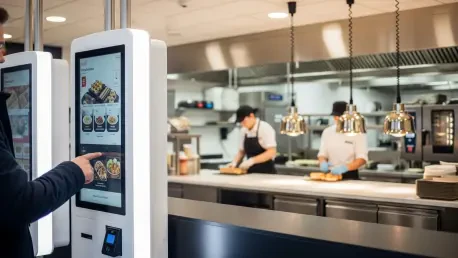
The most visible change resulting from higher labor costs is the accelerated adoption of automation. At many global taco and burger locations, human order-takers are being replaced by digital kiosks and AI-driven voice systems in the drive-thru. This is not just a trend; it is a strategic pivot toward a collaborative robot model. Major chains are testing robotic systems for prep work, such as automated guacamole preparation and assembly lines for bowls and salads, demonstrating that automated systems can improve accuracy while drastically reducing the need for human staff. These innovations address the spillover effect on independent businesses as well, as small cafes find themselves forced to raise wages to compete for talent, even if they are not legally required to meet the specific threshold.
Future Projections: Automation and the Path Toward 2028
As the industry moves through 2026 and toward 2028, the fast-food sector is expected to become even more capital-intensive and less labor-dependent. With more states planning further minimum wage increases, the California model is likely to spread, prompting a nationwide surge in technological investment. Industry projections suggest that the disemployment effects—where technology replaces human roles—will manifest more clearly as the initial phase of price hikes reaches its limit. There is an expected increase in dark kitchens optimized for delivery with minimal staffing and a shift in the workforce toward more technical roles focused on maintaining and managing robotic systems rather than manual food preparation. This transition will likely separate the market into high-tech chains and premium, human-centric boutiques.
Strategic Adaptation: Navigating the New Economic Standards
For industry professionals and business owners, the current climate demands a proactive rather than reactive strategy. First, investing in labor-management software became essential to optimize scheduling without sacrificing service quality. Second, businesses began to prioritize upskilling their remaining workforce to handle the integrated technology that is becoming standard in modern kitchens. For small and independent operators, the key to survival lies in emphasizing the human element and high-touch service that automated chains cannot replicate. Consumers, meanwhile, must be prepared for a permanent shift in the value proposition of fast food, where higher prices and digital-first interactions are the new norm. Survival now depends on the ability to balance operational efficiency with a distinctive brand experience.
Reflecting on the Landmark Shift in Service Labor Markets
The transition to a twenty-dollar minimum wage in the fast-food industry served as a landmark moment in labor history. It successfully raised the floor for compensation, but it also triggered a rapid evolution in how businesses functioned. The core themes of this transition—reduced labor hours, the elimination of benefits, and the aggressive move toward artificial intelligence—suggested that the industry was being rebuilt for a smaller, more specialized workforce. While the long-term significance of these changes was still unfolding, it became clear that the traditional model of low-wage, high-human-input dining was fading. Future success in the service industry required a balance between fair pay and the relentless drive for technological efficiency. Moving forward, the focus shifted toward creating sustainable career paths for the technicians who now manage the automated assembly lines of the modern kitchen.