
In an era where artificial intelligence is reshaping industries, the human element of business has never been more critical. While many leaders focus on the technical aspects of transformation, Marco Gaietti, a veteran in business and strategic management, argues that the true competitive advantage lies in culture. With decades of experience guiding organizations through disruptive change, he has a unique perspective on how to keep people at the center of technological evolution.
This conversation explores the core strategies for building a resilient, human-centric workforce that can thrive alongside AI. We will delve into how to intentionally embed culture into technology strategy, redesign performance and recruitment for a new era, and foster a continuous dialogue that ensures technology empowers, rather than replaces, human connection and creativity.
Many executives see a distinct culture as vital for success, yet it’s often an afterthought in tech transformations. How can HR leaders bridge this gap and intentionally embed a people-first culture into a company’s AI strategy from day one? Please share a specific first step.
That’s the central challenge, isn’t it? We see this stark disconnect in the data—a recent Deloitte study showed that 94% of executives and 88% of employees believe a distinct culture is critical, yet it’s rarely a foundational part of the transformation plan. The first step is a fundamental mindset shift. HR leaders must position culture not as a standalone initiative or a soft-skill project, but as a core competitive advantage that enables the technology. Instead of asking, “How do we manage the people side of this AI rollout?” the question must be, “How does our culture need to evolve to harness the full potential of AI?” A tangible first action is to bring HR to the strategic planning table from the absolute beginning, tasking them with mapping how every new technological process will impact employee experience and how it can be used to reinforce, not erode, the company’s values.
You advocate for connecting day-to-day responsibilities to long-term goals. Can you walk me through the process of redesigning performance metrics and compensation to create a transparent, global framework that gives employees a real sense of ownership over an AI transformation journey?
Absolutely. Employees want to feel like they are part of something bigger than themselves, especially during times of great change. Giving them a sense of ownership starts with making their contribution visible and valuable. The process begins by deconstructing the organization’s long-term strategic goals for AI—whether it’s innovation, efficiency, or market growth—into clear, measurable outcomes for different teams and roles. From there, you build a single, transparent performance framework that applies globally. This isn’t about micromanaging tasks; it’s about aligning effort with impact. For example, instead of just measuring task completion, a metric might be how effectively an employee uses a new AI tool to generate customer insights that lead to a new product feature. When you tie this transparent framework directly to compensation and career growth, you create a powerful, self-reinforcing loop. People can see exactly how their daily work propels the company forward, and that clarity is incredibly motivating.
In a competitive market, attracting talent motivated by impact is key. How can organizations revamp their recruitment practices to identify and secure candidates with the curiosity and adaptability needed to thrive alongside AI? Please describe what a re-imagined interview process might look like.
The talent you need today is different. You’re not just hiring for a fixed set of technical skills; you’re hiring for a mindset. The most valuable people are those who are endlessly curious, adaptable, and driven by the chance to make a real impact. To find them, you have to completely rethink the interview. A re-imagined process moves beyond the standard resume review and behavioral questions. Instead, it might involve a collaborative problem-solving session where candidates are given a real business challenge and a new AI tool. The goal isn’t to see if they can solve the problem perfectly, but to observe how they approach it. Are they curious about the tool’s limitations? Do they ask insightful questions? Do they adapt their strategy when they hit a roadblock? This performance-based approach shows you their potential to learn and grow, which is far more valuable than their knowledge of yesterday’s technology.
Integrating workforce planning with strategic and financial cycles is a significant shift from reactive resourcing. What data-driven steps can HR take to proactively map changing roles and future skill needs, and how do you communicate these insights to leaders and employees without causing anxiety?
This shift from reactive to proactive is non-negotiable in the age of AI. The first step is to build a dynamic skills inventory. HR can leverage analytics and even AI tools to continuously assess the skills your organization has, how relevant they are becoming, and where the gaps are. By integrating this data with the company’s strategic and financial plans, you can forecast what capabilities will be needed in one, three, or five years. The key to communicating this without creating fear is to frame it as a journey of growth and opportunity, not of replacement. You present clear pathways for internal mobility and upskilling. Instead of saying, “Your role is becoming obsolete,” you say, “The work you do is evolving, and here are the training programs and new roles we’re creating to help you lead that evolution.” This data-driven clarity gives leaders the confidence to invest in their people and gives employees a clear map of their future within the company.
In an era of rapid automation, active listening can become a lost art. What practical methods can HR implement to ensure consistent, open dialogue across geographies and roles, and how can that feedback be used to genuinely refresh a company’s mission and values?
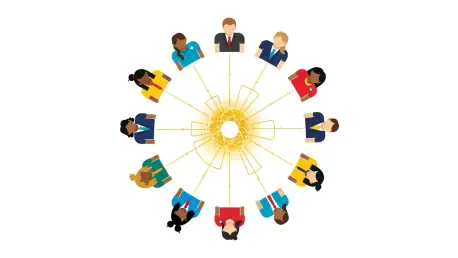
It’s a paradox: the more connected we are by technology, the easier it is to feel disconnected from each other. HR must become the champion of human connection. One of the most powerful, though often overlooked, methods is conducting structured, one-on-one listening tours and interviews across all levels, roles, and geographies. This isn’t about a generic annual survey; it’s about creating intimate, safe spaces for open dialogue about what it feels like to work here during this transition. This qualitative feedback is gold. When you hear the same aspirations and anxieties repeated from an engineer in one country and a marketing manager in another, you’ve found a universal truth about your culture. You then use that feedback to pressure-test and refresh your company’s vision and mission. When employees see their own words and feelings reflected in the company’s core values, those values stop being words on a wall and become everyday guideposts that link their work directly to a shared purpose.
What is your forecast for the evolution of HR’s role as AI becomes more integrated into the workplace?
My forecast is that HR is poised to become the most critical strategic function in any organization. For too long, it’s been viewed as a support or administrative function. But as AI automates routine tasks, the uniquely human aspects of work—creativity, empathy, collaboration, and strategic thinking—become the primary drivers of value. HR’s role will evolve into being the architect and guardian of the human experience at work. They will be the ones ensuring that technology serves people, not the other way around. This means they will lead the charge in building a culture of continuous learning, designing jobs that augment human talent with AI, and using analytics not just for efficiency, but to make the connections between people more meaningful. In short, as the ‘what’ and ‘how’ of work become increasingly automated, HR will be the function that defines the ‘why’.