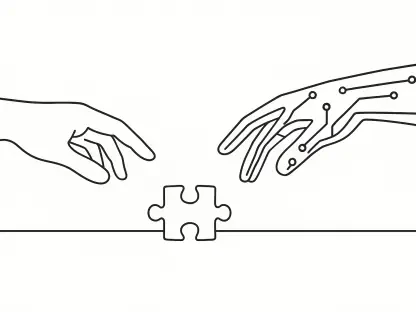

The traditional landscape of executive search has undergone a fundamental transformation as agentic artificial intelligence systems now manage tasks that once required weeks of intensive manual labor by dedicated research teams. While the speed of data processing has accelerated exponentially, the core challenge of identifying high-level leadership remains anchored in the nuanced understanding of human behavior and organizational culture. Modern talent acquisition professionals are currently navigating a complex environment where the ability to distinguish between a digital profile and a living, breathing executive is the primary differentiator of success. Organizations frequently discover that while an algorithm can perfectly match a set of keywords or technical certifications, it struggles to predict how a candidate will react during a corporate crisis or whether their leadership style will clash with an existing executive board. This tension between algorithmic efficiency and human intuition creates a unique dynamic where technology is not replacing the recruiter but is instead redefining the very nature of their professional value.
The Evolution of Data Curation and Talent Discovery
The integration of advanced AI agents into the recruitment workflow has fundamentally shifted the focus from information gathering to strategic interpretation. In the current market, sourcing candidates is no longer the primary hurdle, as automated systems can scan global professional networks, academic publications, and social footprints in a fraction of the second. This abundance of data, however, creates a secondary problem of noise, where the sheer volume of potential matches can overwhelm even the most sophisticated internal HR departments. Agentic AI serves as a powerful filter, identifying individuals with the requisite skills and experience, but it functions primarily as a curator rather than a decision-maker. By automating the preliminary stages of the search process, these digital assistants allow human consultants to dedicate their energy to the more complex aspects of the engagement, such as verifying the authenticity of a candidate’s achievements and assessing their genuine interest in a strategic career move.
Building on this technological foundation, the role of the modern recruiter has transitioned toward that of a high-level advisor who synthesizes machine-generated insights with lived experience. The most effective firms are currently utilizing proprietary datasets to identify specific traits, such as learning agility and intellectual curiosity, which are often obscured in standard resumes. For instance, when Korn Ferry analyzes massive pools of historical placement data, they are looking for patterns of resilience and adaptability that might not be immediately obvious to an untrained eye. However, these data points are merely indicators that require human verification through deep behavioral interviewing and rigorous reference checking. The synergy between science-based assessments and professional instinct ensures that the final selection is grounded in both empirical evidence and a qualitative understanding of the human element. This approach minimizes the risk of expensive hiring mistakes that can derail a company’s strategic goals or damage its internal morale.
Assessing Potential Beyond Historical Performance
A significant limitation of current AI models is their inherent tendency to prioritize historical data and past performance as the primary predictors of future success. While algorithms excel at recognizing patterns in a candidate’s career trajectory, they often fail to account for the “potential” or the capacity to excel in entirely new and increasingly complex environments. In a rapidly shifting economic landscape, what a person has done in the past is often less important than what they are capable of doing when faced with unprecedented challenges. Human recruiters possess the unique ability to probe into a candidate’s motivations and their ability to pivot during periods of organizational distress. Machines are currently unequipped to evaluate the “soft” signals of leadership, such as the subtle shifts in tone during a negotiation or the emotional intelligence required to manage a diverse and remote workforce. Consequently, the reliance on purely automated systems can lead to a “similarity bias,” where the AI selects candidates who look exactly like previous successful hires, thereby stifling organizational diversity and innovation.
This reliance on human judgment becomes even more critical when evaluating cultural fit and the specific ethos of a client organization. Every company possesses a unique DNA that influences how decisions are made, how conflict is resolved, and how success is celebrated. An executive who thrived in a fast-paced, high-risk startup environment might struggle significantly within the structured and risk-averse framework of a legacy multinational corporation. AI can analyze a company’s public-facing values, but it cannot sit in on a board meeting to sense the underlying tensions or the unspoken expectations that define the leadership team. Professional recruiters act as cultural translators, ensuring that a candidate’s personal values and leadership philosophy align with the long-term vision of the hiring organization. This level of synchronization requires a degree of empathy and situational awareness that remains firmly within the human domain, reinforcing the idea that technology is most effective when it is guided by experienced human hands.
The Growing Premium on Trusted Networks
As the recruitment industry becomes increasingly saturated with automated tools, the market has seen a paradoxical rise in the demand for retained search and personalized advisory services. This trend highlights a fundamental truth in high-stakes hiring: the most desirable candidates are often not actively looking for work and are unlikely to be reached through automated outreach. These “passive” candidates typically operate within exclusive professional circles and respond only to outreach from individuals they trust or firms with a reputation for discretion and integrity. In this context, the recruiter’s most valuable asset is not their access to a database, but their long-term relationships and the social capital they have built over decades of service. AI can suggest a name, but it cannot pick up the phone and leverage a twenty-year professional bond to convince a top-tier executive to consider a new opportunity. The “trusted network” remains a fortress that technology has yet to breach, making the human recruiter an indispensable gatekeeper in the global talent market.
Looking toward the immediate future of the industry, organizations should focus on integrating AI as a strategic co-pilot rather than a standalone solution. To maximize the benefits of this partnership, firms must invest in training their teams to interpret AI-generated analytics through a critical and ethical lens. This involves developing a robust framework for identifying algorithmic bias and ensuring that technology is used to expand, rather than narrow, the talent pool. Recruiters should prioritize the development of high-level consultative skills, focusing on executive coaching, succession planning, and organizational design. By delegating the heavy lifting of data curation to AI, professionals can reposition themselves as strategic partners who provide the psychological insights and cultural intuition that machines cannot replicate. The ultimate goal was to create a hybrid model where the precision of data and the depth of human character assessment work in tandem to ensure long-term leadership stability.