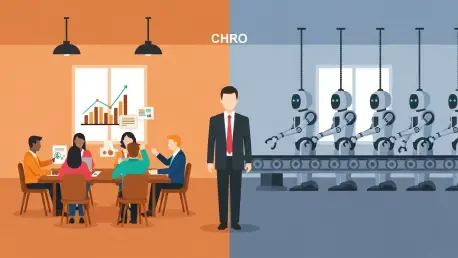

In an era where technology promises unprecedented efficiency and insight, a startling paradox has emerged within human resources departments: three out of every four HR leaders report being dissatisfied with their current technology stack. This widespread frustration is not merely about underperforming software; it highlights a fundamental tension between the transformative potential of artificial intelligence and the complex, often challenging realities of its implementation. For the modern Chief Human Resources Officer, this places them at the epicentre of a technological revolution that could either define their strategic value or render their traditional functions obsolete. The question is no longer if AI will change HR, but how leaders can steer this change toward strategic advantage rather than organizational disruption.
When the Tools of Tomorrow Create Todays Headaches
The significant dissatisfaction with HR technology signals a deep disconnect between promise and performance. This is not simply a matter of buggy software or poor user interfaces; it is a symptom of a deeper friction between the grand vision of AI-driven HR and the practical, often arduous, realities of its deployment. The modern CHRO is caught in this crossfire, tasked with leveraging these powerful new tools while simultaneously managing the fallout from their imperfect application. The challenge is to navigate this landscape where the tools meant to simplify work often introduce new layers of complexity.
This friction forces a critical evaluation of how technology is procured and integrated. Vendors often promise seamless solutions that will revolutionize talent acquisition and management, but the post-implementation reality frequently involves significant gaps in functionality and a steep learning curve for employees. As a result, the CHRO must act as both a technological visionary and a pragmatic troubleshooter, championing innovation while ensuring that new systems deliver tangible value rather than becoming expensive, underutilized assets.
The Great Acceleration From HR Gatekeeper to C Suite Strategist
The pressures of digital transformation have fundamentally shattered the traditional HR silo. The CHRO role is rapidly evolving from a historically risk-averse, compliance-focused function into that of a proactive leader steering the organization’s most critical asset—its people—through technological change. This acceleration demands a strategic mindset that moves beyond administrative oversight and into the core of business strategy, where workforce planning is inextricably linked to technological advancement and market competitiveness.
This new strategic imperative necessitates forging powerful cross-functional alliances. The CHRO can no longer operate in isolation; collaboration is essential for success. This means working hand-in-glove with the Chief Marketing Officer to build a compelling employer brand that attracts top talent in a digital-first world. Simultaneously, a deep partnership with the Chief Technology or Information Officer is critical to making informed investments in the HR tech stack, ensuring that new tools align with both workforce needs and the broader enterprise architecture.
AI as the Dual Edged Sword Amplifying Talent vs Automating Roles
On one hand, AI presents itself as the ultimate force multiplier for HR, an “Iron Man suit” that augments human capabilities to drive remarkable efficiencies. For example, AI-powered assessment tools can screen thousands of candidates for skills and cultural fit with a level of objectivity and speed that is humanly impossible. By automating such high-volume, data-intensive tasks, these systems free up HR professionals to focus on more strategic, high-touch work like employee development, succession planning, and fostering a positive organizational culture.
However, the same efficiencies that empower the HR function also force difficult strategic questions about the future of the workforce. The dark side of this technological sword is the looming conversation about headcount. As AI-driven productivity gains become more pronounced, leaders must confront whether the organization can, and should, operate with a leaner structure. This creates a profound dilemma for the CHRO: how to balance the relentless pursuit of operational excellence with the human cost of automation, ensuring that the company’s a soul is not sacrificed for the sake of its bottom line.
The Reality Check Facing Widespread Tech Frustration and Flat Budgets
The chasm between AI’s potential and its current performance is a source of significant frustration. Widespread dissatisfaction with HR technology often stems from a fundamental misalignment between ambitious sales pitches and the difficult realities of post-implementation life. This promise-performance gap leaves many leaders grappling with systems that fail to deliver on their core value proposition, turning a hoped-for solution into a persistent problem.
Consequently, persistent budget constraints are cultivating a new generation of more sophisticated and critical technology buyers among HR leaders. The era of being swayed by flashy features is giving way to a demand for demonstrable return on investment. CHROs are now compelled to scrutinize potential technology partners, demanding clear evidence that a new platform will solve specific business problems and deliver measurable outcomes. According to Joey Price of Aspect43, the future of HR leadership hinges on successfully navigating this complex and often frustrating tech landscape, making smart, value-driven decisions that truly move the organization forward.
The Blueprint for the 2026 CHRO A Trifecta of Essential Skills
Navigating this complex landscape requires a fundamental reinvention of the HR leadership skill set, transforming the CHRO into a multi-faceted leader. The first pillar of this new identity is becoming a data analyst. This moves far beyond simply generating reports; it involves interpreting complex workforce data to build a compelling business case for new tools, articulating their value to the C-suite, and, most importantly, proving their impact after implementation.
Next, developing deep tech fluency is non-negotiable. A successful CHRO must gain a sophisticated understanding of AI’s capabilities and its limitations. This knowledge is crucial for making informed purchasing decisions, separating genuine innovation from market hype, and effectively articulating technology’s value proposition across the organization. Without this fluency, the CHRO risks making costly investments in systems that are a poor fit for the company’s needs.
Ultimately, these analytical and technical skills must be paired with exceptional people skills. The most advanced technology is worthless if employees refuse to use it. The CHRO must master the art of change management, clearly communicating the “why” behind new systems to overcome resistance and build enthusiasm. By leading with empathy and a clear vision, they can ensure high adoption rates, transforming a technology purchase into a genuine organizational capability.
The path forward for the Chief Human Resources Officer revealed itself not as a simple choice between technology and humanity, but as a complex journey of integration. It became clear that success was not defined by merely adopting AI, but by mastering its application to build a more efficient, data-driven, and fundamentally human-centric organization. The leaders who thrived were those who embraced data, understood the technology, and never lost sight of the people at the heart of the enterprise.