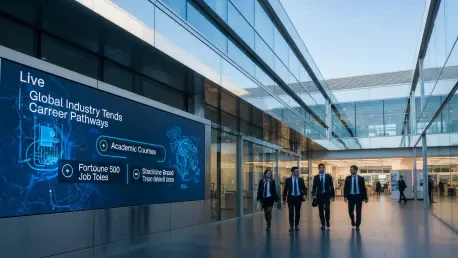

The traditional prestige once associated with centuries-old academic institutions is rapidly being replaced by a data-driven demand for measurable career outcomes and return on investment. As the cost of higher education continues to rise, students and their families are no longer satisfied with vague promises of intellectual enrichment; instead, they seek concrete evidence of employability before committing to a four-year degree. In 2026, the value of a university is increasingly defined by its proximity to the labor market and its ability to provide a seamless transition into high-growth sectors such as green energy and bio-engineering. This shift has forced marketing departments to pivot away from highlighting historic campus architecture toward showcasing real-time placement statistics and salary growth trajectories. Consequently, the university brand is evolving into a professional certification of readiness, where the degree acts as a high-stakes investment vehicle rather than a mere rite of passage for the youth.
Redefining Value: The Modern Academic Marketplace
Phase 1: Data Integration and Curricular Alignment
Universities are increasingly adopting sophisticated AI-driven platforms to align their academic offerings with the evolving demands of the global workforce. By analyzing millions of real-time job postings and patent filings, institutions can identify emerging skill gaps and integrate specific competencies, such as neural network optimization or sustainable supply chain logistics, directly into their core syllabi. This proactive approach ensures that the knowledge imparted in the classroom remains relevant by the time a student graduates into a competitive environment. Furthermore, these data insights allow departments to retire obsolete modules that no longer contribute to a student’s professional viability, thereby streamlining the path to graduation. The branding of these institutions now centers on curriculum agility, signaling to both prospective students and corporate recruiters that the educational experience is synchronized with the actual pulse of the current global economy.
Phase 2: Corporate Partnerships and Innovation Hubs
The physical manifestation of this industry alignment is seen in the rise of co-located corporate laboratories where students engage in high-impact research alongside professional practitioners. Organizations like Microsoft and Tesla are establishing dedicated hubs within university precincts to foster a continuous exchange of talent and innovation. These partnerships provide students with early exposure to proprietary technologies and corporate cultures, significantly reducing the friction often associated with the first few years of employment. For the university, these collaborations serve as the ultimate branding tool, offering a tangible link between academic study and elite professional success. Marketing campaigns frequently highlight these innovation pipelines to demonstrate that their graduates are already integrated into the most influential companies in the world. This symbiotic relationship redefines the university as a gateway to specialized industries rather than a generalist school.
Strategic Shifts: Institutional Identity and Ethics
Phase 3: Economic Utility and Career Marketing
The communication strategies of leading universities have undergone a fundamental transformation, moving from abstract intellectualism to a focus on direct economic utility. Branding materials in 2026 are heavily dominated by comprehensive dashboards that track the median earnings and career progression of alumni over their first five years of employment. This transparency is a direct response to a consumer-driven market where students act as savvy investors looking for the highest possible yield on their tuition capital. Career services offices have moved from the periphery of campus life to the very heart of the student experience, often being the first point of contact for prospective applicants. By positioning career coaching and resume optimization as essential components of the undergraduate journey, universities are rebranding themselves as lifecycle partners in professional development. This focus on utility helps institutions distinguish themselves in a crowded marketplace where status markers are fading.
Phase 4: Durable Skills and the Humanities Debate
However, this intense focus on employability has sparked a rigorous debate regarding the preservation of the humanities and the role of critical inquiry. Many institutions are responding by branding the human element as a high-value skill set that complements technical proficiency. They argue that abilities such as ethical reasoning, cross-cultural communication, and creative problem-solving are precisely what will protect graduates from automation in the coming years. By framing these traditional academic strengths as durable skills, universities are attempting to reconcile their historic mission with the practical demands of the 2026 labor market. This dual branding strategy seeks to attract students who want the security of a job-ready degree without sacrificing the deep, transformative experience of a classical education. The most successful institutional brands are those that can effectively communicate how their graduates possess both the specialized tools for entry and the wisdom for long-term leadership.
Phase 5: Building a Sustainable Educational Future
Higher education leaders recognized that the long-term survival of their institutions depended on a radical pivot toward vocational transparency and industrial integration. To navigate this landscape, administrators implemented rigorous tracking systems that monitored the career progression of every graduate for at least five years to provide clear evidence of value. These data points allowed schools to refine their curricula in real-time, ensuring that no degree became obsolete in a rapidly shifting economy. Moving forward, the most successful institutions sought to blend technical training with human-centric durable skills, creating a hybrid graduate who possessed both critical thinking and specialized proficiency. It became clear that the brand was no longer a static logo, but a dynamic promise of professional security and lifelong adaptability. Future strategies involved deepening the integration between the classroom and the boardroom through mandatory industry feedback loops and expanded micro-credentialing programs to maintain trust.