
With decades of experience navigating the complexities of business management and operations, Marco Gaietti has become a leading voice on the critical intersection of technology and the human element in the workplace. As the retail sector grapples with an unprecedented burnout crisis among its frontline workers, we sat down with him to explore how innovative technologies are being deployed not just to boost efficiency, but to fundamentally reshape the employee experience. Our conversation delves into the tangible ways AI can defuse high-stress customer interactions, the strategic steps for implementing advanced tools like digital twins, and how a tech-forward approach is becoming the new frontier in the war for talent.
The Accenture survey found 69% of frontline workers feel exhausted, with impatient customers being a top stressor. How can AI tools, like the one used by Williams-Sonoma, directly ease this tension? Please describe a scenario where this technology changes the outcome of a difficult customer interaction.
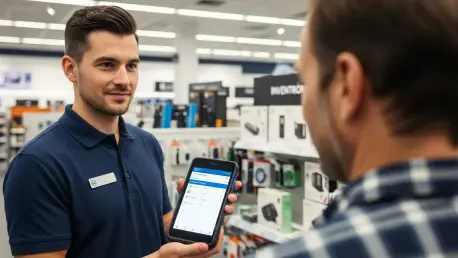
That 70% figure for stress from angry customers is something every retail leader should have pinned to their wall. It’s the emotional friction that grinds people down. A tool like the one at Williams-Sonoma is designed to cut right through that friction by empowering the employee with immediate, actionable answers. Imagine a customer at the counter, their voice rising because the website said an item was in stock, but it’s not on the shelf. In the old model, the employee apologizes, disappears into a chaotic stockroom for ten minutes, and often returns empty-handed, leaving the customer to fume. With an AI assistant on their handheld device, the employee can instead say, “Let me check its precise location.” The AI instantly confirms the item is on a pallet that just arrived and hasn’t been shelved. It can even offer to have it shipped directly to the customer’s home, free of charge. The entire interaction takes 60 seconds, the pressure on the employee evaporates, and a potentially lost customer leaves feeling heard and helped.
Your research notes that managing lines and answering product availability questions are major pain points. Beyond the basic inventory apps most retailers have, what is the step-by-step process for implementing a more advanced tool, like a digital twin, to solve these specific problems on the sales floor?
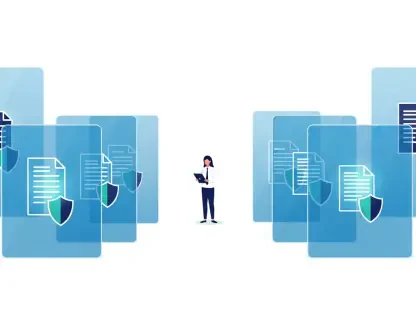
The basic inventory apps that most retailers provide are a starting point, but they often contribute to the problem by providing inaccurate or incomplete data. Implementing a true digital twin, like Walmart is exploring, is a much more holistic process. The first step is to create a high-fidelity digital map of the entire store—every aisle, every shelf, every point-of-sale terminal. Next, you integrate multiple real-time data streams into that map, going far beyond a simple inventory count. This includes data from automated shelf-scanners, sales transactions, and even sensors that monitor foot traffic. Once the digital twin is live, you empower employees with a simple, visual interface on their devices. When a customer asks for a product, the employee doesn’t just see a number; they see a pinpoint on the store map showing its exact location. The final, most advanced step is proactive management. The system can simulate shopper flow, predict when long lines are about to form, and automatically alert a manager to open another register, directly tackling that crowd control issue that frustrates nearly half of all in-store workers.
Karalee Close suggests framing AI as a way to build trust, not just for efficiency. What does this strategy look like in practice for an HR team? Could you provide a specific metric or anecdote that demonstrates how investing in employee-facing tech improves trust and retention?
That’s a crucial mindset shift. For years, technology was positioned to employees as a tool for corporate to watch them or make them work faster. Framing it as a trust-building exercise means HR leads the conversation by saying, “We’ve heard that dealing with price mismatches and out-of-stocks is burning you out. We are investing in this tool to remove that specific frustration from your day.” It’s about demonstrating that you’re listening and investing in their well-being. A perfect practical example is HP’s move to digitize 90% of its sales training. By making learning accessible on demand, they sent a clear message: We trust you to manage your own development and we want you to succeed. The metric that proves this built trust is the resulting 2.5x increase in learning hours. Employees voluntarily engaged because they saw the company investing in them. When an employee feels the company has their back and is actively trying to make their job better, their loyalty deepens, which is the bedrock of retention.
With 88% of leaders seeing benefits from advanced technology, the ROI seems clear. Using an example like MediaMarktSaturn’s “MyBuddy” assistant, could you outline the key performance indicators a retailer should track to measure the true impact of a new AI tool on employee performance and well-being?
While the 88% figure confirms the C-suite is happy, the real story is in measuring the impact on the floor. For a tool like “MyBuddy,” you have to look beyond simple sales uplift. The first KPI should be employee-focused: what is the adoption rate of the tool, and more importantly, what do pre- and post-implementation pulse surveys say about stress levels? You’re looking for a measurable drop in reported burnout. Second, you need operational KPIs, such as the average time to resolve a complex product inquiry—that should plummet. Third, you track the customer experience through metrics like Net Promoter Score or satisfaction ratings for in-store assistance; happier, empowered employees create happier customers. Finally, the ultimate indicator is a reduction in frontline staff turnover. Given that nearly seven out of ten executives are worried about retention, proving that a new AI tool directly correlates with a lower attrition rate makes it one ofthe most valuable investments a retailer can make.
What is your forecast for the future of the frontline retail workforce?
My forecast is that within the next five years, the “tech-enabled employee experience” will become the single most important differentiator in attracting and retaining retail talent, eclipsing even traditional benefits in many cases. The conversation is already shifting; we see that 70% of retailers hiring for the holidays are competing in a new arena. The retailers who fail to close this technology gap between consumer life and work life will face a quiet but relentless talent drain to competitors who do. We will see the line between customer-facing technology and employee-facing technology completely disappear. The best companies will realize that providing an employee with an AI-powered assistant to eliminate their daily frustrations is the most direct path to creating an exceptional customer experience and a resilient, thriving workforce.