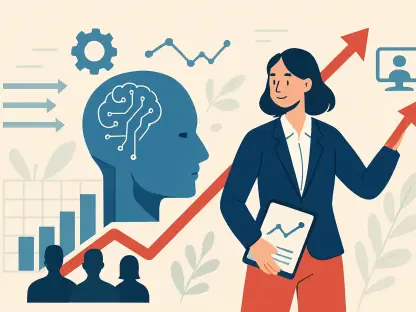

The rapid integration of generative artificial intelligence has led many global enterprises to view their human workforce through the lens of cost reduction, yet some organizations are choosing to swim against this tide. While the prevailing corporate narrative suggests that automation will inevitably shrink administrative departments, Monday.com is actively doubling down on its human capital. Under the guidance of HR executive Nicole Leib, the work management platform is fundamentally rejecting the notion that technology should replace the people responsible for organizational culture. Instead of cutting headcount, the firm is repositioning the Human Resource Business Partner as the primary engine of strategic growth.
Maintaining organizational empathy and context remains a significant hurdle in a landscape increasingly defined by algorithmic efficiency. As firms automate more interactions, they risk losing the nuanced understanding that only a human professional can provide. Leib argues that the HRBP serves as the essential connective tissue between sophisticated technology and high-level business strategy. By prioritizing this role, the company ensures that its internal operations do not become a series of disconnected automated tasks, but rather a cohesive environment where human insights guide technological application.
Human-Centric Strategy in an Automated Era
The decision to prioritize human resource expansion over AI-driven reductions stems from a belief that complex organizational problems require more than just data processing. While AI can handle large-scale information, it often lacks the emotional intelligence needed to navigate the intricacies of workplace dynamics. Monday.com has focused its efforts on ensuring that HR professionals remain central to the decision-making process, particularly when it involves sensitive issues like career development and internal conflict resolution.
This approach addresses the core challenge of maintaining a human touch in a digital-first world. By expanding the influence of human resource teams, the organization fosters a culture of psychological safety and belonging that automation alone cannot replicate. The strategy highlights a shift from viewing HR as a back-office function to seeing it as a front-line consultancy that interprets the needs of the workforce through a lens of empathy and strategic alignment.
Contextualizing the Shift Toward Systemic HR
In the broader tech industry, AI is frequently deployed to automate entry-level roles and handle repetitive administrative functions. This trend often results in a hollowed-out HR department where business partners are restricted to basic employee relations. However, Monday.com has adopted a “Systemic HR” model that departs from this traditional mold. This model treats HR as an integrated system rather than a series of silos, allowing professionals to move fluidly between different business units to solve systemic problems.
The significance of this shift lies in its recognition of the strategic value of human intervention. As the future of work evolves, the ability to manage global, decentralized teams requires a level of sophistication that goes beyond simple automation. By elevating the HRBP role to a senior consultancy level, Monday.com ensures that its people strategy is as agile and innovative as its product development, setting a new benchmark for how global organizations should value their talent.
Research Methodology, Findings, and Implications
Methodology
The analysis of Monday.com’s internal transformation utilized a qualitative approach to examine the leadership strategies implemented by Nicole Leib. This involved a deep dive into the company’s internal “task force” structure, where employees are encouraged to dedicate 20% of their working hours to redesigning the employee lifecycle. This internal laboratory allows the team to experiment with new processes and refine the human experience within the company.
Furthermore, a comparative analysis was conducted to contrast this internal strategy against industry benchmarks provided by The Josh Bersin Company and Korn Ferry. By looking at how other large-scale organizations utilize their HR functions, researchers could identify the specific areas where Monday.com’s model deviates from the status quo. This comparison highlighted the difference between administrative-heavy departments and the consultant-led model favored by Leib.
Findings
The investigation revealed that while AI provides impressive scale, it consistently fails to provide the critical thinking and nuanced context required for complex organizational design. Industry data shows a stark disconnect: while most companies claim to value strategic HR, only a small fraction of HRBPs actually perform high-level design work. Monday.com has successfully bridged this gap by hiring for critical thinking rather than specific technical AI certifications, ensuring their leaders can challenge data rather than just follow it.
Recruitment trends within the company now prioritize individuals who can interrogate automated outputs to verify their logical and ethical validity. This is a direct response to the finding that talent leaders at top firms often lack the seniority needed to influence business outcomes. By empowering their HR teams to act as internal consultants, Monday.com has created a workforce that is more resilient to the fluctuations of the tech market.
Implications
Expanding HRBP support to individual contributors, rather than just senior leadership, has profound implications for organizational health. This democratized access to professional guidance ensures that every level of the workforce benefits from human-centric advocacy. This strategy acts as a competitive differentiator, as it directly impacts long-term employee retention by making staff feel seen and valued in a way that an automated portal cannot achieve.
Practically, this model uses humans to audit AI, ensuring that data-driven decisions do not lead to biased or illogical business outcomes. By maintaining this human layer of oversight, the company mitigates the risks associated with “black box” algorithms. This proactive stance on ethical technology use positions the human element not as a temporary bridge to full automation, but as a permanent necessity for a healthy corporate ecosystem.
Reflection and Future Directions
Reflection
Resisting the popular cost-cutting narrative associated with AI implementation required a courageous departure from conventional corporate wisdom. The transition from administrative “employee relations” to “senior consultancy” involved overcoming cultural hurdles, as team members had to shift their mindsets from reactive task management to proactive organizational design. This evolution highlights the difficulty of balancing efficiency with the preservation of a human-centric workplace culture.
The organization successfully maintained a balance where AI was used to streamline workflows without diluting the personal connections that define the employee experience. This suggests that the value of an HR professional is not found in the tasks they perform, but in the judgment they exercise. Moving forward, the challenge will be to sustain this high-touch approach as the company continues to scale globally.
Future Directions
Strategic research into the long-term return on investment for human-centric HR models will be essential to prove the financial viability of this path. Future studies should compare the retention rates and innovation benchmarks of Monday.com against firms that have moved toward fully automated HR departments. Such data could provide a roadmap for other organizations looking to protect their human capital while still leveraging modern technology.
Additionally, exploring how AI tools can be specifically designed to augment critical thinking tasks will be vital. Instead of replacing the HRBP, technology should evolve to provide deeper insights that a human consultant can then interpret and act upon. Questions remain about how this high-touch model will function in fully remote or highly decentralized global workforces, necessitating new frameworks for digital human connection.
Redefining HR as a Strategic Differentiator
Monday.com’s rejection of AI-driven job cuts served as a powerful testament to the enduring value of human judgment in a tech-saturated market. By expanding HR roles and focusing on systemic design, the organization demonstrated that critical thinking and contextual awareness are the most valuable assets a modern corporation can possess. This strategy reaffirmed that technology should be an assistant to the human experience, not a replacement for it.
The investigation proved that human-driven HR is a strategic necessity for navigating the complexities of the modern workplace. Organizations that choose to invest in their people’s ability to think critically and act empathetically will likely find themselves better equipped to handle the challenges of the future. Ultimately, the successful integration of AI requires more human oversight, not less, to ensure that the logic of the machine remains aligned with the values of the people it serves.