
Navigating a high-velocity warehouse in 2026 requires more than just raw power; it demands a surgical level of precision that can turn seconds into a competitive advantage. As supply chains face unprecedented pressure to deliver goods faster than ever before, the equipment moving those goods must undergo a radical transformation. Toyota Material Handling Europe is meeting this challenge through the launch of its “Next Level of Performance” campaign, introducing a specialized fleet of order pickers and tow tractors designed to redefine the workflow of the modern distribution center.
This expansion is far from a routine update; it is a direct response to the specific hurdles of contemporary logistics. Facilities are becoming denser and more vertical, leaving less room for error or bulky machinery. By focusing on modularity and human-centric design, Toyota aims to bridge the gap between high-volume output and the physical well-being of the workforce, ensuring that productivity does not come at the cost of operator exhaustion.
Redefining Speed and Precision in the Modern Distribution Center
In a landscape where consumer expectations for instantaneous delivery have become the norm, a minor delay in the picking sequence can cause a massive backlog across the entire supply chain. Toyota Material Handling Europe is tackling this issue by deploying machines that prioritize agility and quick cycle times above all else. This performance-driven approach is not just about the strength of the steel frames, but rather about how these machines integrate into the fast-paced, sometimes chaotic environment of a modern logistics hub.
Modern warehouses are increasingly cramped, with aisles shrinking to maximize storage capacity. Consequently, the new fleet focuses on high-velocity movements that allow operators to navigate tight corners without losing momentum. This shift toward more agile equipment reflects a broader realization in the industry: the most successful operations are those that can maintain a steady, uninterrupted flow of goods rather than those that simply rely on the largest possible payload capacities.
The Intersection of High-Volume Logistics and Operator Retention
Material handling facilities today are caught between the need for relentless throughput and a competitive labor market that makes retaining skilled operators a top priority. A warehouse is only as fast as the people running it, and the physical toll of a long shift can lead to high turnover rates and decreased accuracy. By identifying and mitigating the “micro-stresses” that contribute to driver fatigue—such as floor vibrations and the repetitive strain of mounting a vehicle—Toyota is positioning its new hardware as a vital component for worker longevity.
Ergonomic design has moved from a luxury feature to a core business necessity. Machines that provide a quiet, smooth ride and intuitive controls allow operators to remain focused on the task at hand for longer periods. When the human element is treated as the most valuable part of the workflow, the entire operation becomes more resilient. This strategic focus ensures that technology supports the worker, creating a sustainable environment where high-volume logistics can thrive without burning out the personnel responsible for its success.
Modular Innovations: The Optio L-Series and Tracto S-Series
At the heart of this technological expansion are the Optio L-Series and the Tracto S-Series, two lines that exemplify the philosophy of modular innovation. The OSE100 and OSE100W models are designed for low-level picking where versatility is the most important factor. With a 1000kg capacity, these units offer different configurations, such as elevating platforms for vertical reach or walkthrough designs for oversized inventory. An integrated initial lift keeps the forks at an ergonomic height, preventing the back strain that usually accompanies manual pallet loading in high-intensity settings.
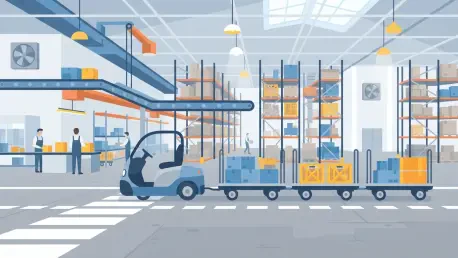
For facilities requiring rapid horizontal transport, the Tracto S-Series electric tow tractors provide a high-speed solution for moving heavy loads. These machines, specifically the TSE300 and TSE500, can tow up to five tons at speeds reaching 12 km/h, making them ideal for the delivery cycles found in large-scale manufacturing and distribution centers. Their compact three-wheel chassis ensures a tight turning radius, allowing them to remain productive even when the staging area is congested with other equipment.
The two series share a unified design language that simplifies fleet management and reduces the learning curve for new hires. A standout feature is the “inching” or “walkie” button system, which allows an operator to move the truck forward while walking alongside it. This small optimization removes the need to step back into the cabin for short-distance movements, a process that saves significant time when repeated hundreds of times during a shift.
Engineering Excellence: Insights from the “Next Level” Initiative
The “Next Level of Performance” initiative is more than a marketing slogan; it is a commitment to engineering excellence and sustainable power. Mark Peters, the Marketing Director at Toyota Material Handling Europe, has noted that these models respond to a market that demands a perfect balance of speed, efficiency, and comfort. Every truck in the new lineup has been validated against ISO 23308 criteria, achieving top-tier ratings for minimizing vibration and noise, which are the primary physical burdens of industrial work.
Beyond ergonomic comfort, the integration of lithium-ion battery configurations represents a major leap in operational fluidity. These batteries support “opportunity charging,” which allows warehouses to top off power during short breaks rather than waiting for long, traditional recharge cycles. This capability supports a 24/7 operation without the need for space-consuming battery swap stations, making the entire facility more energy-efficient and reducing the overall carbon footprint of the machinery.
Strategic Frameworks for Implementing Next-Gen Fleet Solutions
Successfully integrating these next-generation machines requires a framework that prioritizes safety through advanced visual technology. Managers can utilize the built-in “safety bubble” features, such as the integrated blue and red warning lights and directional indicators, to create clear boundaries for pedestrians. This proactive approach to safety is essential in high-traffic areas where visibility is often obstructed by shelving or bulky loads, reducing the likelihood of accidents and improving overall site security.
Operations can also leverage the lightweight engineering of these models to achieve significant energy savings. By adopting a “light-but-powerful” strategy, companies can reduce the energy consumption per pallet moved, contributing to their corporate sustainability goals. These machines are engineered to provide high travel speeds without the unnecessary bulk of older designs, ensuring that the warehouse remains both green and highly productive throughout the busiest seasons.
Future-Proofing with Modular Upgrades
As the logistics sector looked toward the end of the current cycle, the opening of order books for these models provided a clear path for modernization. Production was scheduled to scale significantly through 2027, allowing businesses to plan for a phased rollout of the new technology. Warehouse managers prioritized the standardization of their fleets, recognizing that the shared components across the Optio and Tracto lines simplified technician training and streamlined spare parts inventory.
The strategic decision to implement these modular systems prepared facilities for the demands of a more complex marketplace. By choosing a platform that included the upcoming OSE120CB model, companies ensured their equipment remained relevant as picking requirements evolved. Ultimately, the adoption of these next-gen solutions moved the industry toward a more agile, worker-friendly future where efficiency and safety existed in perfect harmony.