
The global business landscape is currently witnessing a staggering $50 billion gamble on technical infrastructure that marks the definitive end of isolated software solutions. As enterprises scramble to integrate artificial intelligence into every facet of their operations, the focus has shifted from mere digital transformation toward the creation of comprehensive, self-sustaining ecosystems. This transition is not just about adopting new tools; it represents a fundamental reorganization of how global companies utilize data to maintain a competitive edge.
The Rapid Expansion of AI-Integrated Cloud Ecosystems
Market Trajectory: The Rise of Multi-Pillar Suite Adoption
Modern organizations are increasingly moving away from fragmented software environments, seeking instead the synergy found in unified platforms. Recent financial data shows a robust 15% growth in the cloud Human Capital Management sector, pushing annualized run rates for applications to approximately $16.1 billion. This trend highlights a shift where HCM, ERP, and financial tools are no longer separate entities but are bundled into “multi-pillar” strategies.
Such consolidation allows enterprise-scale entities to achieve a level of data fluidity that was previously impossible. By housing diverse business functions within a single environment, companies eliminate the friction often caused by siloed information. This move toward integrated suites suggests that the era of specialized point solutions is rapidly closing in favor of all-encompassing digital backbones.
Real-World Deployment: Autonomous AI Agents in Specialized Sectors
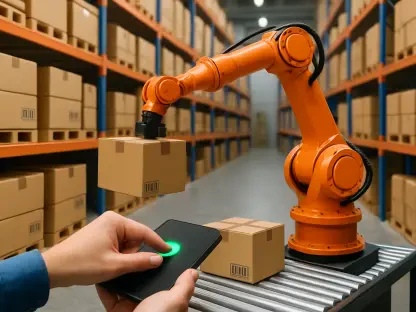
Beyond the financial metrics, the practical utility of these clouds is expanding through the deployment of over 1,000 autonomous AI agents within existing back-office frameworks. These agents are often provided at no additional cost, allowing legacy providers to leverage their massive scale to outpace agile startups. In the healthcare sector, this technology is already managing complex clinician scheduling and matching patients with surgical procedures.
By embedding these tools directly into the workflow, providers offer immediate value that AI-native newcomers struggle to match. These agents do not just analyze data; they execute tasks that were once labor-intensive, proving that the true power of AI lies in its ability to automate the mundane aspects of specialized industry operations.
Industry Perspectives: The SaaS Apocalypse and Infrastructure Defense
The aggressive pivot toward automated models has sparked intense debate regarding the so-called “SaaS apocalypse,” where legacy platforms are threatened by nimble, AI-first competitors. To defend their territory, established giants are committing upwards of $50 billion in capital expenditures to fortify their technical infrastructure. This massive investment serves as a barrier to entry, ensuring that established players remain the primary gatekeepers of enterprise intelligence.
However, this technological arms race brings significant internal uncertainty regarding labor and workforce stability. As companies prioritize high-cost infrastructure and automated efficiency, the human element of the organization often faces an ambiguous future. Professional insights suggest that while the product side of the business thrives, internal structures are undergoing a realignment to accommodate a new, machine-led operational reality.
Future Projections: Intelligent Enterprise Infrastructure
Looking ahead, the long-term success of these strategies depends on embedding generative AI directly into the database layer rather than treating it as an external plugin. This structural integration offers immense benefits for buyers, including “no-cost” features that simplify procurement. Nevertheless, the risk of vendor lock-in remains a primary concern for IT leaders who must balance convenience with long-term strategic flexibility.
The looming challenge for the next five years will be the reconciliation of unprecedented infrastructure spending with the necessity for organizational health. HR and IT procurement roles will likely merge into a hybrid function focused on managing digital-human workforces. Organizations that fail to address the cultural impact of these pivots may find that their technological superiority is undermined by internal instability.
Summary: The Integrated AI Cloud Shift
The recent shifts in the market demonstrated a clear preference for massive AI infrastructure and the consolidation of business suites. Major providers successfully utilized their scale to maintain dominance, effectively using AI agents to provide utility that smaller startups could not replicate. The focus remained on bridging the gap between sophisticated data processing and real-world application.
Enterprise leaders recognized that the transition required a careful balance between technical growth and the well-being of the workforce. Future success depended on the ability to navigate these complex digital transformations without losing sight of the human talent that drove original innovation. Monitoring both financial performance and internal organizational health became the new standard for strategic excellence.