
The traditional boundaries separating human talent from automated systems are dissolving so rapidly that the role of the person overseeing them must fundamentally change to survive. As organizations move beyond the initial hype of generative tools, a new reality has emerged where the Chief Human Resources Officer is no longer just a custodian of culture but a primary architect of technological integration. This shift represents a departure from the reactive “personnel management” of the past, placing HR at the center of a high-stakes transition that determines whether a company thrives through innovation or stagnates under the weight of employee anxiety.
The Shift from Personnel Management to AI Strategy
Current Adoption Trends and the “Chief People-AI Officer”
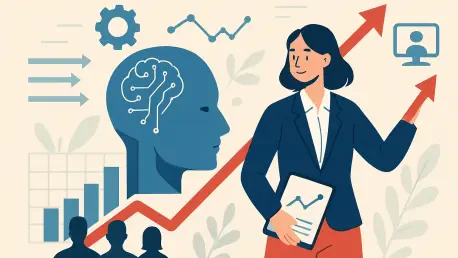
The transition from a standard executive role to what many now call the “Chief People-AI Officer” is backed by increasingly stark data regarding workforce sentiment. Recent studies, including a significant Pew Research analysis, indicate that 52% of workers harbor deep concerns about how artificial intelligence will impact their specific roles and long-term career stability. This widespread apprehension creates a strategic vacuum that HR leaders are uniquely positioned to fill. By evolving the CHRO role into a hybrid position that focuses on the convergence of talent management and technology, leaders can turn a source of friction into a driver of performance.
The most successful organizations today are those that refuse to treat technology as a standalone IT project. Statistics show that companies pairing aggressive AI adoption with comprehensive workforce enablement are significantly outperforming their peers in both raw productivity and employee engagement. These leaders recognize that the “People-AI” title is more than a trendy label; it is a commitment to ensuring that the human element remains the guiding force behind every algorithmic decision. When employees see their leadership actively managing the transition, the narrative shifts from one of replacement to one of empowerment.
Real-World Applications: From HR Labs to Core Workflows
Modern HR departments are increasingly operating as internal “test labs” for the rest of the enterprise by integrating intelligent systems into their own day-to-day functions. This includes everything from the initial screening of candidates and automated onboarding to the precision optimization of training programs based on individual learning patterns. By testing these tools within the HR function first, leaders gain the necessary credibility and hands-on experience to guide other departments through similar transformations. This “lead by example” approach reduces the technical intimidation often associated with large-scale digital shifts.
In the private sector, companies like Westfield have demonstrated how this integration works in practice within the property and casualty insurance industry. By using AI to augment underwriting and claims processing, they have created a “Human + AI” model that prioritizes speed without sacrificing the human judgment required for complex, high-stakes decisions. This framework treats the technology as a digital co-worker rather than a substitute. It allows the organization to redesign job descriptions so that staff can focus on empathetic communication and creative problem-solving while the AI handles the data-intensive heavy lifting.
Expert Perspectives on Leadership and Governance
Industry veterans and Chief People Officers are increasingly vocal about the fact that successful transformation requires a “leadership playbook” rather than a “technology playbook.” The consensus among experts suggests that while the software might be sophisticated, the implementation remains a deeply human challenge. Effective governance must be established early, creating ethical guardrails that ensure accountability remains with human supervisors. HR acts as the strategic partner in this process, ensuring that the deployment of automation does not inadvertently violate labor standards or erode the organizational values that took decades to build.
Transparency has emerged as the most effective tool for mitigating fear and building organizational trust during these technological shifts. When leadership is candid about what is known, what is still being explored, and where the enterprise roadmap is heading, the “black box” of AI becomes less threatening. Experts argue that in the absence of clear communication, employees naturally fill the information gap with worst-case scenarios. By maintaining an open dialogue, HR leaders transform the workforce from a group of passive observers into active participants who are invested in the success of the new digital infrastructure.
The Future of Work: Balancing Efficiency and Human Dignity
Reflecting on historical parallels, such as the Industrial Revolution, reveals that the need for a humanistic approach to automation is a recurring theme in global history. Just as the move to machine-based manufacturing forced a rethink of worker safety and welfare, the current era demands a focus on the psychological and social well-being of the workforce. Reskilling is no longer viewed as a simple technical training initiative; it is now recognized as a holistic change-management journey. This process involves helping employees navigate the emotional stages of disruption while providing them with the tools to remain relevant in a shifting landscape.
The rise of “agentic models” and AI-driven bots introduces a new definition of cultural competence. In the coming years, the workforce will likely comprise a complex mix of human employees and autonomous agents, requiring leaders to manage interactions between biological and synthetic intelligence. This brings the risk of organizational obsolescence for those who cling to “perfection” over “progress.” Waiting for a flawless system before acting is a recipe for failure, as the speed of change favors those who are willing to test, learn, and iterate in real-time while keeping human dignity at the core of their operational strategy.
Shaping the Transformation
The transition of HR from a reactive administrative function to a proactive driver of technological integration has fundamentally changed the corporate hierarchy. This shift demonstrated that the success of any advanced technology is entirely dependent on the synergy between human judgment and intelligent systems at scale. By moving beyond basic automation and focusing on workforce enablement, leaders have managed to turn potential disruption into a sustainable competitive advantage. The focus has moved toward creating environments where employees feel secure enough to experiment with new tools, ensuring that the human element remains the primary competitive differentiator in a digital economy.
To maintain this momentum, organizations should prioritize the creation of “internal marketplaces” for skills, allowing employees to pivot into new roles as AI assumes repetitive tasks. Investing in “soft skill” development—such as ethical reasoning and complex negotiation—will ensure the workforce remains indispensable. Future strategies must also include regular audits of AI impact on employee mental health and workplace culture to prevent burnout. Ultimately, the leaders who successfully navigated this era were those who recognized that the goal of the transformation was not to build a smarter machine, but to build a more capable, resilient, and human-centric organization.