
Developing the nuanced ability to steer a departmental ship through the turbulent waters of modern academia requires far more than the traditional scholarly credentials that typically define a successful academic career. While researchers may spend decades mastering specific scientific or humanities disciplines, they are frequently thrust into leadership roles such as department chairs without formal training in management or institutional strategy. To address this historical gap, the School of Arts and Sciences at Tufts University launched a sophisticated leadership training initiative in early 2025. Developed in strategic partnership with Academic Impressions, the program was designed to transform the way faculty leaders approach their administrative responsibilities. By moving away from a trial-and-error method of management, the university has begun to treat leadership as a distinct professional discipline, ensuring that its experts are equally capable of guiding their peers and managing institutional growth.
Structural Foundations: Implementing the Cohort Training Model
The current iteration of the training program utilizes a cohort-based structure that emphasizes the importance of building long-term professional networks among the university’s academic staff. By gathering leaders from diverse backgrounds, the initiative seeks to create a supportive environment where participants can share their unique experiences and common challenges. At present, the program features two primary tracks that cater to different stages of the leadership lifecycle: one designed for active chairs and directors, and another for mid-career faculty who show significant potential for future administrative responsibilities. Candidates for these tracks are carefully nominated by deans from across the various schools, ensuring that the inaugural group of 22 participants represents a broad spectrum of the university’s intellectual community. This collaborative model ensures that leadership training is not merely a solitary exercise but a collective advancement of the university’s internal culture.
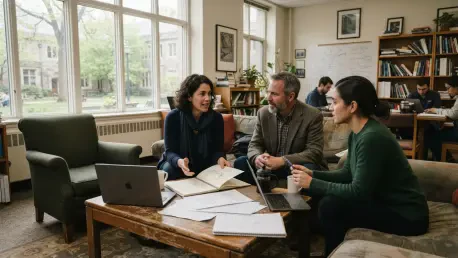
Central to the methodology of this initiative is a significant shift toward interactive, live instruction rather than the passive consumption of digital content. During the initial development phases, the administration evaluated several different pedagogical approaches, including asynchronous online modules and individualized in-person coaching. Feedback from participating faculty revealed a strong preference for human-centered interaction, which led the program to prioritize monthly meetings with professional coaches and a curated series of four specialized workshops. These sessions provide a vital space for leaders to work through complex institutional dilemmas and conduct detailed needs assessments related to project management and sustainable work habits. By focusing on real-time problem solving, the program helps faculty translate abstract leadership theories into concrete actions that can be applied immediately to their departmental missions, thereby increasing efficiency across the entire school.
Strategic Outcomes: Cultivating Collective Institutional Excellence
One of the primary strategic goals of this leadership training is the reduction of professional isolation that often accompanies high-level administrative roles in higher education. By fostering what the administration describes as a “community of practice,” the university aims to break down the traditional silos that frequently separate different academic departments and schools. This interconnected approach allows department chairs to collaborate on broader institutional goals and share best practices that might otherwise remain confined to a single office. Dean Bárbara M. Brizuela and Vice Provost Colleen Ryan have emphasized that the program is about building a sustainable “leadership capacity” that goes beyond basic administrative tasks. This focus on institutional resilience ensures that the university is better prepared to navigate the shifting landscape of higher education, where collaborative management and clear communication are essential for long-term success and academic excellence.
The administration effectively solidified this new leadership framework by analyzing the high levels of satisfaction reported by the initial participants, who provided an average rating of 4.71 out of 5. These faculty members discovered that the training was not merely theoretical but offered practical tools for managing the intricate personnel issues and strategic priorities of their departments. To build upon this success, the university established a roadmap for integrating these training modules into the standard career progression of all emerging faculty leaders. By shifting the focus toward live, collaborative problem-solving, the institution successfully moved toward a more professionalized model of academic management. Future efforts were directed at expanding these cohorts and refining the needs assessment tools to adapt to new administrative pressures. This investment in human capital ensured that the university remained a communicative and resilient environment capable of meeting any future challenges.