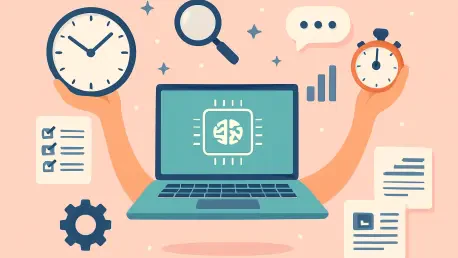

The modern professional landscape is a complex web of disparate applications, where teams navigate a dozen platforms before their first coffee break, leading to a silent drain on productivity as hours disappear into the digital ether of copying data, chasing updates, and manually processing requests that automation could instantly resolve. This fragmentation, once promised as a path to efficiency, has instead created digital friction that slows down progress and pulls focus away from strategic initiatives. AI productivity tools are engineered to reverse this trend, moving beyond rudimentary automation to intelligently analyze workflows, anticipate bottlenecks, and execute repetitive tasks with a level of autonomy that reclaims significant time. By embedding artificial intelligence directly into daily operations, these platforms transform scattered processes into a symphony of coordinated execution, freeing teams from administrative burdens and allowing them to dedicate their most valuable resource—time—to the high-impact work that drives innovation and growth. This analysis explores a curated selection of tools designed to deliver measurable time savings, providing a framework for evaluation and implementation that scales across any department.
1. Unified Platforms for Comprehensive Work Management
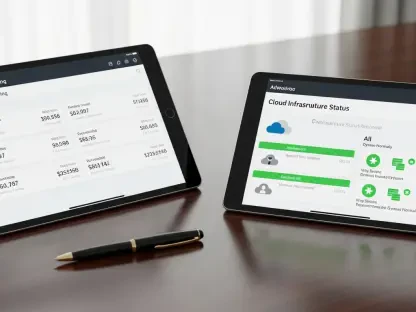
At the forefront of the AI productivity revolution are comprehensive work management platforms that serve as a central nervous system for an organization’s operations, rather than just another specialized application. A prime example of this approach is monday work management, which transforms fragmented project data into a unified, collaborative workspace. Built upon the flexible monday.com Work OS, it provides mid-to-large organizations with the essential building blocks for managing entire portfolios, optimizing resource allocation, and streamlining requests and approvals within a single environment. Instead of forcing teams to jump between different tools, this platform integrates repeatable workflows, dynamic dashboards, intelligent automations, and advanced AI capabilities directly where work occurs. This consolidation grants leadership real-time, high-level insights across all initiatives, while ensuring that team members remain perfectly synchronized on ownership, timelines, and critical dependencies. For instance, a Project Management Office can leverage its AI-powered intake system to automatically categorize new requests, assign the appropriate project template, and instantly notify all relevant stakeholders, thereby eliminating countless hours of manual data entry and follow-up. This shift allows the team to concentrate on strategic delivery instead of getting bogged down in administrative tasks, demonstrating a clear return on investment through enhanced efficiency and focus.
The true value of a platform like monday work management lies in its ability to connect high-level strategic objectives directly to daily execution, ensuring that every task contributes to the organization’s overarching goals. Its portfolio management features allow leaders to consolidate projects from across the company into cohesive, easy-to-understand reports, making it simple to standardize data, compare the progress of different initiatives, and keep stakeholders aligned through automated reporting. Furthermore, the integration of Goals and OKRs helps teams visualize how their individual contributions directly impact the company’s most important priorities. Resource optimization is handled with precision through features like the Workload View, which gives managers clear visibility into team capacity, enabling them to identify and address potential overloads or underutilization before they derail timelines. The platform’s no-code automation center, enhanced with AI actions, empowers teams to automate complex decisions, such as categorizing incoming work or summarizing progress updates, without needing technical expertise. With over 200 native integrations connecting to essential tools like Microsoft Teams, Slack, Jira Cloud, and Google Drive, work remains contextual and fluid, solidifying its position as a central hub for organizational productivity and a leader in collaborative work management.
2. Advanced Tools for Research and Knowledge Synthesis
In an age of information overload, the ability to quickly synthesize vast amounts of data is a critical competitive advantage, and AI-powered research tools have emerged to meet this demand. Perplexity revolutionizes the search process by using AI to interpret natural language queries, scan authoritative sources, and construct a cohesive, cited answer, rather than simply presenting a list of links. This capability allows teams to bypass hours of manual review, accelerating market research, competitive analysis, and strategic planning. Its research mode can run dozens of searches and read hundreds of sources to produce comprehensive reports in minutes. Similarly, Anthropic’s Claude is designed for teams grappling with extensive documentation and complex reasoning tasks. With its remarkable ability to maintain context across up to 150,000 words, Claude is indispensable for analyzing legal contracts, technical specifications, and detailed strategic reports. It provides verifiable insights with clear citations across large documents and connected data sources, facilitating faster and more accurate synthesis of dense information. Both platforms offer a tiered pricing structure, ensuring accessibility for individuals while providing the enterprise-grade controls necessary for larger organizations, such as advanced security and collaboration features.
Continuing this trend of intelligent information processing, ChatGPT has evolved into a central digital workspace that combines deep research capabilities with automated process management and secure access to company knowledge. It functions as a full-service assistant, using persistent Projects and proactive Tasks to simplify daily operations and organize work into intelligent streams. It can securely connect to internal applications like Google Drive and SharePoint, providing answers with citations while respecting existing data permissions. On the other hand, NotebookLM focuses on creating source-grounded intelligence, turning scattered research materials into a coherent, AI-powered knowledge base where every insight is directly tied to user-uploaded content. This makes it an invaluable ally for strategy groups and researchers who need to distill complex information without sacrificing accuracy. Finally, Grok bridges the gap between teams and real-time information through conversational intelligence and live search. It excels at permission-aware knowledge retrieval, providing instant access to fresh data from the web, news, and social streams with automatic citations. Each of these tools addresses a distinct aspect of knowledge synthesis, collectively empowering organizations to make faster, more informed decisions by transforming raw data into actionable intelligence.
3. Specialized Solutions for Technical and Creative Production
For technical and creative teams, AI is not just an efficiency tool but a collaborative partner that enhances the core production process. Cursor reimagines the software development experience by offering an AI-enhanced code editor that possesses a deep understanding of a project’s context. It accelerates development by generating substantial blocks of code that adhere to existing conventions, effectively reducing the friction of writing boilerplate and debugging. Its multi-agent interface allows developers to run multiple AI assistants in parallel, selecting the best output for each coding challenge, while integrated tools like Bugbot provide pre-merge quality checks to catch potential issues before deployment. In a similar vein, Warp Terminal modernizes the command line, transforming it into an AI-powered workspace for collaborative development. It merges intelligent command assistance with real-time session sharing, which streamlines complex CLI workflows for developers and DevOps engineers. By centralizing team knowledge through cloud-synced runbooks and executable documentation, Warp reduces knowledge silos and makes terminal operations more accessible to the entire technical team, accelerating troubleshooting and onboarding.
In the creative domain, Higgsfield AI is democratizing high-end video production, enabling teams without specialized skills to create cinematic-quality content at scale. Developed by former Snap executives, the platform aggregates leading AI video models into a single collaborative workspace, allowing marketers and content creators to produce professional-grade videos while maintaining brand consistency. It distinguishes itself by offering fine-grained cinematic camera controls—such as crash zooms and dolly moves—that provide the visual storytelling capabilities often missing from standard text-to-video tools. The platform manages the entire production cycle, from script editing and storyboarding to final video editing and audio integration, all within one unified environment. These specialized tools—Cursor for coding, Warp for command-line operations, and Higgsfield for video production—demonstrate how AI can be tailored to the unique demands of different professional disciplines. By integrating intelligent assistance directly into the creative and technical workflows, these platforms not only boost productivity but also elevate the quality and sophistication of the final output, empowering teams to achieve new levels of excellence.
4. Intelligent Automation for Seamless Workflow Orchestration
Effective workflow orchestration is the backbone of a productive organization, and AI-powered automation tools are the connective tissue that links disparate systems into a cohesive whole. Zapier stands as a titan in this space, linking nearly 8,000 applications to automate workflows without requiring a single line of code. It excels at AI-enhanced orchestration, making it ideal for teams navigating complex, cross-departmental processes. By automatically triggering actions across an organization’s software ecosystem based on specific conditions, Zapier eliminates manual data entry bottlenecks and synchronization errors, ensuring that all systems remain perfectly aligned. Its AI-powered features, like Copilot, analyze tool usage patterns to suggest new automation opportunities that might otherwise be missed. For teams seeking automation directly within their primary communication hub, Gumloop offers a drag-and-drop solution for Slack. It allows users to build intelligent workflows and deploy conversational AI agents within Slack channels, turning repetitive processes into streamlined, automated tasks that can be managed through natural language commands. This approach eliminates the friction of context switching and places powerful automation capabilities at the fingertips of every team member.
Beyond connecting applications, a new class of AI tools focuses on optimizing the most valuable asset of all: time. Reclaim intelligently orchestrates an individual’s calendar by using AI to balance meetings, focus blocks, and personal habits. It defends a user’s schedule from fragmentation by automatically scheduling and adjusting tasks and focus time around fixed meetings, adapting dynamically as priorities shift. Its universal priority system ensures that the most critical work is always accommodated, helping knowledge workers reclaim control over their day. In the context of meetings themselves, Granola transforms conversations into structured, actionable data without the intrusion of a meeting bot. By capturing device audio for transcription, it builds a searchable knowledge base from discussions, linking key insights to specific people, projects, and companies. Its “Ask Granola” feature allows users to query past meetings to find specific information, while its integration with Zapier enables the automatic creation of tasks in project management systems based on meeting outcomes. Together, these tools provide a multi-layered approach to automation, orchestrating everything from cross-app data flows and Slack-based workflows to personal time management and meeting intelligence.
5. A Five-Step Framework for Successful AI Implementation
Adopting artificial intelligence is a strategic journey that demands a methodical approach, not a haphazard collection of new software. The most successful organizations begin with a clear and deliberate plan, focus on proving value early, and scale their initiatives with intention. The first step in this process is to rigorously assess your team’s actual needs. Before evaluating any vendors, it is crucial to diagnose precisely where productivity is stalling. This involves mapping current processes to identify bottlenecks, such as repetitive tasks and manual data entry, and quantifying the hours lost to these inefficiencies. Gathering direct feedback from team members on their biggest frustrations will help prioritize opportunities where a small technical implementation can yield the most significant time savings. This initial diagnostic phase ensures that the subsequent AI investment is targeted at solving real, pressing business problems rather than chasing trends. It lays the foundation for a data-driven strategy that aligns technology with tangible operational improvements.
Once key needs are identified, the second step is to start with quick wins. Launching an AI initiative by automating simple, repetitive tasks with clear success metrics is essential for building momentum and organizational confidence. A pilot team that is enthusiastic about experimentation and has a well-defined process is the ideal candidate for this initial rollout. By tracking concrete outcomes that resonate with both the team and leadership, these early victories serve as powerful internal case studies and create champions for the technology. The third step is to scale these successes across departments using a documented playbook that captures the lessons learned from the pilot. While the specific needs of a sales team may differ from those of an operations team, a flexible and unified platform can accommodate diverse requirements without creating new information silos. Proactive change management, including early involvement from department heads and role-specific training, is critical for ensuring smooth and widespread adoption. The fourth step involves meticulous measurement and optimization. To validate the AI investment, organizations must define key performance metrics from the outset and monitor them rigorously. This goes beyond simple time savings to include improvements in work quality, error reduction, and team satisfaction. Finally, the fifth step is to foster a culture of continuous innovation. AI is not a one-time installation but an ongoing practice. Encouraging teams to safely explore new applications and systematically evaluate emerging capabilities ensures that the organization continues to leverage AI as a sustained competitive advantage, adapting and evolving to stay ahead of the curve.
A New Foundation for Organizational Intelligence
The integration of artificial intelligence into daily workflows has fundamentally reshaped the landscape of business productivity. Organizations that once struggled with fragmented systems and manual processes discovered a more efficient path forward by leveraging these intelligent tools. The journey began with a clear-eyed assessment of operational bottlenecks, which led to focused pilot programs that delivered immediate and measurable time savings. These early successes built the momentum needed for broader adoption, guided by a strategic framework that prioritized scalability and cross-departmental alignment. By systematically implementing and optimizing AI-driven platforms, businesses managed to not only reclaim countless hours but also to cultivate a culture of continuous improvement. The result was a more agile, data-informed, and resilient enterprise, where technology served not as a collection of disparate tools, but as a unified engine for growth and innovation.