
The relentless pace of innovation within the telecommunications sector is placing unprecedented pressure on project management teams, who are now tasked with navigating the monumental shifts from 5G to 6G infrastructure and the explosive growth of the Internet of Things (IoT). In this high-stakes environment, Artificial Intelligence is rapidly evolving from a ubiquitous background technology into an indispensable strategic partner. It is not a tool for replacement but a powerful force for augmentation, empowering human teams to manage an exponential increase in workload and complexity, thereby transforming core organizational strategies and ensuring they remain competitive in a landscape defined by constant change.
The Rise of AI-Driven Efficiency
Automating Complexity for Strategic Focus
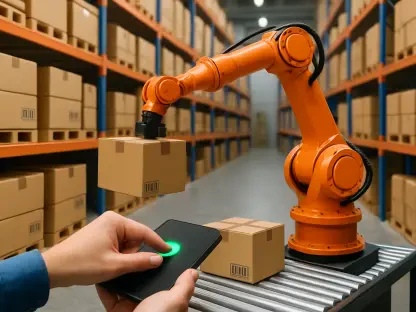
The fundamental value proposition of Artificial Intelligence in project management lies in its ability to systematically handle resource-intensive, routine, and administrative burdens, thereby unlocking the full strategic potential of human professionals. AI-driven tools are exceptionally adept at executing tasks such as compiling daily project updates, dispatching scheduling reminders, performing meticulous data entry, and managing general administrative workflows. This automation liberates skilled team members from the drudgery of repetitive work, allowing them to redirect their focus toward higher-value activities like innovation, complex problem-solving, and stakeholder engagement. At its core, AI excels at processing a vast and intricate web of variables—including resource availability, intricate task dependencies, fluctuating urgency levels, and potential risk factors—with a speed and analytical precision that far surpasses manual human assessment. By entrusting this analytical “heavy lifting” to intelligent algorithms, telecommunications organizations can dramatically streamline their operational processes, enhance decision-making accuracy, and create a foundation for effective and sustainable scaling in the face of ever-increasing project demands.
This strategic offloading of administrative tasks does more than just improve day-to-day efficiency; it fundamentally reshapes the operational capabilities of an organization. When human talent is no longer mired in the minutiae of project tracking and coordination, its cognitive resources are freed to engage in the creative and strategic thinking that drives true competitive advantage. This shift allows teams to become more proactive rather than reactive, anticipating potential roadblocks and architecting innovative solutions before issues escalate. In the context of large-scale telco initiatives like 6G network rollouts, where project timelines span years and involve thousands of interdependent components, the ability for AI to manage the granular details allows human managers to maintain a high-level, strategic overview. Consequently, organizations can handle a greater volume and complexity of projects without a corresponding linear increase in headcount, fostering a culture of agility and resilience that is essential for thriving in the dynamic telecommunications industry. This synergy allows for more robust planning and a greater capacity for innovation.
Market Validation and Industry Adoption
The strategic imperative to adopt AI in project management is not a speculative trend but a tangible reality underscored by compelling market data and widespread industry consensus. The global market for AI in project management is on an explosive growth trajectory, projected to expand from $3.28 billion in 2024 to a staggering $10.37 billion by 2032. This significant financial investment reflects a deep and growing confidence among business leaders in AI’s capacity to bring order, predictability, and efficiency to increasingly complex operational environments. This sentiment is further validated by expert analysis from the Project Management Institute, which forecasts that a remarkable 80% of all project management tasks will be handled or significantly augmented by AI by the year 2030. This statistic points toward a profound transformation in the very nature of project-related work, where AI is not just a peripheral tool but a central component of the management ecosystem, reshaping roles and responsibilities across the board for years to come.
Specifically within the telecommunications sector, the adoption of AI is already well underway and accelerating rapidly, driven by the unique scale and complexity of industry projects. A recent study indicates that nearly 90% of telecommunications companies are currently utilizing AI in some capacity, with a notable 41% actively engaged in scaling up their deployments across various business functions. This high rate of adoption is a direct response to the immense challenges posed by next-generation infrastructure projects. Furthermore, the belief in AI’s transformative potential is pervasive at the leadership level, with 82% of executives agreeing that AI will fundamentally reshape the field of project management within the next five years. This executive buy-in is critical, as it signals that AI integration is being treated as a core strategic priority essential for maintaining a competitive edge, rather than a mere technological experiment. This collective movement indicates a clear understanding that harnessing AI is no longer optional for survival and growth.
Balancing Automation with Human Expertise
The Indispensable Human Element
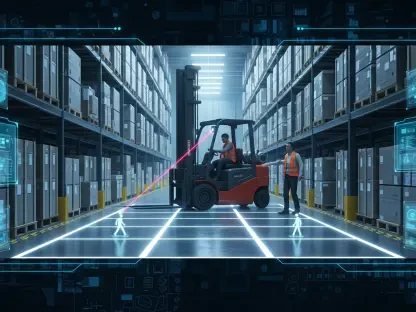
Despite the powerful and ever-expanding capabilities of Artificial Intelligence, the most effective and sustainable outcomes are consistently achieved through a symbiotic partnership between AI-led administration and skilled human judgment. While AI systems excel at high-speed data processing, pattern recognition, and quantitative analysis, they fundamentally lack the nuanced qualities that define human expertise. Critical project management functions such as strategic decision-making, stakeholder negotiation, and creative problem-solving still depend heavily on human intuition, emotional intelligence, and a deep contextual understanding of organizational culture and goals. Technology cannot, for instance, replicate the empathy required to manage a stressed project team or the foresight needed to navigate complex interpersonal politics among key stakeholders. This reality positions AI not as a replacement for human managers but as a sophisticated support system, one that handles the intensive analytical work, thereby empowering its human counterparts to focus on these uniquely human-centric responsibilities that drive project success.
This collaborative model reframes the role of AI from an autonomous decision-maker to an intelligent advisor. For instance, an AI can analyze thousands of data points to recommend an optimal project timeline, but a human project manager is still required to validate that recommendation against the broader strategic objectives of the business and communicate it effectively to the team. The reflection of an entrepreneur pondering delegation—”What if hiring support is the very thing you need to get organised, instead of just getting through the day?”—perfectly captures this dynamic. In this context, AI serves as the ultimate form of sophisticated support, meticulously organizing the quantitative aspects of a project. Meanwhile, internal or outsourced human professionals oversee the qualitative dimensions, such as fostering team cohesion, managing client expectations, and adapting to unforeseen strategic pivots. It is this delicate balance between machine efficiency and human wisdom that unlocks the full potential of AI integration and ensures that technology serves human objectives, not the other way around.
Practical Steps for AI Integration
Successfully integrating AI into the complex ecosystem of a telecommunications company is a strategic endeavor that requires meticulous planning and a strong technical foundation. A primary and non-negotiable prerequisite is the availability of clean, well-structured, and accessible data. The efficacy of any AI system is directly proportional to the quality of the data it is trained on; therefore, organizations must first invest in robust data governance and management practices. This foundational step ensures that AI algorithms can generate accurate insights and reliable recommendations, preventing the “garbage in, garbage out” phenomenon that can undermine the entire initiative. Furthermore, companies must conduct a thorough assessment of their existing IT infrastructure to ensure it can support seamless AI integration. Legacy platforms and siloed systems often present significant barriers, potentially requiring substantial investment in modernization to create an environment where AI tools can operate effectively and communicate with other enterprise systems.
Beyond the technical prerequisites, implementing AI requires a thoughtful approach to cybersecurity and governance. Given the sensitive nature of telecommunications infrastructure and data, integrating AI into core project management workflows introduces new potential attack vectors that must be rigorously addressed. While AI-powered security systems can provide real-time threat detection and response, their implementation must be carefully planned, budgeted, and managed to protect critical assets. Perhaps most importantly, organizations must establish clear policies and protocols for human validation. This involves creating a system of checks and balances where AI-generated recommendations, particularly those related to critical decisions, require oversight and approval from a human expert. This human-in-the-loop approach ensures long-term accuracy, fosters trust in the new systems, and maintains accountability, effectively balancing the unparalleled speed of automation with the irreplaceable reliability of seasoned human expertise.
A New Blueprint for Telco Operations
As projects involving 6G and advanced IoT ecosystems grew in complexity, AI transitioned from a peripheral tool to a core component of business operations. The central finding was that organizations that harnessed AI’s true purpose—to support and augment their people—were best positioned for long-term success and resilience. The most forward-thinking leaders proactively rethought their established strategies for resource allocation and priority management. By embracing the human-AI partnership model, they successfully built more agile, efficient, and future-proof organizations that were fully capable of thriving in an increasingly automated world. This strategic shift became the definitive blueprint for navigating the future of the telecommunications industry.