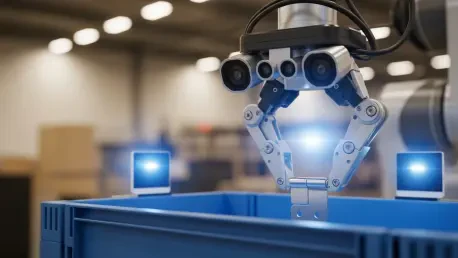

The relentless pressure of modern global supply chains has forced even the most established family-owned enterprises to rethink how they manage the delicate balance between historical legacy and high-tech efficiency. OPO Oeschger, a venerable name in Swiss distribution, recently turned to cutting-edge artificial intelligence to bridge the gap between its legacy infrastructure and the rigorous demands of contemporary automated fulfillment. By implementing AI-powered robotic picking, the company is not just moving boxes; it is redefining how traditional enterprises can leverage high-tech solutions to remain competitive in a high-velocity market.
This transformation marks a significant milestone in “brownfield” automation, a strategy where new intelligence is breathed into existing physical spaces rather than building from scratch. The shift represents a move toward a more agile logistics framework that prizes software intelligence over rigid mechanical structures. For OPO Oeschger, the integration of these systems was less about replacing the past and more about ensuring that their logistical backbone could sustain the rapid acceleration of commerce seen throughout this decade.
Evolution in Motion: Integrating AI into Swiss Logistics
The rapid evolution of e-commerce and supply chain demands has pushed traditional logistics to a breaking point across Europe. OPO Oeschger recognized that its long-standing reputation for reliability would only carry the brand so far if the physical speed of delivery could not match the digital speed of ordering. Consequently, the company sought a solution that could enhance its throughput without requiring the demolition of its current facility. The answer lay in a sophisticated blend of robotics and computer vision that could navigate the complexities of a working warehouse.
By integrating artificial intelligence into their daily operations, the company successfully transitioned from a purely mechanical automation model to one that is cognitively aware. This shift allowed for a more nuanced approach to order fulfillment, where machines began to handle the repetitive, high-volume tasks that previously required constant human intervention. The result is a more resilient supply chain that can pivot in response to market fluctuations without the need for massive capital reinvestment in new buildings.
A Legacy of Precision: The Background of OPO Oeschger
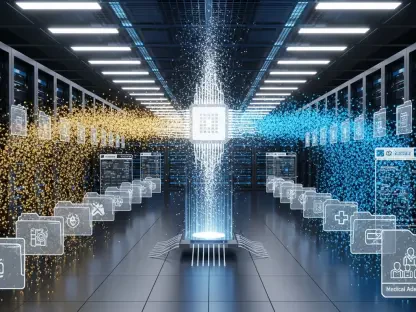
Founded in 1926, OPO Oeschger has established itself as a cornerstone of the construction and woodworking sectors, specializing in the distribution of fittings, tools, and hardware. With an inventory exceeding 70,000 unique items, the company operates a highly sophisticated automated small parts shuttle warehouse that has served as its operational heart for years. However, despite this high level of mechanical automation, the final picking stage remained a manual bottleneck that hindered overall productivity.
The challenge was rooted in the structural constraints of the existing facility. A rigid conveyor system and limited floor space made traditional, bulky automation solutions nearly impossible to implement without a total shutdown. This specific dilemma is common among older distributors: the desire to modernize is present, but the physical environment is unforgiving. Therefore, OPO Oeschger needed a technology that could adapt to the warehouse, rather than requiring the warehouse to adapt to the technology.
Breakthrough Features of Sereact’s Robotic Integration
The partnership with the tech-provider Sereact introduced a robotic picking solution designed to mimic human adaptability rather than requiring a complete overhaul of the warehouse floor. This technology focuses on the “brain” of the robot, allowing it to interpret its surroundings in real time. Unlike older industrial robots that followed a fixed path, these new units use environmental awareness to complete tasks.
Autonomous Item Recognition
The AI utilizes advanced computer vision to identify and handle items without any prior product-specific training or tedious manual data entry for each individual SKU. This is a revolutionary step for a company with 70,000 items, as traditional programming for such a diverse catalog would take years of manual labor. Instead, the robot looks at an object, determines its shape and weight, and decides the best way to grasp it instantly.
This level of autonomy means that as OPO Oeschger adds new tools or hardware to its catalog, the robot is already prepared to pick them. The system learns on the fly, becoming more efficient with every pick and reducing the error rates typically associated with manual sorting. Furthermore, this capability ensures that the transition between different product lines is seamless, requiring no downtime for software updates.
Seamless Brownfield Integration
The robot was specifically engineered to fit into existing manual workstations, interacting with current conveyor technology so precisely that the upstream systems perceive no difference between the robot and a human worker. This “plug-and-play” capability is essential for brownfield sites where stopping production for an upgrade is not an option. The robot essentially takes the place of a person at a station, utilizing the same inputs and outputs.
By maintaining the existing conveyor logic, the company avoided a massive overhaul of its Warehouse Management System (WMS) architecture. This integration ensures that the flow of goods remains consistent across the entire facility. The robot operates as a collaborative unit within the existing chain, proving that modern AI can be a “good neighbor” to older mechanical systems.
Advanced Handling and Stacking Logic
Beyond simple picking, the AI calculates the optimal placement and stability for various packaging dimensions, even performing auxiliary tasks like removing anti-slip mats from containers. This level of detail is critical when dealing with heavy hardware or fragile components that must be packed securely for transport. The robot does not just drop items; it places them with a level of care that mimics a trained employee.
This logic extends to the stacking of containers, where the robot must ensure that the weight distribution is balanced to prevent collapses on the conveyor line. The AI constantly evaluates the volume of the destination box against the items remaining in the order. Such predictive capabilities allow the system to maximize space efficiency, which ultimately reduces shipping costs and waste.
What Sets the OPO Oeschger Solution Apart
What distinguishes this implementation from standard industrial automation is its focus on flexibility over standardization. While traditional robots often require “greenfield” environments—custom-built spaces designed around the machine—OPO Oeschger’s AI-driven system adapts to the environment it was given. By prioritizing software intelligence over mechanical brute force, the system can handle a diverse range of products and packaging types that would typically baffle a conventional programmed robot.
Moreover, the solution emphasizes a low-risk entry into high-tech automation. Instead of a massive, all-or-nothing rollout, the company chose a targeted implementation that addressed a specific bottleneck. This strategy allowed them to prove the concept in a live environment before committing to a full-scale warehouse transformation. This pragmatic approach is a lesson in how to manage technological disruption without jeopardizing the core business.
Current Operations and Implementation Status
Today, the robotic workstation operates as a “living laboratory” within the OPO Oeschger facility. Through a strategic partnership with TGW Logistics, the system is fully interfaced with the WMS, which filters and directs “robot-ready” orders to the automated station. This ensures that the robot is always working on tasks it can complete with 100% accuracy, while more complex or fragile items are routed to human specialists.
Currently, the robot’s speed is intentionally calibrated to match the pace of the surrounding manual infrastructure. This ensures a stable process flow while the company gathers data and refines the interface logic for increasingly complex mixed-item orders. The goal is not immediate maximum speed, but rather a perfect integration that maintains the overall rhythm of the warehouse.
Reflection and Broader Impacts
The primary strength of this project was found in its pragmatic approach to innovation. By starting with a single unit and focusing on software interoperability, OPO Oeschger successfully avoided the risks of a massive, failed rollout. The focus shifted from immediate labor reduction to the acquisition of institutional knowledge, allowing the company to understand exactly how AI behaves in a high-stress logistics environment. This experience provided a level of technical maturity that few of its competitors possessed.
The broader impact of this case study served as a blueprint for the global logistics industry, proving that AI could eliminate traditional barriers to robotic entry. As these systems became more adept at handling “non-standard” items, the role of the human worker shifted toward high-level oversight and the management of exceptionally complex tasks. The success here signaled a future where AI-driven adaptability became the standard requirement for warehouse hardware, rather than a luxury for the few.
Building the Future of Automated Distribution
The transformation at OPO Oeschger demonstrated that the true value of AI in logistics lay in its ability to integrate into human-centric environments without requiring a total infrastructure reset. By successfully bridging the gap between automated storage and manual picking, the company secured a scalable foundation for growth throughout the latter half of the decade. This evolution allowed the team to focus on strategic improvements rather than manual firefighting.
As OPO Oeschger prepared to deploy additional units, the company stood as a testament to the power of strategic, AI-driven evolution in the modern supply chain. The project moved beyond the experimental phase and became a core part of their operational identity. Businesses looking to follow this path should prioritize software flexibility and seek partnerships that emphasize long-term learning over short-term hardware gains. For those interested in deeper technical insights, exploring the integration between Sereact’s AI and TGW’s conveyor systems offers a clear roadmap for the next generation of distribution centers.