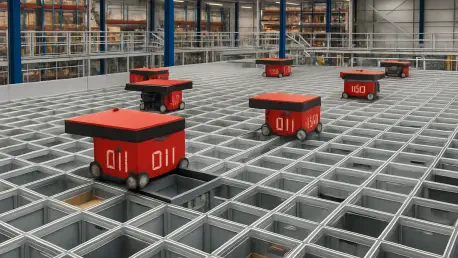

The rapid acceleration of global e-commerce has forced modern logistics providers to abandon traditional manual warehousing in favor of highly sophisticated, robotic fulfillment systems that can process thousands of orders per hour with pinpoint accuracy. This evolution is most visible at Arvato’s Hams Hall site in Birmingham, UK, where the company has significantly expanded its automated capabilities to meet the needs of high-growth sectors such as fashion, technology, and healthcare. By integrating the AutoStore system, the international logistics provider has successfully transitioned from labor-intensive operations to a data-driven model that prioritizes speed and scalability. This strategic shift is not merely about replacing human effort with machines; rather, it represents a sophisticated overhaul of the entire supply chain logic, ensuring that third-party logistics providers can remain agile in a market where consumer expectations are higher than ever before. This analysis explores how such technical advancements are redefining the standards for modern fulfillment centers.
Strategic Flexibility and Technical Performance
Achieving Scalability through Modular Design
The implementation of the AutoStore system at the Hams Hall facility represents a fundamental shift toward modular infrastructure in the logistics sector. Currently, the system utilizes a high-density grid that houses 87,600 individual bins, providing a storage capacity for approximately 1.2 million units within a remarkably compact footprint. This grid-based approach allows the facility to maximize vertical and horizontal space, effectively eliminating the wasted air that typically characterizes traditional racking environments. Because the robots navigate the top of the grid to retrieve bins from sixteen rows deep, the system maintains a high level of density while ensuring that any single item remains accessible within minutes. This specific design choice allows Arvato to support the aggressive inventory requirements of international brands, particularly in the fashion and consumer electronics sectors, where product variety is high and stock turnover must be managed with extreme precision to avoid bottlenecks.
Beyond simple storage density, the modular nature of this robotic solution provides a critical advantage for businesses facing unpredictable growth trajectories. Traditional warehouse automation often requires rigid, fixed conveyor belts or massive structural changes that can take years to plan and implement, often becoming obsolete before they are fully operational. In contrast, the Hams Hall installation was designed to be scaled incrementally, allowing for the addition of more robots or the expansion of the grid without halting daily production. This flexibility is essential in 2026 as market trends fluctuate rapidly, requiring logistics providers to offer infrastructure that grows alongside the client’s actual volume rather than their initial projections. By removing the long lead times associated with traditional overhauls, Arvato ensures that its clients remain competitive and responsive to consumer demand, regardless of whether that demand stems from seasonal peaks or sudden viral marketing success in the global retail space.
Driving Operational Efficiency with Robotic Throughput
Technical performance at the Hams Hall facility has seen a dramatic improvement, with picking rates increasing by 53% compared to conventional manual methods used in previous cycles. During peak periods, the system handles over 26,000 items per day, demonstrating a robust ability to manage high-volume fluctuations that would otherwise require a massive influx of temporary seasonal labor. The transition to robotic retrieval means that the “travel time” previously spent by human workers walking between aisles has been entirely eliminated. Instead, the robots deliver the goods directly to ergonomically designed workstations, where staff members can focus on the quality and accuracy of the final pack. This shift has not only boosted the sheer number of orders processed but has also significantly reduced the margin of error, ensuring that the correct products reach the correct customers on the first attempt, which is a vital metric for maintaining brand reputation.
On the busiest operational days, the robotic grid performs tens of thousands of bin presentations to human operators, maintaining a steady and predictable flow of inventory that manual systems cannot replicate. By automating the core functions of movement and storage, Arvato has successfully reduced the physical burden on its workforce, allowing employees to be reassigned to more complex, value-added tasks within the warehouse. This labor optimization is a key component of the site’s success, as it allows the facility to maintain high output without the common risks of staff burnout or injury associated with high-intensity manual picking. The result is a more resilient operational model that can sustain performance levels throughout the year, from quiet mid-season periods to the extreme pressures of the December holiday rush. This technical synthesis of human oversight and robotic speed has created a highly efficient environment that serves as a benchmark for the industry.
Integration, Partnership, and Enhanced Services
Leveraging Collaborative Ecosystems for Rapid Deployment
The success of the Hams Hall project is rooted in a strong three-way partnership between Arvato, the manufacturer AutoStore, and the specialized integrator Kardex. This collaboration enabled a record-breaking three-month implementation period, taking the project from the initial order to live operation in a fraction of the time typically required for large-scale automation. Such rapid deployment is essential for logistics providers who must react quickly to new contracts and shifting market requirements in 2026. The ability to go from a conceptual design to a fully functioning robotic grid in ninety days provides a significant competitive advantage, allowing Arvato to onboard new clients with minimal delay. This speed was achieved through synchronized planning and a deep understanding of the modular hardware, proving that the right choice of partners is just as important as the choice of technology itself when it comes to executing complex supply chain upgrades.
Kardex played a crucial role in this ecosystem by customizing the base technology and integrating various peripheral systems that enhance the core storage function. This included the implementation of auto-bagging machines and Radio Frequency Identification tunnels, which work in tandem with the robots to streamline the outbound process. By creating a seamless link between the storage grid and the packing stations, the integrator ensured that there were no bottlenecks in the workflow. This level of technical synergy is what allows the Hams Hall site to function as a multi-client environment, where different brands with unique requirements can be managed under one roof. The partnership model ensures that the technology is not just installed but is also optimized for the specific operational nuances of the facility, providing a tailored solution that balances high-speed throughput with the flexibility needed to handle a diverse range of consumer products.
Differentiating through Advanced Value-Added Services
Arvato distinguishes itself from basic logistics providers by offering sophisticated services that go beyond simple picking and packing, creating an end-to-end solution for modern brands. The use of Radio Frequency Identification technology throughout the facility ensures near-perfect stock integrity, allowing for massive inventory counts to be completed in hours rather than weeks. For instance, a recent stock count of 500,000 units was finalized in just 48 hours, a feat that would be impossible under manual conditions. This level of accuracy is vital for high-value fashion and technology items where inventory shrinkage can significantly impact the bottom line. Furthermore, the site functions as a bonded warehouse, helping international retailers navigate the complex trade regulations and customs requirements that define the post-Brexit landscape. This status allows clients to store goods closer to their end customers while deferring certain taxes and duties.
Specialized departments within the facility, such as a professional alterations area for clothing and a dedicated returns management center, provide clients with a comprehensive suite of services that few 3PLs can match. In the alterations department, skilled tailors modify garments to individual consumer specifications before they are shipped, adding a level of personalization that enhances the brand experience. Meanwhile, the returns management operation is designed to handle the high volume of reverse logistics common in e-commerce, performing full inspections and refurbishments to ensure that returned items can be returned to stock as quickly as possible. By integrating these high-touch human services with the high-speed efficiency of AutoStore, Arvato has created a hybrid model that addresses every stage of the product lifecycle. This approach ensures that the facility is not just a storage hub, but a critical partner in the client’s overall business strategy.
Future Trends and Market Adaptability
Navigating the Demands of the UK Logistics Market
The Hams Hall operation reflects broader trends in the logistics industry, particularly the shift toward omnichannel fulfillment where a single facility must simultaneously serve both retail stores and online customers. In the United Kingdom, where consumer expectations for delivery speed and easy returns are exceptionally high, automation is no longer an optional luxury but a fundamental requirement for survival. Logistics providers must rely on real-time data to design their solutions, ensuring they remain agile enough to pivot whenever market conditions change. The Hams Hall site was developed with this data-centric philosophy, using predictive modeling to determine the optimal number of robots and workstations needed to meet future demand. This allows the facility to operate with a high degree of precision, minimizing waste and ensuring that resources are always allocated where they are most needed.
Market adaptability in 2026 requires a deep understanding of how consumer behavior influences warehouse operations. As shoppers move fluidly between physical stores and digital platforms, the warehouse must act as a flexible buffer that can handle individual parcel shipments and bulk pallet orders with equal efficiency. The integration of AutoStore provided the necessary agility to bridge this gap, allowing Arvato to manage complex inventory profiles without increasing the physical size of the building. This ability to “pivot and act” with the market is what separates modern leaders from traditional providers. By focusing on technology that supports high-speed processing and accurate tracking, the facility has positioned itself to meet the rigorous demands of the UK market, where the speed of the supply chain often dictates the success of a retail brand. This commitment to innovation ensured that the operation remained resilient in the face of evolving economic pressures.
Cultivating a Modern Template for Global Fulfillment
The integration of AutoStore at the Hams Hall facility established a new benchmark for how human skill and robotic precision could work in tandem to solve modern logistical challenges. By combining modular robotics with specialized services such as garment refurbishment and advanced tracking, the project proved that automation was most effective when used as a dynamic business strategy that scaled with ambition. This implementation demonstrated that the future of third-party logistics relied on the ability to integrate diverse technologies into a single, cohesive workflow. The takeaway from this project was clear: organizations that embraced an adaptable, data-driven approach were best positioned to remain competitive. The project succeeded because it moved beyond the concept of fixed automation, instead focusing on a system that could be expanded or reconfigured as the needs of the global economy continued to shift.
Ultimately, the Hams Hall site provided a template for global fulfillment that prioritized the long-term viability of the supply chain over short-term cost savings. The decision to invest in a modular grid and high-speed robotic picking allowed the facility to offer its clients a level of stability and performance that was previously unattainable. Moving forward, the focus for logistics leaders shifted toward the integration of even more sophisticated data analytics and artificial intelligence to further optimize these robotic grids. By viewing the warehouse as a constantly evolving ecosystem rather than a static storage space, providers like Arvato ensured they were always prepared for the next wave of consumer demand. The success of this integration suggested that the next logical step for the industry was the widespread adoption of standardized, modular automation that could be rapidly deployed across global networks, ensuring that fulfillment remained a driver of growth rather than a bottleneck.