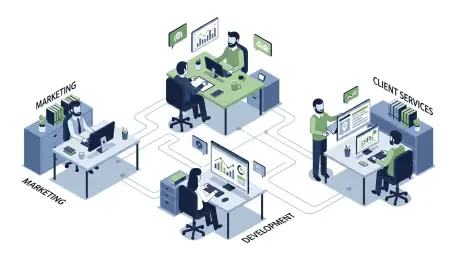

The selection of a work management platform has become one of the most consequential decisions a modern organization can make, profoundly influencing its operational agility, collaborative potential, and capacity for sustained growth. This choice extends far beyond merely tracking tasks; it involves embedding a digital framework that defines how work is structured, prioritized, and executed across every department. In an environment where efficiency and adaptability are paramount, the right platform can serve as a central nervous system, unifying disparate teams and complex workflows into a single, cohesive source of truth. Conversely, a mismatched system can introduce friction, create information silos, and ultimately constrain an organization’s ability to scale effectively. The evolution from simple, task-oriented tools to comprehensive, adaptable Work Operating Systems (Work OS) marks a significant shift in the market, highlighting a growing demand for platforms that can be molded to fit unique business processes rather than forcing businesses to conform to a rigid, pre-defined structure. The true value of these systems is no longer measured solely by feature lists but by their flexibility, scalability, and ability to drive widespread user adoption, ensuring a rapid and measurable return on investment.
Unpacking the Core Philosophies of Work
The fundamental design of a work management platform dictates its capabilities and limitations, shaping every user interaction and defining its suitability for different organizational needs. Asana, Teamwork, and monday work management are built on three distinct philosophies: a task-centric model, a client-centric structure, and a data-centric operating system. Asana is engineered around the structured organization of projects and their constituent tasks, aiming to bring clarity and order to team-based work. Its core function is to convert scattered information from various communication channels into a centralized system of lists and boards. The platform’s philosophy is inherently task-oriented, emphasizing visibility into ownership, deadlines, and progress within a linear project framework. It excels in environments where the primary objective is the efficient tracking and completion of project-based initiatives, offering multiple views like Kanban boards and Gantt-style timelines to cater to individual preferences. Its “multi-homing” feature, which allows a single task to reside within multiple projects, is a key differentiator that ensures consistency across related initiatives. This structure is ideal for internal creative, marketing, and product development teams whose workflows are governed by fixed deadlines and distinct project phases, providing a clear path from start to finish.
In stark contrast, Teamwork is a highly specialized platform meticulously designed for the unique operational realities of agencies and professional services firms. Its architecture is built entirely around a client-centric philosophy, where the fundamental units of work are billable projects delivered to external stakeholders. Consequently, its core functionality is deeply integrated with financial metrics, particularly time tracking, client management, and project profitability. Unlike platforms where time tracking is an optional add-on, in Teamwork it serves as the central component that directly informs budgeting, invoicing, and profitability analysis in real time. The platform excels at providing granular permission controls to securely involve clients in project workspaces while protecting sensitive internal data. Its specialized features for managing retainers and tracking billable hours against budgets make it an indispensable tool for organizations operating on a billable-hour model, such as digital marketing agencies or IT consultancies. However, this specialization becomes its primary limitation when considered for broader organizational use, as its rigid, client-focused structure is ill-suited for the non-billable workflows of internal departments like HR or operations, thereby hindering its potential as a unified, cross-departmental solution.
Finally, monday work management is defined not as a project management tool but as a comprehensive Work Operating System (Work OS), signifying a radical architectural departure from the other two. It provides a flexible, data-centric framework that empowers non-technical teams to build their own custom workflows, applications, and solutions from the ground up. Its core philosophy posits that work is not just a series of tasks or projects but a dynamic, interconnected database of items, which can represent anything from projects and clients to leads, assets, or support tickets. The platform’s power lies in its modular, building-block approach, allowing users to combine customizable elements like columns, views, automations, and integrations to construct workflows that precisely match their unique operational processes. This design supports the creation of complex data relationships across different boards and departments, enabling a holistic view of the entire organization. This universal versatility makes it suitable for a vast range of use cases, from PMOs aligning portfolios with corporate strategy to marketing teams managing campaigns and IT departments handling support tickets. Its primary advantage lies in its ability to connect strategy to execution across the entire enterprise, serving as a single, unified digital workspace.
Customization and Enterprise-Grade Scalability
The ability of a platform to adapt to an organization’s unique processes is a critical determinant of its long-term value and user adoption. Asana offers a degree of customization through pre-defined fields, custom rules, and a variety of project templates, which are effective for standardizing linear project workflows. Users can tailor project boards to include specific data points and automate simple, repetitive actions using a straightforward “trigger-action” system. While this is highly beneficial for bringing structure to common processes like marketing campaigns or product launches, the platform’s underlying task-centric architecture imposes certain limitations. It lacks the deep structural flexibility required to build entirely new types of data models or manage complex, relational inventories. For instance, creating a sophisticated CRM or an asset management system within Asana would be challenging, as it is not fundamentally designed to function as a relational database. This means that as an organization’s needs become more complex and diverse, it may outgrow Asana’s capabilities, necessitating the use of supplementary tools and leading to data fragmentation.
Teamwork, on the other hand, provides a highly optimized but relatively fixed project structure tailored for client services. Its customization options are primarily focused on refining this core workflow, such as creating project templates with predefined task lists, billing rates, and budget settings. The platform’s rigidity is, in many ways, a feature for its target audience, as it enforces best practices for agency operations and ensures consistency in client project delivery. However, this lack of structural flexibility means that organizations must adapt their processes to fit the platform’s framework, rather than the other way around. This makes it extremely difficult to repurpose Teamwork for non-client-facing departments or for workflows that do not revolve around billable hours. The platform’s architecture inherently creates a silo between client delivery teams and internal support functions, making it unsuitable as a central operating system for a multifaceted business. Its value is maximized within its specific niche but diminishes significantly when applied to broader, enterprise-wide operational challenges.
This is where monday work management truly excels, offering unparalleled customization and flexibility through its Work OS framework. Instead of providing rigid templates, it supplies a set of powerful building blocks, including over 30 different column types, that allow teams to construct workflows that precisely mirror their real-world processes. This modularity, combined with its relational capabilities through features like “Connect Boards” columns, enables the creation of sophisticated, interconnected systems. For example, a sales team can manage leads on one board, and when a deal is closed, an automation can instantly create a new client project on a separate board, automatically linking the two items and transferring relevant data. This ability to build custom data models and applications without writing any code empowers every department to create the tools they need to succeed. Furthermore, its enterprise-grade security and governance features, including multi-level permissions that can be set at the account, workspace, board, item, and even column level, provide the robust control that large organizations require. This allows IT departments to maintain security and compliance while giving individual business units the autonomy to innovate and manage their own workflows, making it a truly scalable solution.
The Impact on User Experience and Adoption
The ultimate success of any software implementation hinges on user adoption, and the user experience (UX) of a work management platform plays a pivotal role in driving daily engagement. Asana features a clean, minimalist design that is widely praised for its simplicity and ease of use, particularly for those new to structured project management. Its intuitive interface makes it easy for teams to get started with basic task tracking, creating projects, assigning duties, and setting deadlines. The platform’s visual appeal and straightforward navigation lower the initial barrier to entry, encouraging quick adoption within teams focused on project-based work. However, this simplicity can become a double-edged sword as the volume and complexity of work increase. When managing a large number of interconnected projects, the interface can feel cluttered, and the sheer number of tasks and notifications can become overwhelming for users. While powerful, its focus on tasks can sometimes obscure the broader strategic context, leading to a feeling of being disconnected from the larger organizational goals unless the Goal Tracking feature is diligently maintained by management.
Teamwork presents a functional, data-dense interface that is incredibly powerful for its intended audience but can come with a steeper learning curve for those unfamiliar with agency-specific financial metrics. The dashboard is designed to provide project managers with an at-a-glance overview of critical financial data, such as project budgets, logged billable hours, and overall profitability. For an agency owner or account manager, this information is invaluable and presented in a clear, actionable format. However, for a creative team member or a developer, this financial focus may feel extraneous to their daily tasks, and the interface can seem less intuitive compared to more task-focused platforms. The learning curve is not just about navigating the software but also about understanding the client-service methodology that underpins its entire design. This can make it challenging to roll out the platform to team members who are not directly involved in client billing or project financials, potentially limiting adoption to specific roles within the organization.
monday work management prioritizes a highly visual, colorful, and intuitive interface that deliberately mimics the familiarity of spreadsheets while delivering the powerful functionality of a relational database. This unique approach is credited with significantly lowering the barrier to entry for non-technical users and is a key driver of its high daily engagement rates. The platform’s use of vibrant color-coded statuses, drag-and-drop functionality, and easily customizable views makes managing complex workflows feel accessible and even enjoyable. This focus on a positive user experience is a strategic choice designed to foster widespread adoption across all departments, from HR and finance to marketing and R&D. By empowering end-users to build and modify their own boards and dashboards without needing IT support, the platform fosters a sense of ownership and relevance that is crucial for long-term success. This approach has led to industry recognition for achieving the highest user adoption among enterprise platforms, ensuring that the investment in the software translates into tangible productivity gains and a rapid return on investment.
Evaluating Advanced Operational Capabilities
Beyond basic task and project management, the true power of these platforms is revealed in their advanced functionalities, particularly in automation, resource management, and AI-powered intelligence. Asana’s automation capabilities are built around a simple yet effective system of “Rules,” which follow a basic “trigger-action” logic. For example, a user can create a rule that states if a task’s status is changed to “Done,” then the project manager is automatically notified. This system is user-friendly and highly effective for automating routine procedural steps and reducing manual administrative work within a single project. However, its capabilities are somewhat limited when it comes to creating complex, multi-step workflows that involve conditional logic or require actions across different projects or teams. While it excels at streamlining tasks within its hierarchical structure, it is less equipped to handle the intricate, cross-functional handoffs that characterize many modern business processes, often requiring integrations with third-party automation tools to achieve more sophisticated workflows.
In the realm of resource management, each platform reflects its core philosophy. Asana provides workload visualization features in its higher-tier plans, allowing managers to see task distribution across their team based on the number of tasks assigned or the estimated time for completion. This is valuable for preventing burnout and ensuring a balanced distribution of work within a specific project. Teamwork, true to its nature, approaches resource management from a financial perspective. It excels at tracking billable utilization rates, forecasting resource needs based on committed client hours, and ensuring that team members are allocated efficiently to maximize project profitability. This makes it an exceptional tool for capacity planning in a professional services environment. monday work management, however, offers a more dynamic and flexible approach with its “Workload View.” This feature provides an instant, visual representation of team capacity that can be measured using various metrics, such as hours, story points, or any other custom effort value. Managers can see at a glance who is over or under-allocated across multiple projects and rebalance workloads with a simple drag-and-drop interface, providing a holistic view of team capacity that is not tied to a single project or billing model.
The integration of Artificial Intelligence is rapidly transforming the work management landscape, moving beyond simple automation to predictive and proactive assistance. Asana has introduced AI-powered features like “Smart Goals,” which can suggest project milestones based on historical data, and other functions aimed at improving personal productivity through intelligent sorting and summarization. Teamwork’s AI capabilities are narrowly focused on its core competency, providing intelligent suggestions for time estimation and budget forecasting for client projects. In contrast, monday work management deploys a more sophisticated and holistic AI that analyzes data across the entire organization. Its “Portfolio Risk Insights” feature can proactively scan all active projects to identify and flag potential risks, such as scope creep, budget overruns, or resource conflicts, before they become critical issues. Furthermore, the introduction of “Digital Workers” represents a significant leap forward. These AI agents can be tasked with actively auditing workflows, generating complex reports, and even suggesting process optimizations, moving beyond simple text generation to become active participants in the management and improvement of work itself.
The Final Verdict on a Growth-Oriented Platform
The decision between Asana, Teamwork, and monday work management was ultimately driven by an organization’s specific operational needs, complexity, and long-term strategic ambitions. The analysis revealed that Asana stood as an excellent choice for teams requiring a robust, user-friendly tool for managing internal projects with clear, linear workflows. Its strengths in task organization and project visibility made it ideal for departments like marketing and product development. Similarly, Teamwork proved to be the undisputed specialist for agencies and service firms whose entire business model revolved around client billing, time tracking, and project profitability. Its specialized feature set provided unparalleled value within that specific niche.
However, for organizations that sought a single, unified platform capable of scaling from an individual team to a global enterprise, monday work management emerged as the superior solution. Its unique Work OS architecture provided the unparalleled flexibility, deep customization, and seamless cross-departmental connectivity required to support diverse and evolving business processes. By functioning as a central digital workspace, it effectively broke down the information silos that often hinder growth, aligning high-level strategic goals with daily execution and empowering teams to build the precise tools they needed to succeed. The platform’s high user adoption rates, rapid return on investment, and comprehensive, enterprise-grade features positioned it not merely as a project management tool, but as a foundational operating system for achieving operational excellence and driving sustainable, long-term growth.