
Imagine a world where vast warehouses operate with the precision of a Swiss watch, storing thousands of goods in a fraction of the space once needed, all while slashing energy costs and environmental impact. This isn’t a distant dream but a reality unfolding in the logistics sector through automated high-density warehousing. As supply chains face mounting pressure to deliver faster and more sustainably, this technology emerges as a transformative force. This review delves into the nuts and bolts of these systems, spotlighting their features, real-world impact, and the path ahead.
Unpacking the Technology Behind High-Density Storage
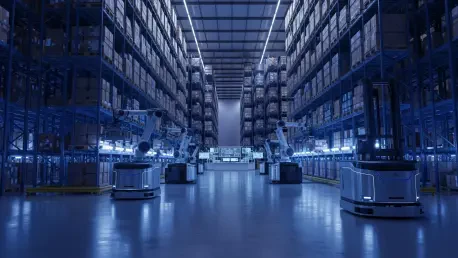
At the heart of automated high-density warehousing lies a simple yet powerful idemaximize storage within minimal space. By leveraging vertical space and compact layouts, these systems achieve staggering efficiency. Take, for instance, a facility boasting over 28,000 pallet locations in a footprint that traditional warehouses could only dream of matching. This design slashes land use, a critical factor in urban or constrained environments, while boosting capacity for businesses scaling up operations.
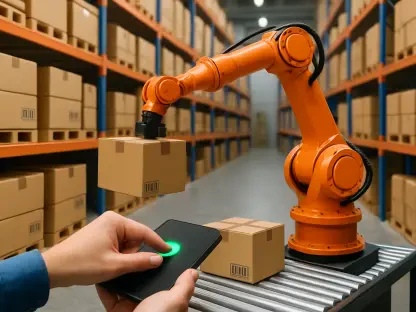
Beyond space savings, automation is the engine driving these warehouses. Robotic systems and integrated software orchestrate seamless inbound and outbound flows, cutting down on human error and time delays. Speed, flexibility, and reliability define their performance, ensuring goods move from shelf to shipment with unparalleled precision. This isn’t just about storage—it’s about redefining how logistics operates in a fast-paced market.
Innovations Setting New Standards
Recent advancements in this field go beyond efficiency, embracing sustainability as a core principle. Modern facilities incorporate eco-friendly materials like low-emission steel and energy-efficient systems that shrink their carbon footprint. Such innovations align with a growing industry push toward greener supply chains, proving that operational excellence and environmental stewardship can coexist.
Moreover, strategic partnerships are fueling progress. Collaborations between industry leaders, such as those coordinating engineering and software integration, ensure these systems aren’t just cutting-edge but also practical for real-world deployment. This synergy of tech and teamwork positions high-density warehousing as a benchmark for future infrastructure, balancing profit with planet-friendly practices.
Real-World Impact Through Case Studies
The true test of any technology lies in its application, and automated high-density warehousing shines brightly here. A standout example is a new distribution center in the Czech Republic, tailored for the hygiene products industry. This facility not only optimizes logistics with rapid processing but also enhances workplace safety and ergonomics, setting a high bar for product delivery standards.
What’s striking is how these implementations ripple outward. By automating repetitive tasks, companies reduce physical strain on workers while ensuring consistent quality for customers. This blend of human-centric design and tech-driven efficiency illustrates the broader potential of such systems across diverse sectors, from retail to manufacturing.
Challenges on the Horizon
However, the road to widespread adoption isn’t without bumps. High initial costs pose a significant barrier, often requiring substantial upfront investment that smaller firms may struggle to justify. Additionally, the technical complexity of integrating automation with existing systems can stall progress, demanding expertise that isn’t always readily available.
Regulatory hurdles also loom large, especially around sustainability standards that vary by region. Yet, efforts to address these challenges are underway through innovative collaborations that streamline implementation. By sharing knowledge and resources, industry players are working to lower these barriers, paving the way for broader access to this transformative technology.
Looking Ahead at Future Possibilities
Peering into the coming years, the trajectory of automated high-density warehousing appears promising. Advances in automation tech, from smarter robotics to AI-driven logistics, are poised to further enhance performance. As adoption grows, industries beyond logistics—think healthcare or e-commerce—could tap into these systems for tailored solutions.
The long-term impact on supply chain sustainability also stands out. With energy efficiency and reduced land use at their core, these facilities are likely to shape industry standards for decades. If current trends hold, they could redefine operational norms, making high-density warehousing not just an option but a necessity for competitive edge.
Final Reflections and Next Steps
Looking back, this exploration revealed how automated high-density warehousing reshaped logistics with its blend of space efficiency and cutting-edge automation. Its real-world applications demonstrated tangible benefits, from streamlined operations to safer workplaces. The commitment to sustainability woven into these projects added a layer of responsibility that resonated deeply with modern industry values.
Moving forward, the focus should shift to making this technology more accessible. Industry stakeholders ought to prioritize scalable solutions and funding models that ease the financial burden for smaller enterprises. Collaborative innovation must continue, ensuring that technical and regulatory challenges don’t hinder progress. Ultimately, embracing this tech on a wider scale could transform supply chains into models of efficiency and environmental care, setting a precedent for future advancements.