
I’m thrilled to sit down with Marco Gaietti, a veteran in the field of sustainable automotive manufacturing and hydrogen fuel cell technology. With decades of experience in business management, Marco has been at the forefront of integrating innovative solutions into industrial operations, particularly in the automotive sector. Today, we’re diving into the groundbreaking deployment of hydrogen fuel cell technology in BMW’s Leipzig plant, exploring how this innovation is reshaping intralogistics, boosting efficiency, and advancing sustainability. Our conversation touches on the journey of developing cutting-edge fuel cell systems, the real-world impact on factory operations, and the broader potential of hydrogen power in material handling across industries.
Can you share the story behind the development of the hydrogen fuel cell system that powers BMW’s new fleet of Automated Guided Vehicles at their Leipzig plant, and what key lessons from the three-year trial shaped its final design?
Absolutely, James, it’s been quite a journey. The project to power BMW’s AGVs with hydrogen fuel cells started with a vision to tackle the inefficiencies of traditional battery systems in high-demand environments like intralogistics. During the three-year trial, we retrofitted battery-powered AGVs with our fuel cell technology and rigorously tested them in real-world conditions at the Leipzig plant. One standout lesson was the dramatic reduction in downtime—refueling with hydrogen took mere seconds compared to the hours needed for battery charging, which directly led to a 20% fleet reduction while maintaining output. I remember a pivotal moment when we saw the AGVs running near-continuously during a peak production cycle; it was a visceral confirmation of the system’s reliability. That feedback pushed us to refine the integration for seamless operation, ensuring the final design was purpose-built for endurance and flexibility in a cutting-edge facility like BMW’s.
What were some of the biggest hurdles in integrating hydrogen-powered AGVs into BMW’s operations, and can you recall a specific moment where this technology made a tangible difference?
Integrating hydrogen-powered AGVs into a bustling plant like Leipzig, with its 6,800 employees and 1,300 cars rolling out daily, was no small feat. One major hurdle was ensuring the refueling infrastructure could keep pace with the operational tempo—setting up safe, efficient hydrogen stations in a live production environment required meticulous planning and coordination. We also had to train staff on handling hydrogen, which initially felt daunting given its novelty. I’ll never forget a day during the trial when a sudden surge in production demand hit; normally, battery AGVs would’ve been sidelined for hours recharging, but our hydrogen units were back in action almost instantly after a quick refuel. That moment, watching the line keep moving without a hitch, really underscored the operational edge this tech provides—it was a game-changer for flexibility and a proud milestone for the team.
How does the air-cooling technology in your fuel cell systems enhance the performance of AGVs in a high-tech plant like BMW’s, and what went into perfecting this feature?
The air-cooling technology in our fuel cells is a cornerstone of their effectiveness, especially for AGVs in a demanding setting like BMW’s Leipzig facility. Its class-leading energy density means we can pack significant power into a compact, lightweight unit, which is critical for AGVs that need to navigate tight spaces and carry heavy loads without bulk. Designing this wasn’t just about engineering specs; it was about relentless testing to ensure the system could handle the heat—literally and figuratively—of continuous operation. I recall a stress test where we pushed the system beyond typical limits, simulating a grueling production day, and the cooling held up flawlessly, maintaining performance where others might’ve faltered. That durability translates to less maintenance and more uptime for BMW, which is everything in a plant where every second counts. Fine-tuning this involved countless iterations, but seeing it outperform expectations in a real factory setting made every late night in the lab worth it.
With 50 hydrogen AGVs already in action at Leipzig, how have you seen this technology transform daily operations, and where have the most striking improvements emerged?
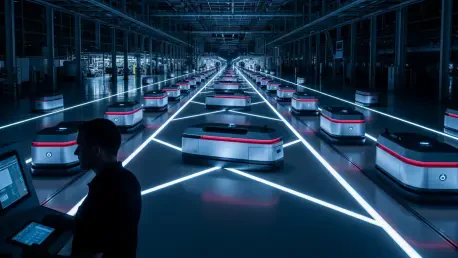
The rollout of the first 50 hydrogen AGVs at Leipzig has been transformative, reshaping how the plant handles its intralogistics with a leaner, greener approach. One of the most immediate impacts is the boost in operational efficiency—eliminating long charging stops means these vehicles are almost always on the move, supporting the production of 1,300 cars a day with fewer units. I’ve noticed the most striking improvements in the component delivery workflows; there’s a particular assembly line section where the AGVs now maintain a near-constant flow of materials, something battery systems struggled with due to downtime. Walking through the plant, you can feel the difference—the hum of uninterrupted activity is almost palpable. Plus, knowing these vehicles emit zero emissions aligns with BMW’s sustainability goals, which adds a layer of pride for everyone involved. It’s not just about numbers; it’s about setting a new standard for what a modern factory can achieve.
Looking beyond BMW, what makes hydrogen fuel cell technology so well-suited for intralogistics across various industries, and can you share a memorable example that highlights its advantages?
Hydrogen fuel cell technology is a natural fit for intralogistics across industries because it addresses the core needs of uptime, reliability, and environmental responsibility in ways traditional power sources can’t match. In warehouses, forklifts, or access platforms, the quick refueling capability—often just seconds—means equipment isn’t sitting idle, which is critical in fast-paced settings where delays ripple through operations. Beyond that, the zero-emission profile of hydrogen, especially when sourced as green hydrogen, helps companies meet stringent sustainability targets without sacrificing performance. I remember a project with a major warehousing operation where we deployed fuel cells in forklifts; during a peak holiday season, the client reported near-perfect uptime compared to their old battery systems, which often lagged with recharging bottlenecks. That success wasn’t just in the metrics—it was in the relief you could see on the operators’ faces knowing they could keep up with demand. It’s moments like that which drive home why hydrogen is poised to redefine material handling on a global scale.
What is your forecast for the future of hydrogen fuel cell technology in sustainable manufacturing over the next decade?
I’m incredibly optimistic about the trajectory of hydrogen fuel cell technology in sustainable manufacturing over the next ten years. I believe we’ll see a rapid expansion of its adoption, not just in automotive plants like BMW’s but across sectors like logistics, shipping, and heavy industry, as infrastructure for green hydrogen production scales up. The technology will likely become more cost-competitive, with advancements in energy density and durability pushing performance even further, making it a no-brainer for companies aiming to cut emissions without compromising efficiency. I foresee regulatory pressures and corporate sustainability goals accelerating this shift, potentially positioning hydrogen as a backbone of zero-emission industrial operations by the decade’s end. My hope is that we’ll look back in 2035 and see hydrogen-powered systems as the standard, with Leipzig’s AGVs as one of the pioneering steps that got us there. It’s an exciting time, and I think the momentum we’re building now will only snowball.