
The modern workplace often resembles a frantic race where the finish line perpetually moves further away, a paradox where increased effort seems to generate even more work, leaving teams caught in a cycle of packed schedules, overflowing inboxes, and constantly postponed strategic initiatives. This common struggle highlights a fundamental flaw in the traditional paradigm that equates long hours with dedication and output. The belief that simply working harder will lead to greater success is not just outdated; it is a direct path to organizational burnout and stagnated growth. The alternative is not about finding minor shortcuts but about a profound operational and cultural shift toward leverage—using systems, technology, and strategic thinking to multiply the impact of every hour invested. This approach transforms the focus from mere activity to tangible business outcomes, redefining productivity itself. By moving beyond the brute-force method of adding more hours to the day, organizations can unlock a more sustainable, scalable, and ultimately more effective model for achieving their most ambitious goals.
The Core Philosophy of Smarter Work
The foundational principle of working smarter rests on a deliberate shift from valuing effort to valuing outcomes, directly challenging the “face-time” culture by asserting that the true measure of work lies in its results, not the time it takes to complete. This philosophy demands a radical inversion of traditional metrics, replacing superficial indicators like hours worked or emails sent with tangible achievements such as features shipped, revenue generated, or customer problems solved. An outcome-driven approach redefines success, making a task completed in twenty focused hours demonstrably superior to one that drags on for sixty. A key component of this principle is the direct connection of daily work to overarching strategic objectives, which ensures every team member understands how their individual contributions propel the entire business forward. When the “why” behind the work is clear, it naturally encourages efficiency and prioritizes tasks that deliver the most significant impact, moving the organization away from a culture of busyness and toward one of achievement.
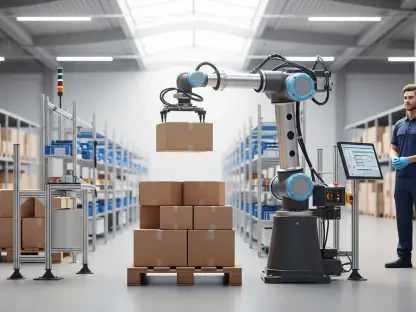
This strategic shift is amplified by the intelligent deployment of systems and technology, which act as powerful force multipliers. While the output of any individual has inherent limits, a well-designed operational system can scale almost infinitely, breaking the linear relationship between input and output. Working smarter involves strategically leveraging technology, particularly AI and integrated work operating systems, to handle the routine, repetitive, and administrative tasks that consume valuable human time and cognitive energy. By automating this administrative work—such as data entry, status updates, reporting, and notifications—organizations can liberate their teams to concentrate on high-value activities that demand uniquely human skills like strategic thinking, creative problem-solving, and complex decision-making. Simultaneously, a core objective is to ruthlessly identify and eliminate wasteful activities, including the cognitive drain of context switching, the friction of manual reporting, and the delays caused by approval bottlenecks. By removing this operational static, organizations create the capacity for the deep, focused work that delivers measurable business value.
The Modern Imperative and Its Warning Signs
The transition to a smarter operational model has evolved from a competitive advantage to a critical necessity for survival in today’s demanding business landscape. The pace of market dynamics has accelerated dramatically, requiring organizations to execute complex, interconnected workflows with unprecedented speed. This complexity is compounded by the rise of hybrid and remote work environments, which have fragmented communication channels and created information silos that impede knowledge flow and collaboration. Teams are also contending with a deluge of data, often struggling to convert this information into timely, actionable insights, which leads to analysis paralysis rather than informed decision-making. Layered on top of these challenges are persistent budgetary constraints, which compel teams to achieve greater output with limited resources, making it imperative to maximize the productivity of every employee. Within this context, relying on individual heroics and sheer effort is an unscalable and unsustainable strategy. Systematic solutions, especially those that unify work streams within a single, integrated platform, are essential for gaining organizational visibility, identifying risks in real-time, and fostering a culture of data-driven agility.
Before an organization can implement solutions, it must first recognize the symptoms of a system strained to its limits by a “work harder” mentality. One of the most telling indicators is a culture of constant busyness without corresponding productivity, where calendars are perpetually full but key strategic projects fail to advance. This is often accompanied by slipping deadlines despite teams consistently working long hours, a clear sign that the process itself, not the team’s effort, is the problem. This unsustainable pressure frequently culminates in widespread team burnout, high turnover, and low morale, which should be treated as operational failures, not just human resources issues. Another warning sign is the recurrence of the same errors and emergencies, indicating that the organization is treating symptoms instead of addressing the root cause of systemic issues. Further evidence can be found in the dominance of manual work, where highly skilled employees spend significant time on low-value administrative tasks, and in the prevalence of information silos that lead to duplicated efforts and miscommunication. Perhaps the ultimate red flag is an inability to scale output without proportionally increasing headcount, demonstrating a fundamental lack of efficient, scalable systems.
Actionable Strategies for High-Leverage Productivity
Initiating the shift toward smarter work begins with reclaiming control over individual and team focus through disciplined time management practices. A powerful first step is to batch similar activities into dedicated time blocks—for instance, processing all emails in two focused 30-minute sessions—to minimize the significant cognitive cost of context switching. This strategy should be paired with the implementation of time blocking, where non-negotiable periods are scheduled for deep, cognitively demanding tasks. This protected time, fiercely guarded against meetings and other distractions, creates the necessary environment for fostering creativity and solving complex problems. Furthermore, organizations can build significant momentum by standardizing recurring work.Fixed version:
The modern workplace often resembles a frantic race where the finish line perpetually moves further away, a paradox where increased effort seems to generate even more work, leaving teams caught in a cycle of packed schedules, overflowing inboxes, and constantly postponed strategic initiatives. This common struggle highlights a fundamental flaw in the traditional paradigm that equates long hours with dedication and output. The belief that simply working harder will lead to greater success is not just outdated; it is a direct path to organizational burnout and stagnant growth. The alternative is not about finding minor shortcuts but about a profound operational and cultural shift toward leverage—using systems, technology, and strategic thinking to multiply the impact of every hour invested. This approach transforms the focus from mere activity to tangible business outcomes, redefining productivity itself. By moving beyond the brute-force method of adding more hours to the day, organizations can unlock a more sustainable, scalable, and ultimately more effective model for achieving their most ambitious goals.
The Core Philosophy of Smarter Work
The foundational principle of working smarter rests on a deliberate shift from valuing effort to valuing outcomes, directly challenging the “face-time” culture by asserting that the true measure of work lies in its results, not the time it takes to complete. This philosophy demands a radical inversion of traditional metrics, replacing superficial indicators like hours worked or emails sent with tangible achievements such as features shipped, revenue generated, or customer problems solved. An outcome-driven approach redefines success, making a task completed in twenty focused hours demonstrably superior to one that drags on for sixty. A key component of this principle is the direct connection of daily work to overarching strategic objectives, which ensures every team member understands how their individual contributions propel the entire business forward. When the “why” behind the work is clear, it naturally encourages efficiency and prioritizes tasks that deliver the most significant impact, moving the organization away from a culture of busyness and toward one of achievement.
This strategic shift is amplified by the intelligent deployment of systems and technology, which act as powerful force multipliers. While the output of any individual has inherent limits, a well-designed operational system can scale almost infinitely, breaking the linear relationship between input and output. Working smarter involves strategically leveraging technology, particularly AI and integrated work operating systems, to handle the routine, repetitive, and administrative tasks that consume valuable human time and cognitive energy. By automating this administrative work—such as data entry, status updates, reporting, and notifications—organizations can liberate their teams to concentrate on high-value activities that demand uniquely human skills like strategic thinking, creative problem-solving, and complex decision-making. Simultaneously, a core objective is to ruthlessly identify and eliminate wasteful activities, including the cognitive drain of context switching, the friction of manual reporting, and the delays caused by approval bottlenecks. By removing this operational static, organizations create the capacity for the deep, focused work that delivers measurable business value.
The Modern Imperative and Its Warning Signs
The transition to a smarter operational model has evolved from a competitive advantage to a critical necessity for survival in today’s demanding business landscape. The pace of market dynamics has accelerated dramatically, requiring organizations to execute complex, interconnected workflows with unprecedented speed. This complexity is compounded by the rise of hybrid and remote work environments, which have fragmented communication channels and created information silos that impede knowledge flow and collaboration. Teams are also contending with a deluge of data, often struggling to convert this information into timely, actionable insights, which leads to analysis paralysis rather than informed decision-making. Layered on top of these challenges are persistent budgetary constraints, which compel teams to achieve greater output with limited resources, making it imperative to maximize the productivity of every employee. Within this context, relying on individual heroics and sheer effort is an unscalable and unsustainable strategy. Systematic solutions, especially those that unify work streams within a single, integrated platform, are essential for gaining organizational visibility, identifying risks in real time, and fostering a culture of data-driven agility.
Before an organization can implement solutions, it must first recognize the symptoms of a system strained to its limits by a “work harder” mentality. One of the most telling indicators is a culture of constant busyness without corresponding productivity, where calendars are perpetually full but key strategic projects fail to advance. This is often accompanied by slipping deadlines despite teams consistently working long hours—a clear sign that the process itself, not the team’s effort, is the problem. This unsustainable pressure frequently culminates in widespread team burnout, high turnover, and low morale, which should be treated as operational failures, not just human resources issues. Another warning sign is the recurrence of the same errors and emergencies, indicating that the organization is treating symptoms instead of addressing the root cause of systemic issues. Further evidence can be found in the dominance of manual work, where highly skilled employees spend significant time on low-value administrative tasks, and in the prevalence of information silos that lead to duplicated efforts and miscommunication. Perhaps the ultimate red flag is an inability to scale output without proportionally increasing headcount, demonstrating a fundamental lack of efficient, scalable systems.
Actionable Strategies for High-Leverage Productivity
Initiating the shift toward smarter work begins with reclaiming control over individual and team focus through disciplined time management practices. A powerful first step is to batch similar activities into dedicated time blocks—for instance, processing all emails in two focused 30-minute sessions—to minimize the significant cognitive cost of context switching. This strategy should be paired with time blocking, where non-negotiable periods are scheduled for deep, cognitively demanding tasks. This protected time, fiercely guarded against meetings and other distractions, creates the necessary environment for fostering creativity and solving complex problems. Furthermore, organizations can build significant momentum by standardizing recurring work. Creating reusable templates for project plans, onboarding checklists, and creative briefs eliminates the need to reinvent the wheel for every initiative, ensuring consistency and accelerating execution across the board. This is complemented by mastering strategic delegation, where tasks are assigned not just based on availability but also as a developmental tool to match assignments with team members’ skills and growth opportunities, defining clear outcomes while granting autonomy in execution.
Building on these individual habits, teams must address systemic inefficiencies, particularly in communication and collaboration. A critical action is to streamline communication channels by defining clear guidelines for their use; for example, mandating that project updates occur within a work platform, urgent issues are handled in chat, and strategic discussions are reserved for meetings. This approach reduces noise and improves clarity. The meetings themselves must be optimized by mandating that every gathering have a clear purpose, a defined agenda, and a measurable outcome, while recurring status meetings should be eliminated in favor of asynchronous updates to reclaim valuable company time. A disciplined practice of data-driven prioritization is also essential, moving beyond decisions based on urgency or “loudness.” Instead, objective criteria such as revenue potential, customer impact, and strategic alignment should be used to rank initiatives. This requires developing the organizational muscle to say “no” to low-impact activities that do not align with core goals, thereby preserving focus and resources for the high-impact work that drives meaningful progress.
The Transformative Power of AI and Culture
Artificial intelligence has emerged as the ultimate force multiplier in the quest to work smarter, offering capabilities that extend far beyond traditional automation. AI-powered systems can adapt, learn, and generate content, enabling them to handle complex and variable tasks that once required human intervention. Practical applications include intelligently categorizing incoming support tickets, automatically summarizing lengthy meetings and documents, drafting contextual emails, and extracting critical data from unstructured sources. Furthermore, AI-powered “digital workers” can be deployed to autonomously handle entire workflows, allowing organizations to scale their operations without a proportional increase in headcount. Beyond task automation, artificial intelligence enhances strategic decision-making by performing predictive analytics to flag potential project risks before they escalate and by optimizing resource allocation based on team members’ skills and availability. Integrating AI into core workflows is no longer a futuristic vision but a present-day reality that provides a powerful, practical path to augmenting human capabilities and achieving unprecedented levels of organizational efficiency.
Ultimately, the most sophisticated tools and tactics remain insufficient without a supportive organizational culture to sustain them. This requires a leadership-driven mindset shift that moves from valuing heroism, such as last-minute problem-solving, to valuing engineering—the proactive building of robust systems that prevent problems from occurring in the first place. Key elements for fostering this culture include radical transparency, which is achieved by making all work and project data visible in a shared workspace to improve coordination and build trust. Success also hinges on achieving alignment around shared goals, using frameworks like OKRs to ensure all teams and individuals are pulling in the same strategic direction. A commitment to continuous improvement is vital, encouraging teams to regularly conduct retrospectives and challenge the status quo to prevent process stagnation. By publicly recognizing and celebrating efficiency wins—such as teams that automated processes or delivered projects early through smart planning—the organization reinforces the desired behaviors and shifts its cultural focus from celebrating firefighters to celebrating architects of success.