
A pioneering partnership between the Scottish green chemical producer Celtic Renewables and the digital supply chain developer LogChain is providing a powerful answer to one of the biggest questions in global trade by successfully managing the first fully digitalized international shipment of green chemicals from Scotland to Singapore. This groundbreaking initiative, which leverages a private blockchain, serves as a compelling real-world case study, proving that environmental responsibility and commercial viability can be mutually reinforcing goals. By demonstrating a practical model for making global logistics more sustainable, efficient, and transparent, this collaboration offers a clear blueprint for companies of all sizes to reduce waste, enhance compliance, and compete more effectively in an international marketplace that increasingly prioritizes both green credentials and digital integration.
The Landmark Shipment a Blueprint for the Future
The Journey of a Green Chemical
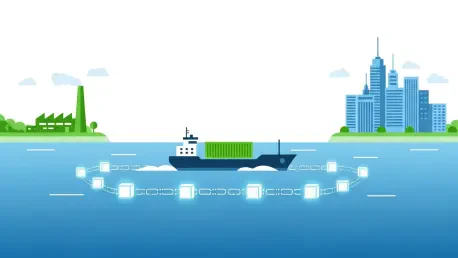
The project centered on a sample shipment of bio-butanol, a sustainable chemical produced by Celtic Renewables at its biorefinery in Grangemouth, Scotland. Embodying the principles of a circular economy, the product is created using locally sourced by-products and waste materials from the food, drink, and agricultural sectors, offering a viable and eco-friendly replacement for traditional fossil fuel-based chemicals. The shipment’s extensive 8,340-nautical-mile journey was meticulously tracked from its departure in Grangemouth on September 24. Traveling from the London Gateway port, it concluded its voyage upon arrival in the island city-state of Singapore on October 26, after a total transit time of 32 days and eight hours. This journey was not just a physical transfer of goods but a demonstration of how innovative production methods can be paired with modern logistics to create a truly green supply chain from origin to final destination, setting a new standard for the industry.
The Technology Behind the Transit
The technological foundation for this achievement was LogChain’s private blockchain software solution, a platform engineered to completely overhaul the entire shipment workflow by digitalizing it from end to end. The system effectively replaces outdated, cumbersome processes that rely on physical paper documentation and fragmented, repetitive email exchanges. In their place, the technology establishes a “single dedicated live digital corridor,” which acts as a unified and secure channel directly connecting the sender and the recipient. Within this corridor, all essential shipping documents and data are transferred electronically, including a comprehensive range of paperwork such as production certificates, commercial invoices, packing lists, Bills of Lading, and Dangerous Goods (DG) certificates. The system’s architecture ensures complete security and provides a fully searchable digital provenance for the product, a feature especially crucial for the highly regulated chemical sector, where verifying the origin and integrity of goods is paramount for compliance and safety.
From Concept to Concrete Results
Quantifiable Gains in Efficiency and Sustainability
The tangible benefits of this digitalized approach were significant and clearly quantified in a post-shipment report. The collaboration achieved a remarkable 50 percent reduction in administrative handling and documentation time, a direct result of several key platform features. Automated task assignments and real-time dashboards significantly reduced coordination delays between the various parties involved in the supply chain. At the same time, integrated platform alerts drastically cut down on email traffic by providing timely, relevant updates directly within the system. Beyond these efficiency gains, the platform enhanced both transparency and compliance by providing all stakeholders with continual, uninterrupted visibility of the shipment’s status and location. This end-to-end transparency, coupled with instant access to all necessary digital paperwork, streamlined compliance processes and improved overall governance. The sustainability benefits were also a primary outcome, as eliminating vast amounts of paper and reducing energy consumption directly contributed to a more environmentally friendly logistics model.
Leadership Perspectives on a Greener Future
The strategic importance of this collaboration was underscored by the leadership of both companies involved. Bettina Brierley, Chief Commercial Officer of Celtic Renewables, emphasized the broader context of achieving net-zero emissions, stating that all industries must integrate low-waste, energy-saving practices into their operations and supply chains. She positioned the partnership as a testament to her company’s holistic commitment to sustainability, which extends beyond producing green chemicals to ensuring their transportation is equally sustainable, framing the project as a powerful example for UK businesses of all sizes. Echoing these sentiments, LogChain CEO Andie McKeown celebrated the project as definitive proof that digital trade can directly facilitate sustainable growth. He asserted that the collaboration shows how technology and partnership can deliver concrete results that benefit trade, the environment, and the broader economy, highlighting the platform’s proven capability to seamlessly and securely manage complex, high-value shipments in a fully compliant manner.
A Model for International Cooperation
This innovative shipment was not conducted in a vacuum; it received crucial support from the International Tank Container Organisation (ITCO) and the UK Government, highlighting its alignment with national and international strategic goals. The project served as a practical manifestation of the strengthening economic relationship between the United Kingdom and Singapore. It directly mirrored the ambitions of key bilateral agreements, including the UK-Singapore Digital Economy Agreement (DEA), which created a formal framework for digital cooperation, and the UK-Singapore Green Economy Framework, which aims to help both nations achieve their decarbonization targets in areas like green transport and low-carbon technologies. The supportive political climate was further evidenced by a visit from the UK’s High Commissioner to Singapore to Edinburgh, part of a wider governmental effort to bolster economic ties. Ultimately, this single shipment demonstrated that when private-sector innovation is backed by robust public policy, it can create scalable models for a truly global green economy.