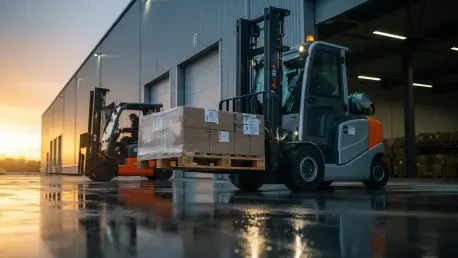

The persistent hum and exhaust fumes of internal combustion engine forklifts have long been the unquestioned soundtrack of warehouses and industrial yards, a symbol of raw, reliable power essential for heavy-duty material handling. For years, the narrative held that while electric models were clean and quiet, they were best suited for the controlled, predictable environment of indoor operations, lacking the muscle and endurance for more demanding outdoor tasks. However, recent technological leaps, highlighted at major industry expositions like LogiMAT, are forcefully challenging this long-standing perception. A new generation of electric forklifts is emerging, engineered not just to compete with their gas and diesel counterparts but to replace them entirely, promising to deliver the same rugged performance without the environmental and operational compromises. This shift marks a potential turning point, suggesting the era of electric dominance in material handling may no longer be a distant prospect but an imminent reality.
Bridging the Power Gap with Crossover Technology
A significant breakthrough in this electric revolution is the development of “crossover” forklifts, a new class of vehicle engineered to blend the formidable strength of ICE trucks with the zero-emission benefits of electric power. These machines are specifically designed to obliterate the traditional line between indoor and outdoor capabilities. For instance, Clark’s latest crossover series showcases this trend with models like the L25-35XE ‘Raider’ and the S25-35XE ‘Renegade.’ The Raider is positioned as a durable, cost-effective workhorse, offering a robust entry point for businesses looking to electrify their fleets without sacrificing longevity or operator visibility. In contrast, the Renegade series is built upon the time-tested chassis of the company’s S-Series ICE trucks, targeting operators who require a higher degree of comfort, advanced safety features, and extensive customization options for maximum operational flexibility. By offering distinct models tailored to different market needs, manufacturers are demonstrating that electric power is no longer a one-size-fits-all solution but a versatile platform capable of meeting diverse and intensive application demands.
The Future Is Flexible with Smart Energy Solutions
Beyond sheer power, the practicality of electric forklifts is being dramatically enhanced by innovations in battery technology and energy management. The modern electric forklift is no longer tethered to a single battery chemistry. A prime example is the “smart battery solution” found in the S-Series Electric line, which introduces unprecedented flexibility. These systems allow a single forklift to seamlessly switch between traditional lead-acid batteries and advanced lithium-ion power packs through a simple software adjustment. This plug-and-play capability is a game-changer for fleet managers, enabling them to adapt their equipment to evolving operational requirements on the fly. A company can start with a lower-cost lead-acid setup and later upgrade to lithium-ion for more demanding, multi-shift applications without replacing the entire vehicle. This adaptability directly translates to a lower total cost of ownership and ensures that the investment remains future-proof. Coupled with significant improvements in ergonomic design and integrated safety systems, these smart energy solutions make the latest electric models not just powerful but also intelligent and user-centric alternatives to legacy ICE equipment.
A Tipping Point for Industrial Electrification
The advancements showcased in the latest generation of electric material handling equipment represent a definitive shift in the industrial landscape. The debate is no longer centered on whether electric forklifts could match the performance of their internal combustion rivals; the evidence confirms they have. The introduction of robust crossover models has erased the boundaries between indoor and outdoor applications, while intelligent, swappable battery systems address long-held concerns about flexibility and operational uptime. These technological milestones have effectively dismantled the final barriers to widespread adoption. For businesses, the decision-making process has evolved from a question of capability to one of strategic implementation. The focus has shifted toward evaluating the compelling long-term value proposition offered by electrification, which includes reduced fuel and maintenance costs, improved operator safety, and alignment with increasingly stringent corporate sustainability goals. The transition to electric power has been established not as a compromise but as a strategic upgrade for a more efficient and responsible future.