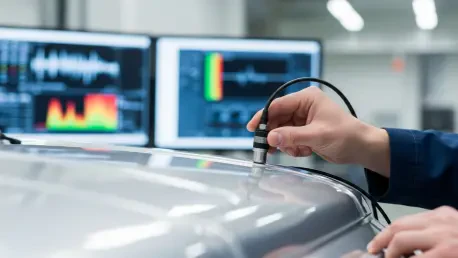

Ford Motor Company recently faced a series of high-profile quality setbacks that wiped billions from its market valuation, proving that even the most advanced machine learning models cannot replace the seasoned intuition of a veteran shop floor engineer. Since the beginning of 2026, the automotive giant has attempted to mitigate warranty costs by deploying sophisticated computer vision arrays across its major assembly plants, yet the results have been decidedly mixed. These automated systems are incredibly adept at identifying binary errors, such as a missing bolt or a misapplied decal, but they frequently struggle with the nuanced, non-linear defects that characterize complex automotive engineering. This reliance on digital oversight has inadvertently created a quality gap where software-verified components fail shortly after reaching the consumer. The situation necessitates a reevaluation of how much trust is placed in algorithms versus the physical verification processes that human workers have mastered over decades of manufacturing experience.
The Paradox of Digital Precision in Heavy Industry
Algorithmic Blind Spots and Physical Realities
The integration of artificial intelligence into the Ford Blue and Model e divisions was intended to streamline production, but it has instead revealed significant limitations in how neural networks interpret physical anomalies. Current machine learning models are trained on massive datasets of perfect parts, which makes them highly sensitive to any deviation, leading to an excessive number of false positives that stall production lines unnecessarily. Conversely, when a defect does not match a pre-defined pattern in the training set, the AI often clears the part for assembly, allowing systemic flaws to propagate through the entire vehicle build. Human inspectors possess a cognitive flexibility that allows them to recognize when a component feels wrong, even if it technically meets the visual parameters set by the scanning software. This ability to synthesize tactile feedback and visual cues remains a hurdle that current generative and predictive AI architectures have yet to overcome effectively.
The Importance of Contextual Data Integration
Beyond the technical limitations of sensors, the data silos that exist within Ford’s sprawling global infrastructure often prevent AI from understanding the full context of a manufacturing defect. While an automated station in the stamping plant might identify a slight thinning in a steel sheet, that information is not always translated into a meaningful warning for the robotic welders further down the line. Skilled human supervisors have traditionally acted as the connective tissue between these disparate stages of production, using their experience to predict how a minor variance in one department will escalate into a major mechanical failure in another. By over-automating these oversight roles, the company risked losing the holistic perspective required to maintain long-term vehicle durability. The challenge now lies in restoring the hierarchy where human intelligence directs the AI, ensuring that the technology serves as an enhancement to human skill rather than a flawed replacement for it during the production cycle.
Strategic Integration of Human Oversight
Skilled Technicians as the Final Logic Gate
The move toward a more balanced quality control ecosystem requires Ford to empower its workforce with tools that augment their natural diagnostic abilities rather than obscuring them. This involves the deployment of human-in-the-loop systems where AI flags potential issues for rapid review by senior technicians who possess the authority to override the machine’s decision-making process. Such a strategy acknowledges that while machines are superior at data processing and repetitive scanning, humans are unmatched in their capacity for troubleshooting and root-cause analysis. By positioning experienced engineers at critical logic gates within the assembly process, Ford can catch the nuanced errors that typically bypass digital sensors, such as the subtle hum of a bearing that indicates an internal casting flaw. This collaborative approach not only improves the final product’s reliability but also fosters a culture of accountability where technology is viewed as a supportive instrument rather than an infallible authority.
Strategic Evolution of the Hybrid Workforce
To truly resolve these systemic quality issues, the industry moved toward a hybrid certification model that prioritized specialized training for assembly personnel. Companies discovered that investing in advanced diagnostics training for the workforce yielded a higher return on investment than purchasing additional sensor arrays that only added layers of complexity to the production line. This shift necessitated a reorganization of the factory floor, where the most experienced workers were moved into high-impact advisory roles to oversee the output of automated clusters. They implemented rigorous feedback loops where the insights gained from manual inspections were fed back into the AI training models, slowly improving the machine’s accuracy through human-guided learning. By treating the shop floor as a laboratory for continuous improvement, manufacturers successfully stabilized their warranty claims and restored consumer confidence. This transition proved that the future of automotive excellence relied on a synergy between digital tools and human judgment.