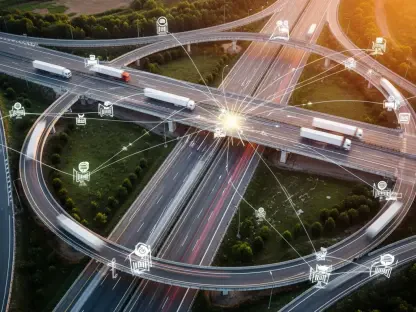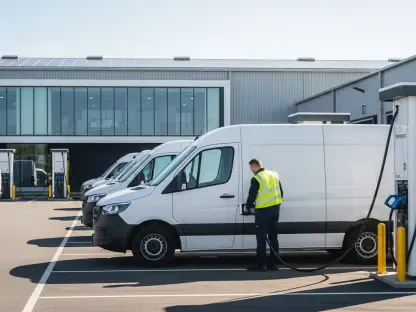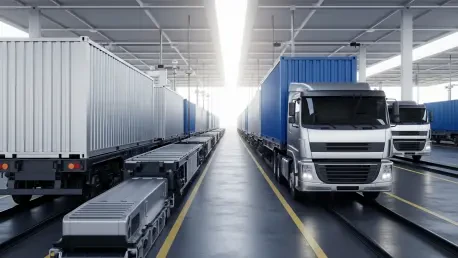

Moving freight across continents has traditionally been synonymous with high emissions, yet the urgency of the climate crisis is forcing a radical transformation of how goods traverse the globe. As international regulations tighten, the freight forwarding industry no longer views sustainability as an optional luxury but as a core operational requirement. This transition involves moving away from diesel-dependent systems toward comprehensive electrification and more intelligent logistics management.
Strategic partnerships have emerged as the primary vehicle for this change, enabling companies to pool resources and infrastructure. By aligning with port authorities and rail operators, forwarders can create seamless “green corridors” that span multiple borders. These collaborations allow for the scaling of low-carbon solutions that would be impossible for a single entity to implement in isolation, effectively redefining the standards for modern commerce.
The Strategic Shift Toward Decarbonizing Global Supply Chains
The necessity for carbon neutrality is driven by both environmental imperatives and the increasing demands of eco-conscious consumers. Freight forwarders are currently navigating the complex transition from fossil-fuel-based transport to electrified logistics, a process fraught with technical and financial hurdles. Replacing established infrastructure requires significant investment and a complete rethink of how energy is managed across the supply chain.
Moreover, the success of these initiatives hinges on the ability to integrate different modes of transport into a unified, low-emission network. This requires sophisticated tracking and coordination to ensure that the carbon footprint is minimized at every stage, from the initial warehouse to the final delivery point. Strategic alliances facilitate this by providing the necessary technological and logistical backbone to support large-scale decarbonization efforts.
Background of the Cargo-Partner and HHLA Pure Alliance
The ongoing collaboration between cargo-partner, a subsidiary of Nippon Express, and Hamburger Hafen und Logistik AG (HHLA) has reached its third year, marking a significant milestone in sustainable shipping. This partnership focuses on the HHLA Pure initiative, which promotes low-emission terminal operations and climate-neutral transport services. By leveraging HHLA’s extensive network, cargo-partner has been able to offer its clients a reliable method for reducing the environmental impact of their shipments.
This alliance is particularly relevant within the broader context of the logistics sector’s sustainability targets. As the industry strives to reduce its total carbon footprint, the integration of carbon-neutral rail and port services provides a proven model for other players to follow. The partnership demonstrates how established logistics giants can adapt their legacy systems to meet modern environmental standards without compromising efficiency.
Research Methodology, Findings, and Implications
Methodology: A Multi-Layered Technical Analysis
Researchers analyzed a transport network that prioritizes electrified rail systems and energy-efficient port terminals to determine the actual reduction in greenhouse gases. A central component of the study was the evaluation of the “insetting” approach, which utilizes direct links between specialized warehouses and rail hubs to eliminate unnecessary truck movements. This method ensures that emissions are reduced at the source rather than just addressed later.
Furthermore, the methodology included a rigorous assessment of the carbon-offsetting process for residual emissions that currently cannot be removed through technology. These emissions are balanced through Gold Standard-certified climate protection projects. This two-pronged strategy ensures that every TEU moved under the program meets a verifiable standard of carbon neutrality, providing a high level of transparency for stakeholders.
Findings: Regional Data and Environmental Impact
The performance data for 2025 revealed that 13,349 TEUs were moved via these climate-neutral methods across Central Europe. Hungary led the regional contribution with 6,140 TEUs, while Slovakia and the Czech Republic followed with 3,678 and 3,531 TEUs respectively. This distribution highlights the growing demand for green logistics in markets that were previously more reliant on traditional road transport.
The environmental quantification of these efforts is substantial, totaling a reduction of over 545 tons of CO2. To put this into perspective, the impact is equivalent to the carbon sequestration capacity of more than 24,500 mature trees. These figures provide a tangible metric for success, demonstrating that specialized rail corridors can significantly lower the ecological burden of heavy transport.
Implications: Beyond Rail and Toward Total Decarbonization
The findings suggest a practical shift in the logistics industry toward integrating Sustainable Aviation Fuel (SAF) and green warehousing into broader service offerings. By optimizing the connection between the Dunajská Streda warehouse and the METRANS terminal, the project has created a blueprint for efficient, low-emission logistics. This moves the industry from a reactive stance on environmental compliance to a proactive strategy of supply chain decarbonization.
Moreover, the societal benefits of these changes are increasingly evident as the ecological footprint of heavy transport on local environments decreases. Reducing reliance on long-haul trucking lowers noise pollution and road wear while improving air quality in transit corridors. This shift reflects a maturing industry that recognizes its responsibility to the communities it serves alongside its commercial objectives.
Reflection and Future Directions
Reflection: Coordinating Multi-Modal Green Logistics
Coordinating carbon-neutral transport across various European regulatory frameworks proved to be a complex endeavor requiring constant adjustments to operational protocols. The seamless link between the Dunajská Streda facility and rail hubs served as a critical proof of concept for reducing transit-related emissions. However, the reliance on offsetting for residual carbon highlights the remaining gap between current technical capabilities and a truly zero-emission reality.
Technical innovation must be balanced with high-standard offsetting to maintain the integrity of green claims. While electrification is the primary goal, the logistics sector must continue to refine its “insetting” strategies to maximize efficiency. The success of the cargo-partner and HHLA collaboration suggests that a holistic approach, combining infrastructure upgrades with strategic location management, is the most effective path forward.
Future Directions: Scaling and New Technologies
The next phase of sustainable logistics will likely involve expanding carbon-neutral rail corridors into more diverse geographical regions, including deeper connections into Asia. Investigating the potential for hydrogen-powered heavy vehicles and fully autonomous green transport systems could further reduce the carbon intensity of the “last mile.” These technologies represent the next frontier in the quest for a completely emission-free supply chain.
There also remain critical questions regarding the scalability of Sustainable Aviation Fuel and its long-term cost-effectiveness for various client segments. Future research should focus on how to drive down the costs of these green alternatives to encourage wider adoption across the industry. As demand grows, the pressure to move beyond pilot programs into standardized, global green freight solutions will intensify.
Advancing the Future of Eco-Conscious Freight Transport
The collaboration between cargo-partner and HHLA Pure achieved a significant reduction in the environmental impact of regional freight by successfully integrating electrified rail and certified offsetting. The data demonstrated that strategic infrastructure investments can lead to measurable carbon savings equivalent to tens of thousands of trees. This initiative proved that “insetting” strategies, such as direct warehouse-to-rail links, are essential for modernizing supply chains. The project also highlighted the vital role that high-standard carbon credits play in addressing the emissions that technology cannot yet eliminate. These advancements laid the groundwork for a more sustainable logistics industry that prioritizes ecological health alongside operational speed. Future efforts were directed toward expanding these green corridors and exploring hydrogen power to ensure the long-term viability of global trade.