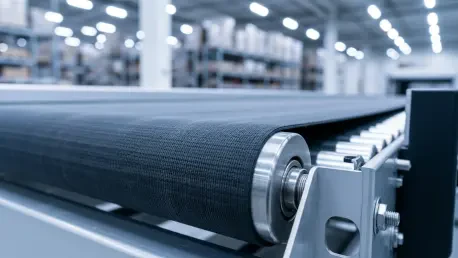

The internal mechanics of a global distribution center often mirror a high-stakes cardiovascular system where the failure of a single synthetic loop can paralyze millions of dollars in commerce within minutes. While these belts were once viewed as mere industrial consumables, the current economic climate has elevated them to the status of critical strategic assets. For global logistics giants, the focus has shifted from the initial purchase price to a complex calculation of energy consumption, friction coefficients, and carbon overhead. This evolution marks a departure from the “disposable” hardware era, ushering in a period where high-tech materials serve as the primary defense against skyrocketing operational costs.
Can a Single Component Define the Carbon Footprint of a Global Logistics Hub?
Modern commerce relies on a seamless flow of goods, but the energy required to maintain this movement is becoming a significant liability for large-scale operators. A conveyor belt may appear to be a simple piece of fabric and rubber, yet it is the primary interface between mechanical power and physical throughput. As companies like DHL and Amazon move toward more aggressive carbon reduction mandates, they are discovering that traditional belting is an efficiency drain. By focusing on the total cost of ownership, these organizations are identifying that a belt’s ability to reduce system-wide friction is more valuable than its upfront cost.
The transition to high-performance belting is not merely a trend but a response to a fundamental shift in how infrastructure is valued. In the past, procurement departments prioritized the lowest bid, often resulting in higher energy bills and frequent replacements. Today, the narrative centers on long-term resilience. When a single belt can influence the electricity demand of an entire warehouse, it becomes a tool for meeting legally binding sustainability targets. This change in perspective is turning the humble conveyor into a sophisticated engineering solution capable of redefining the environmental profile of a global logistics hub.
The Economic Forces Reshaping Global Material Handling
The landscape of material handling has stabilized after a period of post-pandemic recalibration. While European markets previously experienced a slowdown in capital expenditures due to geopolitical uncertainty, other regions are currently seeing a massive influx of investment. The aviation sector has emerged as a primary driver of this growth, particularly in the Asia-Pacific region and the Americas. Projects like the expansion of Singapore’s Changi Airport Terminal 5 serve as benchmarks for this new era, demanding belting solutions that can handle extreme throughput while meeting the world’s most stringent safety and fire regulations.
Furthermore, the resurgence of the parcel logistics sector is being led by a more disciplined approach to expansion. Companies like FedEx and UPS are no longer building at any cost; instead, they are looking for infrastructure that offers stability and lower overhead. This cautious reinvestment strategy favors manufacturers who can provide localized support across a global footprint. The ability to supply specialized belts that meet diverse regional standards—from flame retardancy in airports to food-grade hygiene in processing plants—has become a prerequisite for success in a market that demands both versatility and specialization.
Core Pillars of Modern Belting Innovation
Engineering the Underside for Maximum Friction Reduction
The true technical innovation of the modern conveyor belt is hidden from view, located on the underside of the material where it contacts the slider bed. Engineers are now integrating permanent lubricants directly into the fabric matrix during the manufacturing process. This ensures that the low-friction properties do not wear off after a few months of use but remain consistent for a lifespan that often extends beyond eight years. By minimizing the resistance between the belt and the conveyor structure, the physical strain on the entire drive system is drastically reduced.
Thermal Management and the Cascading Effects of Heat Reduction
A direct consequence of reduced friction is a significant drop in operational heat. In massive facilities where thousands of individual motors run simultaneously, the collective heat output can place an immense burden on building-wide HVAC systems. Innovative belting materials have demonstrated the capability to lower system operating temperatures from 65°C to 40°C. This cooling effect does more than just protect the belt and the motor; it creates a cascading energy saving by reducing the air conditioning load required to keep the facility within safe working temperatures for both employees and sensitive electronics.
Quantifiable Sustainability and the End of Greenwashing
To satisfy modern corporate governance, manufacturers have moved away from vague environmental promises in favor of empirical data. The introduction of digital ROI calculators allows operators to input variables such as belt speed, load, and running hours to receive a third-party verified report on CO2 savings. These tools, often certified by organizations like the German TÜV, provide the transparency needed for companies to report accurate environmental metrics to stakeholders. This data-driven approach ensures that every infrastructure upgrade is backed by a clear financial and ecological justification.
Industry Perspectives on the Total Cost of Ownership
Expert Insights on Procurement Philosophy
Industry leaders are increasingly championing the “Total Cost of Ownership” (TCO) model as the only sustainable path forward for large-scale operations. Experts from Forbo Movement Systems note that while a conveyor belt represents a tiny fraction of the capital investment in a billion-dollar facility, it is the component most responsible for daily energy waste. The old philosophy of “buying cheap” is being replaced by an understanding that higher-quality materials pay for themselves through reduced maintenance intervals and lower utility bills. This shift reflects a broader professionalization of the logistics supply chain where reliability is the ultimate metric.
Regional Trends and Global Regulatory Demands
While the drive toward efficiency is global, regional markets still exhibit distinct characteristics. The Asia-Pacific market remains highly sensitive to initial costs, yet it is simultaneously the site of the world’s most ambitious infrastructure projects. In contrast, the North American market is beginning to pivot from a performance-only mindset to one that incorporates European-style sustainability standards. As international aviation and safety regulations become more unified, the demand for high-performance, energy-efficient technology is creating a new global baseline that transcends local economic preferences.
Strategies for Implementing High-Efficiency Conveyor Solutions
Transitioning to Smart Belting and Predictive Maintenance
The next phase of conveyor evolution involves the integration of “smart” features designed to eliminate unplanned downtime. Organizations are beginning to adopt belts with laser-marked QR codes that provide instant access to technical specifications and maintenance histories via mobile devices. This digital bridge allows technicians to order precise replacements and view installation guides on-site, reducing the risk of human error. As these systems evolve, they will pave the way for self-diagnosing conveyors that can alert operators to tension issues or wear before a catastrophic failure occurs.
Adopting a Data-Driven Replacement Schedule
To maximize the impact of new technology, facilities should move away from reactive repairs toward a data-driven replacement schedule. Utilizing digital simulation tools, managers can identify which high-traffic lines offer the greatest potential for energy savings and prioritize them for upgrades. This strategic approach ensures that capital is deployed where it will generate the highest ROI in terms of both electricity reduction and CO2 mitigation. By treating the conveyor system as a dynamic asset rather than a static piece of hardware, companies positioned themselves to navigate the complexities of a resource-constrained future.
The transition toward high-efficiency belting systems proved to be a decisive factor for organizations seeking to balance operational growth with environmental responsibility. Stakeholders recognized that the integration of low-friction materials and digital tracking tools provided a measurable advantage in a competitive global market. Moving forward, the industry turned its attention to the development of fully circular material lifecycles, ensuring that the next generation of conveyor components could be recycled without losing their high-performance characteristics. These advancements shifted the focus from simple energy savings to a holistic approach where every mechanical movement contributed to a larger corporate goal of sustainable excellence.