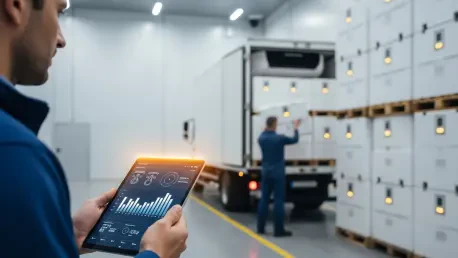

The journey of a temperature-sensitive product, from life-saving pharmaceuticals to fresh produce, is a race against time where a few degrees can mean the difference between viability and waste. Historically, cold chain logistics relied on a fragile system of refrigerated trucks and rudimentary thermostats, offering minimal insight and leaving businesses vulnerable to costly spoilage and regulatory failures. This passive approach provided a rear-view mirror perspective on events that had already occurred, often too late to prevent significant losses. The industry is now undergoing a profound transformation, moving away from these outdated methods toward a fully integrated, data-driven ecosystem. This evolution is not about a single technological breakthrough but rather the sophisticated orchestration of multiple innovations, creating a cohesive, intelligent, and responsive supply chain capable of anticipating challenges and acting proactively to preserve product integrity and profitability.
The Dawn of Intelligent Monitoring
The foundation of the modern cold chain is built upon a constant stream of high-fidelity data, enabled by real-time environmental and conditioning monitoring. This leap forward is powered by a suite of interconnected technologies, including Internet of Things (IoT) smart sensors, Bluetooth Low-Energy (BLE) beacons, and RFID tags, which are embedded within shipments and infrastructure. These devices do far more than simply record temperature; they create a comprehensive digital profile of a product’s journey by continuously tracking a range of critical factors such as humidity, light exposure, and physical shock. This granular visibility turns a previously opaque supply chain into a transparent, observable system. The true power of this technology is realized when it is paired with instant alerts and automated corrective actions. For instance, if a sensor detects a temperature deviation, the system can automatically trigger an alert to logistics managers and even initiate a response, such as rerouting a shipment to a closer facility or instructing a vehicle’s refrigeration unit to adjust its internal climate, mitigating risks before they escalate into irreversible damage.
This intelligent monitoring extends beyond the products themselves to the very equipment responsible for maintaining their environment, fostering a new era of reliability through predictive maintenance. By analyzing operational data from refrigerated units and transport vehicles, advanced algorithms can identify subtle patterns and anomalies that signal potential equipment failure long before it occurs. This proactive approach allows logistics providers to schedule maintenance and repairs during planned downtime, drastically reducing the likelihood of catastrophic failures mid-transit that could jeopardize entire shipments. The integration of this predictive capability ensures that the mechanical components of the cold chain are just as reliable and data-informed as the digital systems overseeing them. This synergy creates a resilient and dependable infrastructure, where potential points of failure are systematically identified and addressed, ensuring the unbroken custody of temperature-sensitive goods from their point of origin to their final destination.
From Reactive to Predictive Inventory Control
The real-time data gathered from advanced sensors becomes a powerful strategic tool when integrated with Automated Inventory Management (AIM) systems. This integration bridges the gap between the physical condition of a product and the digital records within Warehouse Management Systems (WMS) and Enterprise Resource Planning (ERP) tools. Static inventory lists are transformed into dynamic, actionable assets that reflect the true state and viability of each item. This allows for the intelligent automation of complex inventory principles like “First Expired, First Out” (FEFO). Traditionally a static rule based on expiration dates, FEFO can now be dynamically adjusted based on a product’s actual temperature exposure history. For example, a batch of goods that experienced a minor temperature fluctuation, while still safe, can be automatically prioritized for shipment over a batch with a similar expiration date that was kept in ideal conditions, ensuring that items with a potentially shorter shelf life are moved first to minimize waste.
This sophisticated level of inventory control also enables dynamic allocation strategies that optimize the supply chain for both efficiency and product preservation. When sensor data indicates a product is at a heightened risk of spoilage due to unforeseen delays or temperature variations, the AIM system can automatically reassign that inventory to closer markets. This proactive rerouting significantly shortens the remaining transit time, reducing the window for potential degradation and turning a potential loss into a successful sale. Furthermore, by having a precise, real-time understanding of inventory conditions across the entire network, companies can enhance their planning and forecasting accuracy. This prevents overstocking of sensitive products in any single location, reduces the need for costly emergency shipments, and ultimately builds a more agile and cost-effective logistics operation that is finely tuned to both market demand and the specific needs of its perishable goods.
A New Framework for Cold Chain Excellence
The strategies that supported modern cold chain logistics were not confined to digital solutions alone; they were also anchored in physical infrastructure and advanced material science. The localization of micro-fulfillment centers, strategically positioned within five to ten miles of major urban population centers, fundamentally reshaped the final leg of the delivery process. This model drastically reduced the time a product spends in the critical last-mile transit zone, which is often the most challenging part of the temperature-controlled journey. By shortening this period, companies enabled same-day and even sub-two-hour deliveries, easing the immense pressure of maintaining strict temperature protocols over long distances. Simultaneously, advanced thermal packaging, utilizing innovations like phase change materials (PCMs), vacuum-insulated panels, and high-performance insulated liners, created a stable micro-environment for products. This packaging provided an unbroken chain of thermal custody, capable of maintaining precise temperatures for up to 72 hours and shielding sensitive goods from external environmental fluctuations, thereby ensuring product integrity regardless of external conditions.