
The rapid disappearance of diesel plumes from modern loading docks is not merely a cosmetic change but the result of a profound technological pivot that is currently redefining industrial logistics. While the industry has long flirted with battery power, recent breakthroughs in high-voltage engineering and lithium-ion integration have finally pushed electric forklifts past the performance ceiling of the internal combustion engine. This review examines how this “strategic continuum” of electrification is dismantling the old trade-offs between environmental responsibility and raw mechanical power.
The Evolution of Electric Propulsion in Industrial Logistics
The transition toward electric power has shifted from a niche environmental preference to a fundamental operational mandate. Historically, electric trucks were relegated to light-duty indoor tasks because they lacked the stamina and torque for heavy-duty yard work. However, the emergence of high-voltage power delivery has allowed manufacturers to bridge this gap, creating a seamless spectrum of machinery that can handle everything from a single pallet in a grocery store to five-tonne containers in a shipping port.
This evolution is largely a response to the dual pressures of global decarbonization targets and the skyrocketing costs of fossil fuels. By moving away from internal combustion engines, facilities are not just reducing their carbon footprint; they are fundamentally simplifying their supply chains. The removal of fuel storage and the reduction in moving engine parts translate to a more streamlined, data-driven approach to fleet management where energy consumption is tracked with the same precision as inventory.
Core Pillars of Modern Electric Material Handling
Integrated Lithium-Ion Scalability and Compact Design
One of the most transformative shifts in recent years is the abandonment of the “battery box” design philosophy. Traditional lead-acid batteries required massive, heavy compartments that dictated the entire geometry of the truck. Modern integrated lithium-ion systems, conversely, are built into the chassis itself. This design freedom has led to a 15% improvement in warehouse density, as trucks are now shorter, narrower, and more maneuverable without sacrificing stability.
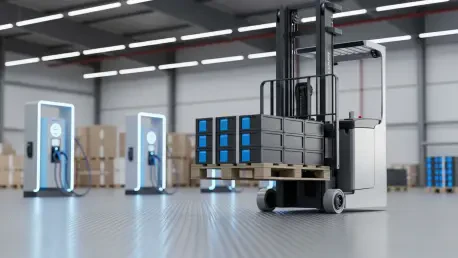
Beyond mere dimensions, these integrated systems offer performance metrics that lead-acid could never match. The ability to perform “opportunity charging”—plugging in during a fifteen-minute coffee break—eliminates the need for time-consuming battery swaps and dedicated charging rooms. For a high-volume warehouse, this means the machinery stays on the floor longer, directly increasing the number of pallets moved per shift while reducing the total fleet size required.
High-Voltage Architecture for Heavy-Duty Operations
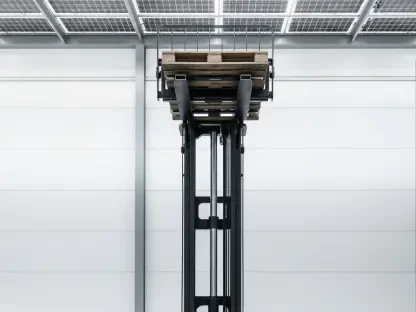
The true frontier of electrification lies in the 4.0 to 5.0-tonne class, where diesel once reigned supreme. New high-voltage architectures allow electric motors to generate the massive torque necessary for heavy lifting and steep ramp climbing. High-speed reach trucks now operate with a consistency that does not degrade as the battery drains, a critical factor for multi-shift operations where the last hour of the day must be as productive as the first.
In demanding environments like timber yards or construction supply centers, these heavy-duty electric models are proving their worth. They provide a vibration-free, quiet operating experience that significantly reduces operator fatigue, which is an often-overlooked factor in workplace safety. The power consistency offered by these high-voltage systems ensures that heavy loads are handled with precision, reducing the risk of product damage during high-intensity maneuvers.
Market Segmentation and Business Model Innovations
The industry is seeing a clever bifurcation of product lines to meet diverse economic needs. On one hand, there is a rise in specialized, “standardized” brands—such as the purple-coded AntOn line—which cater to small businesses needing reliable, intermittent tools. On the other hand, the premium “yellow” portfolios continue to serve high-performance hubs. This tiered approach allows companies to match their capital expenditure to their actual intensity of use, preventing over-investment in features they may not need.
Furthermore, the shift from CAPEX-heavy purchasing to OPEX-focused rental models is gaining momentum. By treating material handling as a service rather than an asset, businesses can remain agile, upgrading to the latest technology without the burden of ownership. This shift is accompanied by a growing circular economy, where refurbishment programs give a second life to lithium-ion components, ensuring that the transition to green energy does not create a new waste crisis.
Application Across the Industrial Spectrum
In the realm of small and mid-sized enterprises (SMEs), the new generation of electric tools provides a “plug-and-play” simplicity that was previously unavailable. These businesses can now access professional-grade material handling through e-commerce and distribution partners, bypassing the complex sales cycles of the past. For these users, reliability and ease of maintenance are the primary drivers, as they often lack on-site mechanical teams.
In contrast, large-scale distribution centers are implementing these solutions as part of a broader automation strategy. In these high-intensity hubs, zero-emission operation is not just a preference but a requirement for indoor air quality and worker health. The silent operation of electric fleets also allows these centers to operate closer to residential areas or during night hours without violating noise ordinances, providing a strategic advantage in urban logistics.
Barriers to Widespread Electrification Adoption
Despite the clear benefits, the road to total electrification is paved with logistical hurdles. The primary challenge remains the infrastructure; a large fleet of high-voltage trucks requires a massive draw from the local power grid, which may necessitate expensive upgrades to a facility’s electrical system. Without a robust charging strategy and intelligent energy management, the cost savings of switching from diesel can be offset by peak-demand charges from the utility provider.
Market obstacles also persist regarding the initial investment. While the total cost of ownership (TCO) is lower over the life of an electric truck, the “sticker shock” of lithium-ion technology can be a deterrent. Additionally, the industry is still working toward global standardization for battery recycling and quality control. Managing a diverse fleet of high-voltage equipment requires new technical skills, necessitating a re-training of maintenance staff who are more accustomed to wrenches than multimeters.
Future Outlook: High-Voltage Prototyping and Ultra-Fast Charging
The next phase of development focuses on ultra-fast DC charging and “smart” energy integration. Prototypes like the FalcOn are already demonstrating that heavy-duty electric trucks can be charged as quickly as a diesel tank can be filled. This capability will be the final nail in the coffin for internal combustion engines in the logistics sector, as it removes the last remaining uptime advantage held by fossil fuels.
Long-term, we will see these machines integrated into the “Internet of Energy” within the warehouse. Material handling equipment will act as mobile energy storage units, balancing the building’s power load and potentially feeding energy back into the grid during peak times. This transformation will turn a fleet of forklifts into a strategic energy asset, further reducing the total cost of ownership and cementing the role of electrification in the sustainable supply chains of tomorrow.
Conclusion: The Transformation of Material Handling Ecosystems
The shift toward a unified electric landscape represented a fundamental departure from the fragmented energy strategies of the past decade. By bridging the gap between entry-level utility and heavy-duty industrial power, manufacturers successfully demonstrated that electrification is no longer a compromise but a superior technical choice. The industry moved beyond the simple replacement of engines to the creation of purpose-built, digitally integrated tools that redefined warehouse spatial dynamics. This transition proved that when technical innovation aligns with economic flexibility, even the most traditional industrial sectors can achieve rapid, meaningful modernization. Moving forward, the focus must shift toward scaling the necessary grid infrastructure and standardizing the lifecycle management of lithium components to ensure these gains remain sustainable. Strategic partnerships between equipment providers and energy firms will be the next logical step in solidifying this new electric standard.