
The relentless drive toward Industry 4.0 has often spotlighted large-scale, fully automated production lines, leaving a significant portion of the manufacturing sector—workshops reliant on manual, pneumatic, and semi-automated presses—grappling with how to integrate modern quality control. For these operations, achieving 100 percent part verification and complete process traceability has remained a complex and often cost-prohibitive challenge, frequently relegated to post-production inspections that are both time-consuming and inefficient. This gap in the digital transformation journey creates a critical vulnerability where a single out-of-spec component can compromise an entire assembly, leading to costly rework, scrap, and potential reputational damage. The solution lies not in replacing proven machinery but in augmenting it with intelligent, accessible technology. A new generation of monitoring systems is emerging to bridge this divide, offering a turnkey, plug-and-play approach that empowers any workshop to embed real-time, data-driven quality assurance directly into the production process, regardless of the age or brand of its existing equipment.
A New Era of In-Process Verification
Real-Time Anomaly Detection
The core innovation of the EMG-Control system is its ability to provide immediate and decisive in-process verification, effectively transforming a standard press into a smart quality control station. By integrating high-precision force and displacement sensors, the system captures a detailed digital signature of every operation, analyzing critical parameters in real time. This continuous monitoring enables instantaneous anomaly detection. If a part fails to meet the predefined force, distance, or time-based criteria, the monitoring unit immediately signals a “NOK” (Not OK) status. This alert is multi-faceted and designed for clarity in a busy workshop environment, utilizing clear on-screen messages, intuitive bar graphs, or even simple smiley-face icons. To ensure no defective part goes unnoticed, these visual cues can be reinforced with an audible alarm or, for ultimate process security, by physically locking the press lever, preventing the operator from beginning the next cycle until the non-compliant part is addressed and removed. This immediate feedback loop is crucial, as it stops errors at the source and guarantees that only 100 percent compliant products advance to subsequent manufacturing stages, eliminating the risk of downstream failures.
Enhancing Traceability and Process Control
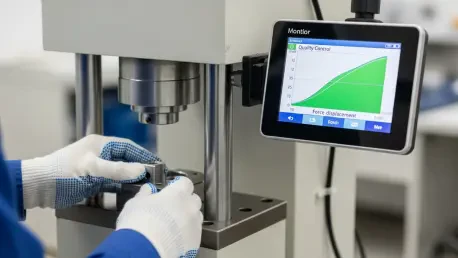
Beyond simple pass/fail sorting, the EMG-Control system provides the deep data insights necessary for robust process optimization and comprehensive traceability, which are cornerstones of modern quality management. Every measurement cycle is recorded and can be visualized as a detailed graph, allowing engineers and operators to analyze the exact force-and-displacement curve of each operation. This data is invaluable for troubleshooting, fine-tuning press settings, and understanding process variations that might otherwise go unnoticed. The system’s sophisticated sequence editor gives users complete control over the measurement process, allowing them to define precise evaluation windows and parameters tailored to specific applications. Furthermore, with capabilities for multi-program management, a single unit can store the unique quality criteria for numerous different parts, making changeovers quick and error-free. The collection of statistics and measurement histories directly supports Statistical Process Control (SPC) initiatives, empowering manufacturers to move from a reactive to a proactive quality strategy by identifying trends and preventing defects before they occur.
Seamless Integration and Universal Application
Simplified Plug-and-Play Implementation
A primary barrier to digitization in many workshops is the perceived complexity and cost of implementation. The EMG-Control system directly addresses this concern with a design centered on user-friendliness and rapid deployment. It functions as a true plug-and-play solution, engineered to be installed and commissioned without requiring specialized technicians or extensive downtime. A key enabling feature is the use of sensors equipped with TEDS (Transducer Electronic Data Sheet) technology. This smart functionality allows the sensors to store their own calibration and identification data, which is automatically read by the display unit upon connection. This process of self-recognition and auto-configuration eliminates the tedious and error-prone manual setup typically associated with such systems. Built for the rigors of the factory floor, the durable unit is designed to withstand challenging industrial environments. This turnkey approach democratizes access to advanced quality control, empowering manufacturers to independently upgrade their production lines and take a significant step in their digital transformation journey.
Broad Compatibility Across Equipment and Systems
Versatility is a defining characteristic of the EMG-Control system, ensuring its benefits are not limited to a single brand or type of equipment. While developed to complement EMG’s own range of presses, its universal design is one of its most significant assets. Through a series of readily available adaptation kits, the system can be retrofitted to virtually any brand of manual, toggle, or pneumatic press, as well as integrated into other semi-automated workstations and custom machinery. This adaptability extends the life and enhances the capability of existing capital equipment, offering a sustainable path to modernization. To ensure it fits seamlessly into a facility’s broader digital ecosystem, the system is equipped with a comprehensive suite of connectivity options. Data can be transferred via standard USB-A and USB-C ports, with the latter offering a clever keyboard emulation mode for simple, driverless data entry into any software. For more advanced integration, it supports industrial communication protocols like COM (ASCII or Modbus RTU) and Ethernet (Modbus TCP or server file generation), enabling direct data exchange with PLCs, MES, and ERP systems.
The New Standard in Workshop Quality
The introduction of this adaptable monitoring technology marked a significant shift in how quality control is approached in small to medium-sized manufacturing environments. It effectively dismantled the notion that high-precision, data-driven quality assurance was the exclusive domain of large, fully automated factories. By providing a universally compatible and user-friendly solution, the system empowers workshops to elevate their legacy equipment to modern standards of traceability and in-process verification. This development represents a crucial step in bridging the gap between traditional craftsmanship and the interconnected, data-rich principles of the smart factory, proving that digital transformation can be an incremental and accessible process rather than an expensive, all-or-nothing overhaul.Fixed version:
The relentless drive toward Industry 4.0 has often spotlighted large-scale, fully automated production lines, leaving a significant portion of the manufacturing sector—workshops reliant on manual, pneumatic, and semi-automated presses—grappling with how to integrate modern quality control. For these operations, achieving 100 percent part verification and complete process traceability has remained a complex and often cost-prohibitive challenge, frequently relegated to post-production inspections that are both time-consuming and inefficient. This gap in the digital transformation journey creates a critical vulnerability where a single out-of-spec component can compromise an entire assembly, leading to costly rework, scrap, and potential reputational damage. The solution lies not in replacing proven machinery but in augmenting it with intelligent, accessible technology. A new generation of monitoring systems is emerging to bridge this divide, offering a turnkey, plug-and-play approach that empowers any workshop to embed real-time, data-driven quality assurance directly into the production process, regardless of the age or brand of its existing equipment.
A New Era of In-Process Verification
Real-Time Anomaly Detection
The core innovation of the EMG-Control system is its ability to provide immediate and decisive in-process verification, effectively transforming a standard press into a smart quality control station. By integrating high-precision force and displacement sensors, the system captures a detailed digital signature of every operation, analyzing critical parameters in real time. This continuous monitoring enables instantaneous anomaly detection. If a part fails to meet the predefined force, distance, or time-based criteria, the monitoring unit immediately signals a “NOK” (Not OK) status. This alert is multi-faceted and designed for clarity in a busy workshop environment, utilizing clear on-screen messages, intuitive bar graphs, or even simple smiley-face icons. To ensure no defective part goes unnoticed, these visual cues can be reinforced with an audible alarm or, for ultimate process security, by physically locking the press lever, preventing the operator from beginning the next cycle until the non-compliant part is addressed and removed. This immediate feedback loop is crucial, as it stops errors at the source and guarantees that only 100 percent compliant products advance to subsequent manufacturing stages, eliminating the risk of downstream failures.
Enhancing Traceability and Process Control
Beyond simple pass/fail sorting, the EMG-Control system provides the deep data insights necessary for robust process optimization and comprehensive traceability, which are cornerstones of modern quality management. Every measurement cycle is recorded and can be visualized as a detailed graph, allowing engineers and operators to analyze the exact force-and-displacement curve of each operation. This data is invaluable for troubleshooting, fine-tuning press settings, and understanding process variations that might otherwise go unnoticed. The system’s sophisticated sequence editor gives users complete control over the measurement process, allowing them to define precise evaluation windows and parameters tailored to specific applications. Furthermore, with capabilities for multi-program management, a single unit can store the unique quality criteria for numerous different parts, making changeovers quick and error-free. The collection of statistics and measurement histories directly supports Statistical Process Control (SPC) initiatives, empowering manufacturers to move from a reactive to a proactive quality strategy by identifying trends and preventing defects before they occur.
Seamless Integration and Universal Application
Simplified Plug-and-Play Implementation
A primary barrier to digitization in many workshops is the perceived complexity and cost of implementation. The EMG-Control system directly addresses this concern with a design centered on user-friendliness and rapid deployment. It functions as a true plug-and-play solution, engineered to be installed and commissioned without requiring specialized technicians or extensive downtime. A key enabling feature is the use of sensors equipped with TEDS (Transducer Electronic Data Sheet) technology. This smart functionality allows the sensors to store their own calibration and identification data, which is automatically read by the display unit upon connection. This process of self-recognition and auto-configuration eliminates the tedious and error-prone manual setup typically associated with such systems. Built for the rigors of the factory floor, the durable unit is designed to withstand challenging industrial environments. This turnkey approach democratizes access to advanced quality control, empowering manufacturers to independently upgrade their production lines and take a significant step in their digital transformation journey.
Broad Compatibility Across Equipment and Systems
Versatility is a defining characteristic of the EMG-Control system, ensuring its benefits are not limited to a single brand or type of equipment. While developed to complement EMG’s own range of presses, its universal design is one of its most significant assets. Through a series of readily available adaptation kits, the system can be retrofitted to virtually any brand of manual, toggle, or pneumatic press, as well as integrated into other semi-automated workstations and custom machinery. This adaptability extends the life and enhances the capability of existing capital equipment, offering a sustainable path to modernization. To ensure it fits seamlessly into a facility’s broader digital ecosystem, the system is equipped with a comprehensive suite of connectivity options. Data can be transferred via standard USB-A and USB-C ports, with the latter offering a clever keyboard emulation mode for simple, driverless data entry into any software. For more advanced integration, it supports industrial communication protocols like COM (ASCII or Modbus RTU) and Ethernet (Modbus TCP or server file generation), enabling direct data exchange with PLCs, MES, and ERP systems.
The New Standard in Workshop Quality
The introduction of this adaptable monitoring technology marked a significant shift in how quality control is approached in small to medium-sized manufacturing environments. It effectively dismantled the notion that high-precision, data-driven quality assurance was the exclusive domain of large, fully automated factories. By providing a universally compatible and user-friendly solution, the system empowers workshops to elevate their legacy equipment to modern standards of traceability and in-process verification. This development represents a crucial step in bridging the gap between traditional craftsmanship and the interconnected, data-rich principles of the smart factory, proving that digital transformation can be an incremental and accessible process rather than an expensive, all-or-nothing overhaul.