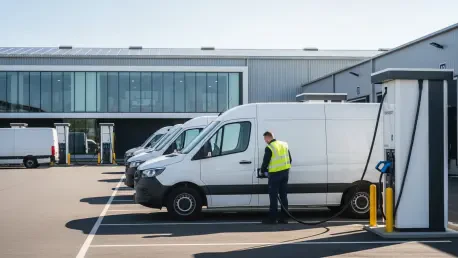

One in every six new cars registered in the UK this year is now fully electric, a figure driven not by individual consumers, but by the strategic decisions of corporate fleet managers who are reshaping the continent’s automotive landscape. Across Europe, the quiet hum of electric motors is replacing the rumble of internal combustion as companies move from experimental pilots to full-scale fleet overhauls. This transition is no longer a niche environmental play; it is a high-stakes logistical transformation that is redefining how goods and people move across the continent. Managers are now viewing electrification as a core operational necessity rather than a secondary corporate social responsibility goal.
The Billion-Dollar Pivot: Corporate Fleets as the Engine of Electrification
The decisions made by fleet and mobility managers carry immense weight because corporate vehicles account for a disproportionate share of new car sales. These vehicles eventually populate the used-car market, meaning the corporate sector effectively decides what the general public will drive in the coming years. As organizations grapple with tightening government regulations and aggressive sustainability mandates, their pivot to Battery Electric Vehicles (BEVs) acts as a catalyst for infrastructure development and technological maturation.
Understanding this shift is essential, as the corporate sector’s ability to overcome financial and logistical hurdles will ultimately determine the speed at which Europe achieves its net-zero transportation goals. If the business world successfully integrates these vehicles, the infrastructure and technology will mature fast enough for the rest of society to follow suit without the current growing pains. This leadership by industry creates a ripple effect that stabilizes supply chains and encourages manufacturers to prioritize electric platforms.
Why the Corporate Shift Dictates the Future of European Mobility
With 56% of European companies planning to ramp up their acquisition of BEVs over the next 24 months, the trajectory for internal combustion engines is clearly downward. While plug-in hybrids remain a popular transitional bridge, the long-term corporate strategy is firmly rooted in full electrification. Companies are increasingly prioritizing long-term energy security over the familiarity of traditional fuel sources, viewing electric power as a more stable alternative in a volatile global market.
The United Kingdom has emerged as a frontrunner in the EV space, with battery electric vehicles claiming a 16% market share of new registrations this year. This growth is underpinned by a combination of strict regulatory frameworks and corporate initiatives that prioritize green mobility as a core business identity. However, the road to a green fleet is paved with significant obstacles. Financial strain from rising vehicle prices and energy costs is currently colliding with persistent range anxiety and a public charging network that many professionals deem inadequate for commercial-grade operations.
Mapping the Transition: Momentum, Strategy, and Regional Leaders
Data from recent industry studies reveals a fundamental shift in financial planning where managers are moving away from looking only at the sticker price of a vehicle. Instead, they focus on the Total Cost of Ownership (TCO), which accounts for fluctuating electricity rates and maintenance savings. This holistic view is critical for justifying the transition to stakeholders who may be wary of high upfront capital expenditures. By calculating long-term efficiency, firms are finding that electric fleets often outperform their diesel counterparts over several years of operation.
Perhaps the most telling finding is the move toward self-sufficiency; approximately 90% of firms currently operating EVs have bypassed public infrastructure failures by installing their own on-site charging stations. Expert consensus suggests that for large-scale logistics, private infrastructure is no longer an amenity but a prerequisite for operational reliability. This trend toward private grids suggests that companies no longer trust public utilities to keep pace with their specific commercial needs.
Insights from the Front Lines: Expert Findings on Fleet Evolution
To mitigate the risks of an insufficient public charging network, companies invested early in private charging hubs. Planning for scalable on-site power solutions ensured that the fleet remained operational regardless of the state of local public utilities. Furthermore, managers utilized smart charging software to optimize vehicle refueling during off-peak hours, helping to stabilize the TCO and reduce the financial impact of energy market unpredictability. This proactive approach turned energy consumption into a managed asset rather than an unpredictable overhead cost.
Successful fleets often used a tiered rollout, starting with urban delivery routes where range anxiety was minimized. This allowed companies to gather internal data and refine charging protocols before expanding to long-haul or heavy-duty transport sectors. The final step involved establishing a clear energy management framework that aligned with broader corporate goals. This strategic foresight ensured that the transition was not just a replacement of engines, but a comprehensive upgrade to more resilient and data-driven logistical operations.
Navigating the Shift: Strategies for Successful Fleet Electrification
The organizations that led this transition focused heavily on data integration and employee training. Drivers were educated on the nuances of regenerative braking and optimal charging habits, which maximized the efficiency of the new technology. At the same time, fleet managers integrated real-time tracking to monitor battery health and energy usage, ensuring that every kilowatt was accounted for in the broader operational budget. These internal refinements proved that the human element was just as important as the hardware itself.
Ultimately, the shift toward electric fleets was secured by a commitment to long-term scalability. Companies avoided the pitfalls of outdated infrastructure by installing modular charging systems that could grow alongside their vehicle count. This foresight provided the flexibility needed to adapt to evolving battery technologies and changing grid requirements. By treating electrification as a continuous evolution rather than a one-time purchase, European fleets established a blueprint for sustainable transportation that balanced economic reality with environmental responsibility.