
With decades of experience in management consulting and operations, Marco Gaietti stands as a seasoned authority on the complexities of modern business management. His expertise is particularly relevant in high-stakes environments where strategic planning meets the volatile demands of global retail. In this conversation, we explore the fascinating mechanics of the floral supply chain, focusing on how agribusinesses navigate the intense pressure of peak holiday seasons. We examine the logistical choreography required to transport millions of perishable items across continents, the evolution of long-term strategic partnerships, and the integration of sustainable practices like circular pallet pooling and Internet of Things technology to minimize environmental impact while maintaining a relentless 96-hour delivery window.
With demand doubling during peak seasons like Mother’s Day, how do you manage the logistics of transporting hundreds of millions of stems within a 96-hour window? What specific coordination steps are taken between partner growers across 19 countries to ensure freshness?
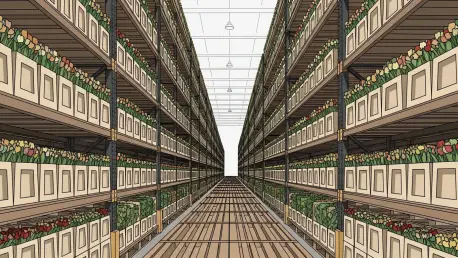
The logistical pressure during the first quarter of the year is immense because we face a literal 100 percent increase in demand as Valentine’s Day gives way to Mother’s Day. To handle hundreds of millions of stems, we orchestrate a precise sequence that begins with our partner growers across 19 different countries, ensuring that every flower is harvested and cooled immediately to preserve its life. The 96-hour window is our golden rule; it requires a seamless hand-off from the farm to the logistics hubs where products are palletized for rapid transit. We rely on a robust pallet pooling system to keep the flow moving without the bottlenecks of equipment shortages, which is the only way to ensure the product reaches supermarket shelves in peak condition. This coordination is about more than just trucks; it is a synchronized dance of timing and temperature control that keeps the entire supply chain vibrant during its busiest hours.
After a decade of collaboration, how have your logistics processes evolved to handle a consistent five percent annual growth in volume? How does the reliance on a pallet pooling system specifically facilitate expansion across different European retail markets?
Over the last 10 years, our partnership has moved far beyond a simple vendor-client relationship into a deeply integrated strategic alliance. As we have seen a steady five percent increase in overall demand year-over-year, we have had to scale our infrastructure without losing the agility that a perishable business requires. Utilizing a pallet pooling system allows us to expand into various UK and European retail markets without the massive capital expenditure of buying and managing our own pallet fleet. This circular model provides the flexibility to scale up or down instantly, ensuring that our growing volume of plants and produce is always supported by a reliable supply of high-quality pallets. It is this shared focus on continuous improvement and reliability that has allowed us to maintain service levels even as the sheer scale of our operations has transformed over the decade.
Reducing carbon footprints involves balancing sea freight usage with waste reduction programs. How do you integrate circular pooling models to meet these sustainability targets? What metrics are most useful when measuring the environmental impact of pallet flows and water stewardship?
Sustainability is no longer an optional add-on but a core pillar of how we grow, and integrating a circular pooling model is central to reducing our carbon footprint. By reusing pallets through a robust network, we significantly cut down on wood waste and the energy consumption associated with manufacturing new units. We track several key metrics, including the reduction of “empty miles” through better route density and the volume of waste diverted from landfills via recycling programs. Beyond logistics, we are heavily invested in water stewardship and biodiversity projects, ensuring that our growth across 19 countries does not come at the expense of local ecosystems. Seeing the tangible impact of lower chemical usage and renewable energy investments gives our team a sense of pride that goes beyond just meeting delivery deadlines.
Advanced forecasting and Internet of Things technology are becoming essential for optimizing supply chains. How do these tools help you navigate peak period challenges? Can you explain how data-driven planning helps reduce unnecessary miles while maintaining a reliable flow of products?
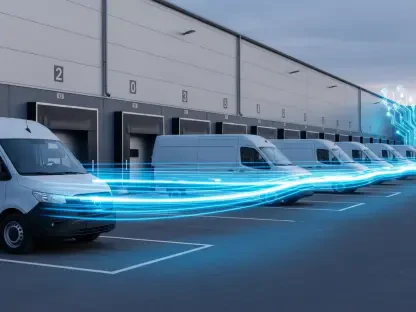
The implementation of Internet of Things (IoT) technology has revolutionized how we visualize the movement of goods, especially during the chaotic peaks of the floral season. These smart tools allow us to track pallet flows in real-time, providing the data needed for advanced forecasting and planning that prevents bottlenecks before they happen. By analyzing these data streams, we can optimize product flows to ensure that trucks are fully utilized, which directly reduces unnecessary miles and the associated emissions. This high-tech approach means we aren’t just reacting to supermarket orders; we are anticipating them with a level of precision that ensures a reliable flow of stems. It’s a sophisticated layer of digital intelligence that supports our physical operations, making the entire network more resilient and efficient.
Peak volumes require significant flexibility and open communication between logistics partners. How do you structure your internal workflows to remain responsive to sudden shifts in supermarket demand? What role does a shared focus on continuous improvement play in maintaining service levels?
We structure our internal workflows around the principles of flexibility and open communication, ensuring that our inbound logistics coordinators are in constant contact with our pooling partners. When a supermarket suddenly spikes its order for Mother’s Day bouquets, our teams must be able to pivot instantly, which requires a transparent view of available equipment and transport capacity. This collaborative approach means we treat our logistics partners as an extension of our own team, solving challenges through honest dialogue and a shared commitment to the end consumer. We regularly review our performance to identify areas for continuous improvement, whether that’s refining the speed of pallet returns or enhancing the reliability of our supply chain. A great example of this is how we manage the transition between Valentine’s Day and Mother’s Day, where a shared focus on efficiency ensures we don’t drop the ball during the year’s most demanding transition.
What is your forecast for the future of sustainable floral logistics?
I believe the future of floral logistics will be defined by a total transition toward a carbon-neutral circular economy where every mile is accounted for by data-driven intelligence. We will likely see a significant shift toward more sea freight to further lower emissions, supported by breakthroughs in shelf-life extension technologies that make longer transit times viable for delicate stems. Retailers and consumers will demand even higher levels of transparency regarding water stewardship and chemical usage, making sustainability metrics as critical as profit margins. Ultimately, the winners in this space will be those who can marry high-speed delivery with a footprint that is as light as the flowers they carry, ensuring the industry remains both profitable and environmentally responsible.