
The escalating strategic importance of Arctic maritime routes and the necessity for robust coastal defense have placed the Royal Canadian Navy at a critical crossroads regarding its aging underwater fleet. As the Canadian government seeks to replace its Victoria-class submarines through the Canadian Patrol Submarine Project (CPSP), the competition among international shipbuilders has intensified, focusing not only on technical specifications but also on long-term industrial impact. Hanwha Ocean, a powerhouse in South Korean naval engineering, has recently moved to the forefront of this high-stakes procurement by establishing a comprehensive network of local alliances. This initiative represents a shift from traditional buyer-seller dynamics toward a deeply integrated industrial partnership that promises to reshape Canada’s maritime defense landscape. By aligning with domestic manufacturers and prestigious academic institutions, the company is addressing the mandatory Industrial and Technological Benefits (ITB) requirements while proposing a technologically superior solution tailored to Canada’s unique geographic and operational needs.
The recent CPSP Partners’ Day held at the National Arts Centre in Ottawa served as the primary stage for Hanwha Ocean to demonstrate its commitment to Canadian sovereignty and economic prosperity. During this event, the shipbuilder formalized five major industrial Teaming Agreements and signed three academic Memoranda of Understanding, creating a structured ecosystem designed to support the entire lifecycle of a new submarine fleet. These agreements are not merely symbolic; they represent a concrete plan to transfer advanced South Korean naval technology to Canadian soil, ensuring that the local industry remains competitive on a global scale. The strategy focuses on integrating Canadian innovation into the global supply chain, which allows local firms to contribute to high-value engineering tasks. This approach ensures that the project provides more than just hardware, fostering a resilient defense-industrial base that can maintain and upgrade these complex vessels independently for decades.
Industrial Synergy and Technical Partnerships
Strengthening the Domestic Supply Chain
The core of Hanwha Ocean’s industrial strategy lies in the formation of tri-party agreements that bridge the gap between Canadian expertise and South Korean manufacturing excellence. By partnering with GeoSpectrum Technologies and Ultra Maritime, both of which are based in the maritime hub of Nova Scotia, Hanwha is tapping into a deep well of local knowledge regarding underwater acoustics and warfare systems. These firms are collaborating with South Korea’s LIG Nex1 to co-develop and integrate sophisticated sonar suites and undersea defense technologies. This collaboration is particularly significant because it focuses on the “ears” of the submarine, which are critical for detecting threats in the vast and often acoustically challenging waters of the North Atlantic and the Arctic. Such partnerships ensure that the intellectual property and technical skills required to manage these systems remain within Canada, bolstering the nation’s specialized naval workforce and its regional economic stability.
Beyond the immediate requirements of the CPSP, these industrial alliances are designed to position Canadian companies as preferred partners for future international naval projects. By working alongside a global leader like Hanwha Ocean, local firms gain access to advanced production methodologies and quality control standards that are synonymous with South Korea’s shipbuilding success. This exposure allows Canadian participants to scale their operations and refine their technical offerings, potentially opening doors to export opportunities within the broader global defense market. The emphasis on high-value engineering work, rather than just basic assembly, ensures that the economic benefits of the submarine project are felt across diverse sectors, from software development to specialized manufacturing. This long-term vision aligns perfectly with federal mandates to maximize domestic content in major military acquisitions, creating a sustainable model for national defense procurement.
Power Management and Navigation Excellence
A submarine’s operational effectiveness is largely defined by its internal management systems and its ability to navigate precisely in silent environments. To address these critical areas, Hanwha Ocean has entered into strategic agreements with AKA Energy Systems from Prince Edward Island and Ontario-based J-Squared Technologies. These partnerships, which also include Korea’s KTE, focus on the development and implementation of integrated platform management systems (IPMS) and advanced power distribution networks. These systems serve as the central nervous system of the vessel, controlling everything from propulsion efficiency to environmental life support. By involving Canadian firms in the design and maintenance of these essential components, Hanwha ensures that the Royal Canadian Navy has a direct line to local technical support. This localized approach minimizes the risks associated with international supply chain disruptions and ensures that the fleet remains mission-ready at all times.
In tandem with power management, the partnership with Safran Trusted 4D Canada in Montreal highlights a commitment to superior optronics and navigation capabilities. Navigating a submarine through complex underwater terrain requires more than just standard radar; it demands high-precision inertial navigation systems and advanced defense electronics that can operate without exposing the vessel’s position. By teaming up with Safran’s international divisions and Hanwha Ocean, the Montreal-based team will play a pivotal role in equipping the KSS-III with cutting-edge “eyes” and “ears.” This level of technical integration ensures that the submarines are not only stealthy but also possess unparalleled situational awareness. The inclusion of Quebec’s aerospace and defense cluster into the submarine program demonstrates the nationwide scope of Hanwha’s industrial plan, proving that the project is a truly national endeavor that leverages the best technological talent from coast to coast.
Academic Research and Future-Ready Innovation
Driving Technological Advancements
The evolution of modern naval warfare is increasingly dictated by software, automation, and data analytics, moving away from the era of purely mechanical dominance. Recognizing this trend, Hanwha Ocean has established academic Memoranda of Understanding with the University of Toronto, the University of New Brunswick, and Dalhousie University. These partnerships are specifically aimed at advancing research in Artificial Intelligence (AI) and digital twin technologies to optimize submarine performance and stealth. For instance, AI-enabled systems can significantly reduce the workload on the crew by automating routine monitoring and decision-support tasks, which is vital for long-duration missions. Digital twin simulations allow engineers to create a virtual replica of the vessel to predict maintenance needs and test acoustic signatures before the hardware ever hits the water. This forward-thinking research ensures that the Canadian patrol submarines will remain at the cutting edge of technology throughout their service lives.
The collaboration with these top-tier research institutions also facilitates a direct pipeline for technology transfer from the laboratory to the shipyard. Students and researchers are given the opportunity to work on real-world challenges associated with the KSS-III platform, providing them with invaluable experience in the defense and maritime sectors. This academic engagement does more than just solve technical problems; it creates a culture of innovation that attracts talent to the naval engineering field. By investing in the intellectual capital of Canadian universities, Hanwha Ocean is helping to build a self-sustaining ecosystem of innovation that will continue to produce breakthroughs in maritime technology long after the initial fleet is delivered. This focus on research and development ensures that Canada is not just a consumer of foreign technology but a proactive contributor to the next generation of global undersea warfare capabilities.
Arctic Sovereignty and Workforce Development
For Canada, the ability to project power and maintain surveillance in the Arctic is a matter of national sovereignty and environmental security. The harsh conditions of the North require specialized vessel technologies, including reinforced hulls and advanced life support systems capable of operating in sub-zero temperatures. Hanwha Ocean’s academic partnerships focus heavily on these Arctic-specific challenges, leveraging Canadian expertise in polar engineering to refine the KSS-III design for northern operations. This includes researching specialized materials and sensor arrays that can remain functional under ice cover, ensuring that the Royal Canadian Navy can effectively patrol its northernmost borders. By addressing these unique requirements through local research, the project guarantees that the resulting fleet is purpose-built for the Canadian environment rather than being a generic export model adapted as an afterthought.
Furthermore, these academic agreements are a cornerstone of Hanwha’s strategy to develop a future-ready workforce that can support the fleet for the next thirty to forty years. The complexity of modern submarines requires a highly specialized workforce with skills in cybersecurity, systems integration, and advanced materials science. By creating pathways for Canadian students to enter the defense industry through internships, co-op programs, and collaborative research projects, Hanwha is ensuring that the human capital necessary for the fleet’s long-term success is cultivated domestically. This investment in people is perhaps the most significant long-term benefit of the partnership, as it provides high-quality career opportunities and strengthens Canada’s overall technological resilience. A well-trained workforce capable of maintaining and upgrading the submarines locally is the ultimate guarantee of operational independence and strategic autonomy in an increasingly uncertain global maritime environment.
The KSS-III: A Proven Underwater Platform
Endurance and Stealth Capabilities
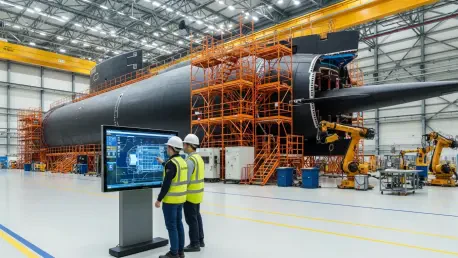
At the heart of Hanwha Ocean’s proposal is the KSS-III submarine, a vessel that is already demonstrating its capabilities in active service with the Republic of Korea Navy. This “Military Off-The-Shelf” (MOTS) status is a primary advantage, as it means the design has already undergone rigorous testing and operational evaluation in real-world conditions. One of the most impressive features of the KSS-III is its exceptional endurance, achieved through a sophisticated combination of high-capacity lithium-ion batteries and an advanced Air Independent Propulsion (AIP) system. This technology allows the submarine to remain submerged for over three weeks at a time, providing the long-range persistence required for patrolling Canada’s extensive coastlines. With a cruising range exceeding 7,000 nautical miles, the KSS-III is uniquely suited for the vast distances of the Pacific, Atlantic, and Arctic oceans, offering a level of mission flexibility that few other platforms can match.
Stealth remains the primary defense of any submarine, and the KSS-III incorporates several layers of advanced acoustic management to ensure it remains undetected. The vessel is covered in specialized acoustic tiles designed to absorb sonar waves, while its internal machinery is mounted on noise-dampening structures to minimize its sound signature. Additionally, the integration of advanced sonar systems allows for superior target detection at greater ranges, giving Canadian sailors the advantage of seeing the enemy before they are seen themselves. This combination of long endurance and extreme stealth makes the KSS-III a formidable deterrent against potential adversaries. By choosing a platform that is already in production and operation, the Canadian government can avoid the cost overruns and technical delays often associated with developmental “paper” designs, ensuring that the navy receives a reliable and proven asset on a predictable timeline.
Strategic Support and Lifecycle Reliability
One of the most significant risks in naval procurement is the potential for “technological orphaning,” where a fleet becomes difficult to maintain because the original manufacturer no longer supports the platform. Hanwha Ocean mitigates this risk by offering an “in-service support” (ISS) model based on the fact that the KSS-III is the backbone of South Korea’s own naval strategy. Canada would benefit from a shared pool of operational data, maintenance protocols, and spare parts that are continuously updated by the South Korean Navy. This synergy ensures that the Canadian fleet will always have access to the latest software patches, hardware upgrades, and technical expertise. Moreover, the adaptable nature of the KSS-III allows it to carry a variety of mission-specific payloads, from long-range strike missiles to unmanned underwater vehicles (UUVs), ensuring the platform remains relevant as mission requirements evolve over the coming decades.
The reliability of the KSS-III is further bolstered by the robust global supply chain that Hanwha Ocean has cultivated over years of high-volume shipbuilding. By integrating Canadian suppliers into this existing network, the company ensures that local industry becomes an essential part of the global maintenance framework for these vessels. This means that Canadian firms will not only support their own navy but could also provide services and components for other KSS-III operators around the world. This lifecycle reliability is crucial for a project of this magnitude, where the total cost of ownership often exceeds the initial purchase price. A proven platform with a stable and expanding user base provides the predictability and security that defense planners require when making multi-decade investment decisions. The result is a fleet that is not only powerful on the day of delivery but remains a potent and cost-effective asset throughout its entire operational history.
Economic Impact and Sovereign Capability
Fostering Regional Growth
The feedback from across the Canadian industrial landscape suggests that Hanwha Ocean’s approach is being viewed as a transformative opportunity for regional economic development. Leaders from maritime technology clusters in Nova Scotia, aerospace hubs in Quebec, and manufacturing centers in Ontario have expressed strong support for the collaborative framework established by the South Korean shipbuilder. This enthusiasm stems from the realization that the CPSP is not just a defense project but a multi-billion-dollar engine for industrial growth. The creation of high-value engineering and technician jobs will have a significant multiplier effect on local economies, supporting a wide range of secondary service industries and contributing to the overall prosperity of the nation. By distributing work across different provinces, Hanwha is ensuring that the benefits of the submarine project are felt nationally, fostering a sense of shared purpose and investment in Canada’s maritime future.
The partnership also serves as a catalyst for small and medium-sized enterprises (SMEs) to move up the value chain by participating in a complex international program. Many Canadian firms possess niche expertise that, when combined with Hanwha’s systems integration capabilities, can lead to the development of world-leading products. This regional growth is not a temporary byproduct of the construction phase but is designed to be a permanent fixture of the Canadian industrial base. As the fleet matures, the need for ongoing maintenance, repair, and overhaul (MRO) services will provide a steady stream of work for decades, ensuring that the skills and facilities developed during the project remain active and productive. This long-term industrial commitment is essential for maintaining sovereign capability, as it ensures that Canada possesses the domestic means to keep its most critical naval assets in peak condition without relying on foreign intervention during times of crisis.
A New Standard for Defense Cooperation
The collaboration between Hanwha Ocean and its Canadian partners was characterized by a deep integration of manufacturing power and specialized innovation, creating a blueprint for future international defense projects. By moving beyond a simple transactional model, the two nations established a partnership that emphasizes mutual technological growth and strategic alignment. The KSS-III proposal successfully combined South Korea’s renowned efficiency in large-scale naval construction with Canada’s leading-edge research in artificial intelligence and Arctic operations. This synergy addressed the immediate tactical needs of the Royal Canadian Navy while simultaneously building a technological legacy that would serve the country for many years. The initiative demonstrated that successful defense procurement in the modern era requires a holistic approach that balances military requirements with domestic economic goals and long-term industrial sustainability.
In the final analysis, the project provided a clear path forward for enhancing Canadian maritime sovereignty through the development of a resilient and technologically advanced underwater fleet. The focus on academic research and workforce development ensured that the nation would have the human capital necessary to lead in the maritime sector for the foreseeable future. By establishing a robust domestic supply chain and fostering regional innovation, Hanwha Ocean and its partners set a new standard for how global defense companies could contribute to a host nation’s long-term security and economic health. As the geopolitical landscape continues to evolve, the foundations laid by this partnership will remain a vital component of Canada’s ability to protect its interests and maintain stability in its territorial waters. The successful integration of international expertise and local talent stands as a testament to the power of collaborative innovation in securing a safer and more prosperous maritime future.