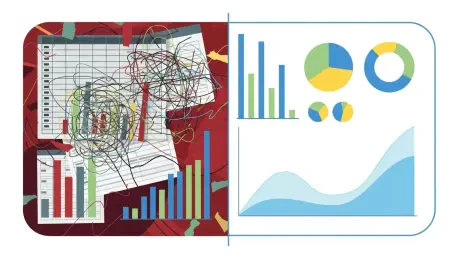

In the fast-paced world of professional services, project managers are often found navigating a complex labyrinth of spreadsheets and email threads, a frantic digital ballet performed daily just to determine who is available for the next critical client engagement. This constant shuffle between disconnected platforms consumes valuable time that could be dedicated to strategy, client relationships, and proactive risk management. The pressure to deliver on time and within budget is immense, yet the very tools meant to support these efforts frequently become the primary source of friction, leading to a state of perpetual operational disarray. For many organizations, the question is no longer whether this system is inefficient, but rather how much untapped potential is being squandered in the daily struggle to maintain control.
The consequences of this fragmented approach extend far beyond administrative headaches. When resource data is siloed, true capacity remains a mystery, making it nearly impossible to forecast accurately or commit to new projects with confidence. This lack of a unified perspective directly contributes to team burnout, as top performers are unknowingly over-allocated, while others may be underutilized. Deadlines slip, project quality suffers, and client satisfaction erodes, all because the foundational elements of resource management are built on a shaky, disconnected infrastructure. Transitioning from manual tracking to an integrated system is not merely an upgrade in technology; it represents a fundamental shift toward strategic execution and sustainable growth.
Are You Juggling Too Many Spreadsheets and Not Enough Strategy
The daily reality for many project leaders in the services industry is a high-stakes game of resource Tetris played across countless spreadsheets. Each new client request or project modification sends ripples through the system, requiring manual updates to capacity plans, allocation charts, and timelines. Critical questions about team availability, skill distribution, and potential project risks are met not with instant data but with a time-consuming investigation across multiple documents and communication channels. This reactive cycle keeps managers trapped in the weeds of administrative coordination, preventing them from focusing on higher-value activities like strategic planning, process improvement, and mentoring their teams.
Moving beyond these manual limitations is essential for survival and growth. The persistent reliance on outdated methods creates a fertile ground for operational failures. Bottlenecks emerge without warning as key personnel are stretched too thin across competing priorities. Talented employees, facing relentless and unbalanced workloads, become disengaged and eventually burn out, leading to costly turnover. Missed deadlines become more frequent, damaging the organization’s reputation and jeopardizing client relationships. The alternative is a system where strategy, not spreadsheets, dictates how resources are deployed, transforming resource allocation from a chaotic guessing game into a precise, data-driven discipline.
Why Your Current Approach to Resource Allocation Is Holding You Back
Services organizations face a unique and persistent challenge: the simultaneous management of numerous client projects, each with its own distinct timeline, budget, and specialized team requirements. Unlike product-based companies with more predictable development cycles, service firms must remain agile, constantly reallocating personnel and adapting to shifting client needs. This dynamic environment places immense strain on traditional management methods, where the complexity of tracking dozens of interconnected variables quickly overwhelms the capacity of manual systems. The result is an operational model that is perpetually reactive, struggling to keep pace with the demands of the business.
The primary danger of this approach lies in the creation of a fragmented system where information is trapped in isolated silos. When project plans live in one software, team schedules in another, and budget data in a series of spreadsheets, a holistic view of execution becomes impossible. This lack of cohesion prevents managers from seeing how a delay in one project impacts resource availability for another or how a change in client scope affects overall portfolio health. This fractured landscape is where chaos thrives, leading to duplicated efforts, communication breakdowns, and uninformed decision-making. To break free from this cycle, organizations need to establish a single source of truth—a centralized platform where all project-related data converges. This unified system provides real-time visibility into workloads, dependencies, and portfolio performance, empowering leaders to make proactive, strategic decisions.
The Core Capabilities That Transform Chaos into Clarity
A fundamental shift in resource management begins with the ability to see the complete picture of team workloads in an instant. Modern platforms replace ambiguous spreadsheets with visual workload management tools, often using intuitive, color-coded interfaces to provide immediate clarity. These views instantly identify which team members are over-allocated, under-utilized, or perfectly at capacity, eliminating the guesswork that fuels burnout and project delays. By turning complex allocation data into a simple visual summary, managers can spot potential resource conflicts weeks in advance and rebalance assignments proactively. For instance, the retail leader Country Road Group leveraged such visual tools to achieve a 25% increase in efficiency, citing the system’s ability to instantly highlight resource gaps that were previously hidden in spreadsheets.
Effective resource allocation moves beyond simple availability to incorporate a more nuanced understanding of team capabilities. Intelligent resource allocation systems empower managers to match the right skills to the right project with precision. Using features like drag-and-drop interfaces and searchable skill databases, leaders can assign work based not just on who is free but on who is best suited for the task based on their role, expertise, and proficiency. This ensures that client projects are staffed with the optimal mix of talent, improving both the quality of the final deliverable and overall team morale. This strategic approach had a significant real-world impact for the global professional services firm Genpact, which reported a 40% improvement in cross-team collaboration after implementing a system that ensured the right expertise was assigned to each client project.
True clarity emerges when individual project details can be aggregated into a comprehensive portfolio view. Portfolio management capabilities consolidate data from all active projects into a single, high-level dashboard, allowing leadership to monitor progress, track budget utilization, and identify risks across the entire business. This big-picture perspective is crucial for making informed strategic decisions, such as prioritizing high-value projects, reallocating resources to support struggling initiatives, or forecasting future hiring needs. Without this unified view, organizations are effectively flying blind, making critical choices based on incomplete or outdated information. This holistic visibility transforms resource management from a project-level task into a strategic business function.
Another critical component in conquering chaos is the implementation of automation that scales with the organization. Many of the repetitive tasks that consume a project manager’s day—such as sending assignment notifications, requesting status updates, and routing approvals—can be put on autopilot. Automated workflows can be configured to handle these routine processes, ensuring that communication is consistent and timely without manual intervention. This not only frees up valuable time for strategic work but also reduces the risk of human error. The construction technology company Falkbuilt provides a powerful example, having saved over 40,000 human actions monthly through automation, which allowed their teams to redirect their focus from administrative coordination to innovation and client service.
Finally, a resource management platform cannot exist in a vacuum; it must connect seamlessly with the other tools that power the business. A robust integration ecosystem ensures that data flows freely between the resource management system and other essential platforms like customer relationship management (CRM) software, financial systems, and communication tools. When a new client is signed in the CRM, a project shell can be automatically created in the management platform. When time is logged on a project, that data can flow directly into the financial software for invoicing. This interconnectedness breaks down information silos and creates a truly unified operational environment, where data is always consistent and up-to-date across the entire technology stack.
The Evidence How Unified Resource Management Drives Measurable Results
The transformative power of unified resource management is best illustrated by real-world success stories, such as the journey of the global gaming technology company Playtech. Previously, its project managers were tasked with overseeing complex projects across 60 global licensees using a disjointed combination of spreadsheets and email. This manual system led to significant operational challenges, including the premature booking of resources before projects were fully approved and a laborious, error-prone process for calculating project costs. The lack of a centralized system also meant that stakeholders had limited visibility into project progress, leading to communication delays and misaligned expectations.
Confronting these challenges, Playtech implemented a single, automated platform to centralize all project work, budgeting, and approvals. This new system provided a clear distinction between potential and active projects, preventing premature resource allocation and ensuring that teams were only committed to fully greenlit initiatives. By integrating project management with financial tracking and approval workflows, the company created a cohesive ecosystem where data flowed seamlessly from one stage to the next. The results of this transformation were substantial and quantifiable: the organization achieved a 26% increase in overall efficiency, with each team member saving an average of three hours per week on administrative tasks. Furthermore, stakeholder collaboration improved by 49%, driven by the newfound transparency and real-time visibility into project status.
The benefits experienced by Playtech are echoed across various industries that have embraced a unified approach. The most immediate impact is often seen in time savings and efficiency, as hours previously lost to manual reporting and status meetings are reclaimed through automated workflows and real-time dashboards. This enhanced efficiency directly translates into improved productivity. For example, McDonald’s Australia was able to reduce its project timelines by 25%, while the digital marketing agency Seer Interactive eliminated over 600,000 manual actions annually by automating repetitive steps. Beyond speed, this level of visibility and control delivers significant financial benefits; one services organization reported saving $250,000 annually and cutting its meeting time in half simply by leveraging real-time dashboards for progress tracking and decision-making.
Your Six Step Blueprint for Optimizing Resource Management
The first step in any successful optimization effort is to consolidate all relevant information into a single, accessible location. This involves importing all existing projects, team member details, and current allocations to establish a foundational single source of truth. By bringing data out of scattered spreadsheets and disconnected tools into one centralized platform, an organization immediately gains a baseline level of visibility that was previously unattainable, setting the stage for more advanced planning and analysis.
Once the data is centralized, the next crucial step is to configure and customize capacity views to accurately reflect the team’s working reality. This requires setting up workload dashboards that account for individual working hours, planned time off, and specific allocation percentages for different projects. Tailoring these views to show capacity on a daily, weekly, or monthly basis allows managers to conduct more accurate and realistic planning, ensuring that resource forecasts are grounded in the actual availability of their team members.
To accelerate project setup and ensure operational consistency, the third step is to build a library of reusable project templates. By standardizing the workflows for common service delivery types—including predefined phases, task lists, resource requirements, and approval processes—organizations can significantly reduce the administrative overhead associated with launching new initiatives. These templates provide a consistent framework that ensures quality and best practices are followed across every project, while still allowing for customization to meet specific client needs.
With a solid foundation in place, the focus shifts to implementing time-saving automation. This fourth step involves configuring rules and workflows to handle routine tasks automatically. Examples include setting up notifications that alert team members to new assignments, creating warnings that flag when a resource’s capacity is exceeded, or automating the process of updating a project’s status based on task completion. These automations act as a digital project coordinator, eliminating manual work and ensuring that critical information is communicated without delay.
The fifth step is to translate raw project data into high-impact, strategic insights by creating portfolio-level dashboards. These executive-level views should aggregate key performance indicators from across all projects, tracking essential metrics like team utilization rates, project profitability, and on-time delivery percentages. By building dashboards that provide a real-time, at-a-glance summary of portfolio health, leadership can make faster, more data-driven decisions about where to invest resources and how to steer the business.
Finally, the optimization process is completed by enabling transparent stakeholder access. This involves setting up automated reports and configuring user permissions to provide clients and internal leadership with a clear view of project progress. Granting controlled access to relevant dashboards and reports improves confidence, fosters trust, and dramatically reduces the need for time-consuming status update meetings. This transparency ensures that all stakeholders are aligned and informed, allowing the project team to focus on execution rather than communication.
The move away from fragmented spreadsheets toward a unified resource management system was more than a simple technological upgrade; it was a strategic business transformation. Organizations that successfully navigated this transition found that the chaos of manual coordination was replaced by the clarity of real-time data and automated workflows. The immediate benefits, such as significant time savings and increased efficiency, were clear, but the long-term impact proved to be even more profound. Teams were not just more productive; they were more engaged and less prone to burnout, as workloads were balanced and transparent.
This newfound operational control allowed leaders to shift their focus from reactive problem-solving to proactive, strategic planning. With a clear view of the entire project portfolio and resource capacity, they could make more confident decisions about taking on new business, allocating budgets, and investing in growth. Client relationships strengthened through enhanced transparency, and the consistent, high-quality delivery that the system enabled became a key competitive differentiator. The journey to solve resource allocation chaos ultimately led to a more resilient, agile, and profitable organization, well-equipped to thrive in a demanding market.