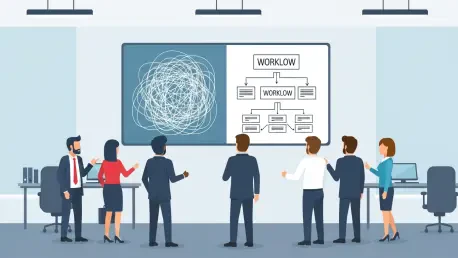

In the high-stakes world of professional services, the line between functional tools and fundamental constraints can become blurred, often leading teams to rely on makeshift solutions that mask underlying inefficiencies until growth and complexity expose their critical flaws. This was precisely the challenge faced by BDO South Africa’s Finance Transformation Services division, a rapidly expanding capability that found its initial project management methods buckling under the weight of its own success. The team, tasked with guiding CFOs through complex transformations, initially leveraged a common collaboration platform for its operational needs, believing it was a sufficient approach for assigning tasks and housing documents. However, as the division matured, it became clear that this system was not a purpose-built project management engine but a series of workarounds. It lacked the structured workflows, robust governance components, and deep operational visibility required to deliver projects with the discipline and consistency their clients expected. This pivotal realization triggered a strategic quest for a platform that could do more than just manage tasks; it needed to embed best practices and create a single source of truth, transforming their approach from reactive adaptation to proactive, structured delivery.
The Tipping Point for Transformation
The journey toward a more disciplined project management framework began with the acknowledgment that their existing tools were a significant liability. BDO’s Finance Transformation Services team, established just a year prior, advises organizations on critical changes across people, processes, technology, and governance. Initially, their reliance on a well-known collaboration platform seemed practical for facilitating basic task allocation and providing some degree of documentation visibility. Yet, as the team grew and took on more complex engagements, the platform’s limitations became glaringly obvious. Veronica Lukwago, Finance Transformation Associate Director at BDO, aptly described the situation as relying on a “workaround” rather than an “authentic project management system.” The tool was fundamentally missing the technical architecture needed to enforce structured processes, monitor risks effectively, and provide the comprehensive oversight necessary for high-stakes projects. While other business units within BDO had experimented with various task management applications, none offered the integrated suite of features—workflow, governance, document management, and visibility—that the Finance Transformation Services PMO deemed essential to elevate its service delivery and achieve its strategic goals.
This recognition prompted the BDO team to establish a clear and precise set of objectives to guide their search for a new platform. Their goal was not to find a single solution to all their problems but to procure a foundational tool that would entrench proper project management principles into the very fabric of their daily operations. The core requirements were strategically defined to address their primary pain points. First and foremost, they required a system with an inherent, structured workflow that would provide the literal, chronological steps necessary to follow and enforce project management discipline from initiation to closure, ensuring consistency across every client engagement. Secondly, they needed comprehensive, real-time visibility into all project aspects, demanding intuitive dashboards capable of clearly displaying key metrics like task completion rates, progress against timelines, and identified risks. Finally, BDO sought a platform that would actively embed and reinforce best-practice project management principles, serving as a guide to promote a standardized, high-quality approach to execution for the entire team.
A Rigorous Search and Strategic Deployment
The selection process for a new project management platform was, as described by Lukwago, “rigorous,” reflecting the meticulous standards of a professional services firm. Spanning approximately three months, the evaluation involved extensive due diligence, including in-depth discussions with business unit leaders and managing directors from various BDO offices to fully understand their project management challenges. A significant factor guiding this search was a deliberate preference for a reputable South African company. This decision was rooted not only in a desire to support local technological capability but also in practical necessity. The team identified local support as a non-negotiable requirement, recognizing that a custom-configured system in a constantly evolving environment would need ongoing, accessible assistance—a level of service often difficult to obtain from global providers post-implementation. The discovery of PPO came through a personal referral, and after a successful 30-day trial and formal demonstration, the solution was greenlit by an internal governance committee that conducted thorough security and compliance checks.
The implementation of PPO, which commenced in June 2024, was marked by a key strategic pivot that proved crucial to its success. The initial plan to launch five projects simultaneously was revised in favor of a more focused approach: perfecting the system’s use on a single project to serve as a foundational proof point. This tactic was highly effective. By ensuring one project ran exceptionally well on the new platform, the team created a compelling internal case study that demonstrated the system’s value and significantly facilitated broader buy-in from stakeholders. This initial success catalyzed the platform’s expansion across the full spectrum of BDO’s finance transformation projects, which vary widely in scale and complexity and serve a diverse mix of public and private sector clients both locally and globally. The initial 20 user licenses were rapidly assigned due to high demand, underscoring the team’s readiness for a more structured and capable project management solution.
Quantifying the Gains in Governance and Credibility
The adoption of the new platform fundamentally transformed BDO’s project management environment, yielding significant benefits for both the internal team and its clients. The most immediate impact was a dramatic improvement in governance and real-time visibility. Dashboards providing usage statistics and progress updates became central to project oversight, allowing for more informed and efficient discussions during meetings. This instant access to reliable information reduced preparation time and gave leadership greater confidence that the entire team was aligned and “pulling in the same direction.” Furthermore, the structured nature of the platform inherently reinforced accountability, making it clear who was responsible for which tasks and by when. This new layer of transparency and process discipline created a more reliable and consistent framework for project execution, moving the team away from ambiguity and toward data-driven decision-making.
Beyond these internal efficiencies, the platform significantly enhanced BDO’s credibility with its clients. The ability to present clients with structured dashboards and professional reports provided tangible proof that the firm was not just claiming to follow best practices but was actively embedding them into its methodology. This elevated level of transparency strengthened client relationships and provided a competitive differentiator in the market. The success within the Finance Transformation Services team has since initiated broader conversations within BDO South Africa about standardizing project management discipline across the entire organization, with this initiative serving as a potential blueprint for a firm-wide standard. Looking forward, the PMO aims to leverage the platform’s capabilities to refine its project close-out reporting, moving beyond simple status updates to produce comprehensive reports that clearly articulate the full scope of project delivery and the outcomes achieved.
The Human Factor in a Digital Shift
Reflecting on the successful transition, BDO’s experience underscored several critical lessons centered on the human element of technological adoption. The team learned that organizations must not underestimate the time and focus required for such a change. The process involved far more than just configuring a system; it demanded significant internal work to prepare teams for new ways of working, as a structured platform inevitably reveals gaps in existing processes that must be addressed. A key takeaway was the importance of treating change management as a practical, ongoing transition rather than a single event. This involved carefully considering the timing of the tool’s introduction, planning a clear cutover, and setting realistic expectations for when accurate task completion and consistent reporting could be achieved. It was understood that people naturally cling to familiar methods, so building in sufficient time for users to explore the new solution in a low-pressure environment was essential for building confidence and fostering gradual adoption. This was supported by a phased timeline rather than an abrupt switch, which allowed the team to adapt at a sustainable pace and fully embrace the new system without feeling overwhelmed. By empowering the team and sharing accountability, leadership cultivated a sense of ownership that proved vital to the project’s ultimate success.