
With decades of experience in management consulting and operations, Marco Gaietti has become a pivotal voice in the evolution of business management within the industrial sector. His expertise isn’t just limited to high-level strategy; he understands the granular mechanics of customer relations and the logistical hurdles that companies face when scaling their operations. In a world where data is often overwhelming, Gaietti’s insights focus on how digital ecosystems can turn raw information into a competitive advantage. Today, we sit down with him to discuss the digital transformation of intralogistics, specifically focusing on how integrated platforms are redefining the relationship between human managers and their machine fleets.
This conversation explores the transition from fragmented data silos to unified digital portals, highlighting the impact of centralized fleet management on daily efficiency and operational safety. We delve into the integration of artificial intelligence for natural language reporting, the proactive shift in workplace safety through assistance systems, and the strategic management of energy infrastructure to curb costs and maintain vehicle availability during peak demand.
How does the consolidation of access control, driver management, and shock event analysis into a single portal fundamentally change the way intralogistics managers handle their daily operations?
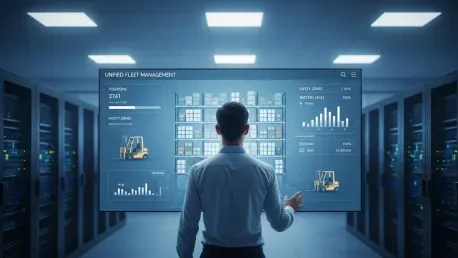
The shift toward a unified platform like myLinde is essentially about removing the “noise” that typically clutters a manager’s day. In the past, an intralogistics manager had to jump between different software programs or even physical logs to see who was driving what, whether the pre-operational checks were done, or if a forklift had been involved in a collision. By pulling these features—access control, driver management, and shock analysis—into one cloud-based hub, we are giving managers their time back. You can see it most clearly during those high-pressure peak periods when trucks must be loaded in minutes or assembly lines will stall. Instead of hunting for information, a manager can see everything on one screen, ensuring that the right drivers are on the right vehicles and that every machine is actually safe to operate before the shift even starts. This creates a transparent process where fact-based decisions replace guesswork, which is vital when you’re trying to maintain high vehicle availability.
The introduction of an AI feature that understands plain language is a significant step forward; how do you see this impacting the efficiency of fleet analysis for the average user?
Compiling reports from various data sources is a tedious task that very few people actually enjoy, yet it is necessary for optimizing a fleet. The new AI feature in myLinde changes the dynamic by allowing a manager to simply ask a question as if they were talking to a colleague. For example, asking for a table showing the operating hours of all forklifts over the past week or requesting an overview of shock events per day used to require manual data entry and filtering. Now, the algorithm does the heavy lifting, analyzing the data and visualizing the results in charts or tables instantly. This accessibility means that even a manager who isn’t a data scientist can identify which vehicles have the highest lift percentages or where utilization is lagging. It turns a chore that might take an hour into a task that takes seconds, which is a massive win for operational efficiency and keeps the focus on taking action rather than just staring at spreadsheets.
Workplace safety is often treated as a series of reactive measures, but your insights suggest a move toward prevention; how does visualizing “near-misses” change the safety culture on the warehouse floor?
Safety should never be an afterthought, and tools like the Linde Safety Guard assistance system are moving the needle from reaction to proactive prevention. In the portal, we can now analyze data on near-misses or identify specific zones where there is a high risk of accidents between pedestrians and forklifts. When you can see these patterns on a customizable dashboard, it changes the conversation with the workforce; it’s no longer about a generic “be safe” warning, but about showing employees exactly where the hazards are. This visualization helps raise awareness and allows for specific interventions, like changing a warehouse layout or adding stationary warning units in high-traffic areas. By addressing these “near-misses” before they become actual accidents, a company protects its most valuable asset—its people—while also avoiding the costly downtime and damage that follow a workplace incident.
Energy management is often an invisible cost until the bill arrives, so how can digital tools help managers navigate charging infrastructure and peak power loads more effectively?
Managing a fleet of electric industrial trucks requires a sophisticated approach to energy, especially as fleets grow and power grids face more pressure. Within the digital portal, managers can now get a bird’s-eye view of their entire battery charging infrastructure and how it’s being utilized at any given moment. With just a few clicks, you can set charging limits or prioritize certain chargers to ensure that your most critical forklifts are always ready for the next shift. This is particularly important for avoiding peak power loads, which can drive up energy costs significantly if too many vehicles are plugged in at the same time. By smoothing out these charging cycles, companies not only reduce their monthly expenses but also extend the life of their equipment and ensure that their assembly lines never have to wait for a battery to finish its cycle.
When dealing with massive amounts of data and global access, security is always a concern for large enterprises; how does the current infrastructure address these risks while maintaining ease of use?
Security is the foundation of any digital platform in this industry, and it cannot be compromised for the sake of convenience. All company data is protected by high security standards, specifically the ISO 27001 certification, and is stored on secure servers within Europe to ensure compliance with strict data protection laws. We use a single sign-on system, which allows users to log in worldwide via a web browser without compromising the integrity of the network. Furthermore, personal data is strictly siloed, meaning it is only visible to specific, authorized user groups, which prevents unauthorized access to sensitive driver information. This balance of high-level security and a “self-explanatory” user interface ensures that managers can trust the system while also needing very little training to get up and running, which is essential for rapid adoption across a global organization.
What is your forecast for the future of digital fleet management?
I believe we are moving toward a completely autonomous ecosystem where the “fleet manager” role evolves into a “fleet orchestrator.” We will see even deeper integration between the vehicles and the warehouse environment, where the AI doesn’t just answer questions about the past week’s operating hours, but proactively suggests reallocating vehicles before a bottleneck even happens. As more companies adopt ISO 27001 standards and European-based cloud storage, the fear of data vulnerability will fade, allowing for a total synchronization of energy, safety, and productivity data. Ultimately, the goal is for the digital portal to become a “living” part of the warehouse that predicts maintenance needs and safety risks in real-time, allowing human managers to focus entirely on high-level strategic growth.