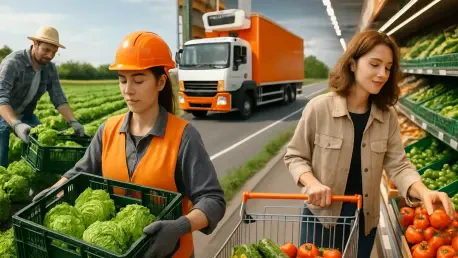

The architectural overhaul of the Swiss grocery landscape reached a critical inflection point last year when Coop Switzerland and its subsidiary, Alifresca, abandoned traditional procurement in favor of a vertically integrated, trust-based distribution model. Under the astute leadership of CEO Vladimir Cob Sevilla, the organization has pivoted away from the standard transactional nature of retail buying to address the escalating volatility of global food systems. This strategic transformation was necessitated by a series of logistical bottlenecks and environmental pressures that threatened the consistency of fresh produce availability across the nation. By prioritizing exclusivity and long-term partnerships over short-term price fluctuations, the group has effectively insulated itself from the erratic swings of the international market. This transition reflects a broader industry shift toward supply chain sovereignty, where control over every touchpoint from the farm to the shelf becomes a primary competitive advantage for major retailers.
Modernizing Infrastructure: The Shift Toward Internalized Control
The implementation of the Novazzano logistics hub near Chiasso represents a foundational shift in how the group manages the physical flow of goods destined for the Swiss market. Since the facility became fully operational at the beginning of last year, the company has transitioned from relying on shared, privately owned platforms to a model of total internal control. This exclusivity allows Alifresca to oversee the unloading and processing of fresh produce with a level of precision that was previously unattainable through third-party arrangements. The results of this internalization are evident in the data, which shows a remarkable 99.5% reliability rate for arrivals throughout the inaugural year of operation. By eliminating the communication gaps and conflicting interests inherent in external logistics partnerships, the organization has simplified its operational hierarchy. This streamlined approach ensures that quality standards are maintained through direct oversight, creating a more predictable and efficient conduit for fresh fruits and vegetables.
Complementing the physical infrastructure of the Novazzano hub is a significant expansion of the group’s green logistics strategy, specifically through the doubling of rail transport capacity along the Italian corridor. Coop Switzerland occupies a unique position in the European retail sector by operating its own railway infrastructure, which allows for seamless integration between the south-north transport axis and the domestic distribution network. This infrastructure investment ensures that large volumes of fresh produce can move from vital sourcing hubs in Italy directly into the metropolitan centers of Zurich and Geneva without the delays often associated with road congestion. By prioritizing rail over traditional trucking, the company has successfully decoupled its business growth from an increase in carbon emissions, aligning its logistical operations with national sustainability targets. This rail-first methodology provides a punctual and steady flow of products while serving as a resilient alternative to the increasingly unpredictable conditions found on trans-European highways.
Strategic Partnerships: Building Trust and Economic Growth
A cultural paradigm shift has occurred within the company’s relationship with its global suppliers, moving toward a model of radical trust that eliminates traditional quality checks at the point of origin. Rather than dispatching personnel to external processing centers to micromanage shipments before they depart, Alifresca has adopted a partnership role that holds producers directly accountable for maintaining high standards. This decision was based on a rigorous selection process that identifies partners who already possess the internal structure and cultural alignment necessary to meet the group’s expectations without constant supervision. This move has drastically reduced the administrative burden and associated costs of origin-based inspections, allowing the company to reallocate its human capital toward collaborative innovation and long-term project development. While this trust-based model requires a high degree of transparency, it functions as a natural filter that strengthens the supply chain by retaining only those suppliers who are capable of self-sufficient quality management.
The economic impact of these operational efficiencies was reflected in the record-breaking financial performance reported during the most recent fiscal cycle, where the group achieved a total revenue of 35.5 billion Swiss francs. This growth was distributed across retail, wholesale, and production sectors, indicating that the strategic focus on fresh produce and sustainability is resonating with a broad consumer base. Notably, the cooperative has maintained its commitment to social responsibility by reinvesting a significant portion of its 606 million Swiss franc profit back into the business to ensure competitive pricing for consumers. The retail sector saw particularly strong performance in organic and sustainable product lines, which now account for nearly seven billion francs in net revenue. This financial stability has allowed the organization to remain a dominant employer, supporting a workforce of nearly 100,000 individuals while funding the technological upgrades necessary to keep the supply chain at the forefront of the European market.
Global Diversification: Ensuring Resilience through Adaptive Planning
To safeguard against the increasing frequency of extreme weather events, such as the catastrophic flooding seen in traditional Mediterranean growing regions, the group has aggressively diversified its sourcing footprint to include 31 different countries. This geographic expansion has moved procurement beyond historical hubs in Spain and Italy to include emerging agricultural powerhouses in Poland, Hungary, Albania, and the Balkan region. By broadening the sourcing map, the company ensures that a localized climate crisis in one part of Europe does not result in empty shelves in Swiss supermarkets. This strategy has proven essential for maintaining market share during periods of regional crop failure, as the Verona-based offices and other international branches coordinate supply from unaffected areas. The ability to guarantee product availability regardless of environmental disruptions has become a defining characteristic of the group’s resilience, allowing it to outperform competitors who remain overly reliant on a narrow selection of traditional Mediterranean suppliers.
The final phase of this transformation involved a transition from rigid, template-based seasonal planning to a dynamic and reactive strategy that prioritized real-time environmental data over historical sales patterns. By unifying the management of international branches and eliminating internal competition between regional offices, the group established a cohesive strategy that adjusted programs based on current crop yields and logistical realities. This flexibility allowed for more efficient management of high-demand periods like Carnival and Easter, where supply was synchronized with actual market needs rather than theoretical forecasts. The organization successfully implemented a “nature-first” philosophy, acknowledging that the supply chain must adapt to the environment rather than attempting to force nature to meet artificial retail deadlines. Future considerations for the industry now involve scaling these localized successes into a broader European standard, demonstrating that a decentralized sourcing model combined with centralized logistical control provided the most robust solution for modern food security.