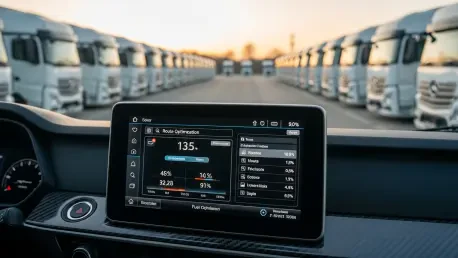

The Digital Evolution of Modern Logistics and Transportation
Every second that a commercial vehicle spends idling in gridlock or moving along an inefficient route represents a measurable erosion of a company’s bottom line and a missed opportunity for logistical precision. This reality has forced a total reevaluation of how transportation assets are managed, moving away from the era of manual logbooks and toward an age of digital dominance. The economic significance of fleet operations is now undeniable, as these departments have transitioned from basic cost centers to critical components of corporate strategy. In a marketplace where competition is hyper-aggressive and margins are razor-thin, the ability to extract actionable intelligence from every mile traveled has become the primary differentiator between industry leaders and those struggling to survive.
Technological influences are no longer confined to long-haul freight; they now permeate every segment of the industry, including service fleets and complex last-mile delivery networks. This shift has been catalyzed by the democratization of advanced hardware and software, making enterprise-level tools accessible to small and medium enterprises. Major market players continue to set the pace, but the widespread availability of cloud-based platforms means that even a local courier can leverage the same diagnostic and routing power as a global logistics giant. This leveling of the playing field ensures that operational excellence is a universal standard rather than a luxury for the elite few.
The paradigm shift is also deeply rooted in the transition from passive observation to active, data-centric management. Gone are the days when a fleet manager had to wait for a weekly fuel receipt or a monthly maintenance invoice to understand the health of the operation. Today, sensors and connectivity provide a continuous stream of information that allows for instantaneous adjustments. This evolution represents more than just a mechanical upgrade; it is a cultural transformation that prioritizes evidence over intuition, ensuring that every strategic decision is backed by the certainty of empirical data.
Deciphering the Emerging Trends and Market Dynamics
Accelerating Fleet Performance through Telematics and Connected Mobility
The integration of GPS tracking, onboard diagnostics, and real-time behavioral monitoring has created a sophisticated nervous system for modern vehicle networks. Telematics serves as the foundation of this ecosystem, providing deep visibility into engine performance, fuel consumption, and driver habits. However, the true innovation lies in the shift toward connected solutions that unify disparate functions into a single platform. By merging fuel cards, insurance data, and maintenance schedules into one interface, businesses can eliminate the administrative friction that traditionally plagued large-scale transportation logistics.
Furthermore, the convergence of efficiency and sustainability is becoming a central theme in fleet performance optimization. Data-optimized route planning does more than just save time; it significantly reduces carbon footprints by minimizing unnecessary mileage and curtailing excessive idling. This alignment of financial and environmental goals is particularly relevant as organizations seek to meet internal ESG targets without compromising on service delivery speed. Modern telematics platforms now offer specific modules that quantify these green gains, providing the transparency required by both regulators and environmentally conscious consumers.
Quantifying the Shift: Market Forecasts and Financial Performance Indicators
Growth projections for the global telematics and fleet management software markets indicate a robust expansion trajectory from 2026 through the end of the decade. As capital flows toward automation and cloud-based logistics, the market is expected to witness significant compound annual growth rates. This financial momentum is driven by the clear Return on Investment that digital tools provide. Organizations are reporting substantial fuel savings and a marked extension of asset lifecycles, which directly offsets the initial costs of technological implementation.
Beyond immediate savings, the focus is shifting toward forward-looking performance indicators such as commercial electric vehicle adoption rates and the utilization of smart infrastructure. The integration of data with charging station networks is becoming a critical success factor for organizations transitioning away from internal combustion engines. Financial performance is increasingly tied to how well a fleet can navigate the complexities of power management and battery health. Consequently, the ability to forecast energy needs and optimize charging cycles has become a vital metric for maintaining a competitive edge in the evolving energy landscape.
Navigating the Obstacles to Seamless Data Integration and Operational Efficiency
The transition to a data-heavy management style is not without its complications, particularly regarding the hidden costs associated with fleet management. Driver behavioral inefficiencies, such as harsh braking or rapid acceleration, often go unnoticed in manual systems but contribute significantly to vehicle wear and tear. These minor issues create a snowball effect across large operations, where small percentage losses in fuel efficiency or slight increases in mechanical strain aggregate into massive annual expenditures. Identifying these patterns requires a granular level of visibility that many organizations are only beginning to master.
Another significant hurdle is the persistence of fragmented data silos that prevent a holistic view of the operation. When telematics data is kept separate from financial reports or maintenance logs, managers are often forced to piece together a narrative from incomplete information. The challenge lies in moving toward integrated, real-time dashboards that provide proactive decision-making capabilities. Overcoming these silos requires not only technical investment but also a cultural shift within the organization. Employees must be trained to trust data-driven accountability, moving away from subjective performance reviews toward an objective, metrics-based approach.
Management must also address the human element of this technological shift. Implementing rigorous monitoring can sometimes be met with resistance from staff who feel overly scrutinized. Navigating this cultural transition requires clear communication regarding the benefits of the technology, such as increased driver safety and simplified administrative tasks. When data is used as a tool for professional development and safety coaching rather than as a punitive measure, the resulting increase in morale and efficiency provides a much smoother path toward total operational integration.
The Regulatory Landscape: Driving Safety Standards and Environmental Compliance
Tightening global emissions standards and corporate social responsibility mandates have transformed compliance from a legal chore into a strategic necessity. Data plays a pivotal role in meeting these requirements, providing the necessary documentation for driver hours, vehicle safety inspections, and insurance mandates. The ability to produce accurate, real-time reports on carbon emissions is no longer optional for companies operating in multiple jurisdictions. Digital visibility acts as a safeguard against legal liabilities, ensuring that every vehicle on the road meets the latest environmental and safety benchmarks.
Ensuring data security and privacy is also a paramount concern in an increasingly connected transportation network. As vehicles become more like mobile computers, the risk of cyber threats or data breaches increases proportionally. Fleet operators are now required to implement robust cybersecurity protocols to protect sensitive information regarding routes, driver locations, and internal logistics. This focus on security is not just about compliance; it is about protecting the operational integrity of the entire supply chain from external disruptions that could cause significant financial or reputational damage.
Furthermore, the role of digital visibility in managing insurance premiums cannot be overstated. In an era of escalating insurance costs, those who can demonstrate a commitment to safety through telematics data often secure more favorable terms. Insurance providers are increasingly using behavioral data to assess risk, rewarding fleets that maintain high standards of driver conduct. By proactively monitoring safety metrics and reducing accident rates, organizations can mitigate the financial impact of insurance hikes, turning a regulatory burden into a source of competitive advantage.
Pioneering the Next Frontier: Predictive Analytics and the Rise of Electric Fleets
The industry is currently transitioning from reactive tracking models to predictive maintenance frameworks that anticipate mechanical failures before they occur. By analyzing historical data and real-time sensor inputs, management can schedule repairs during off-peak hours, thereby avoiding the high costs of emergency downtime. This transition to predictive analytics represents the next frontier of operational efficiency, where the goal is to eliminate unexpected vehicle outages entirely. As AI-driven diagnostic tools become more sophisticated, the ability to maintain a fleet with near-perfect reliability is becoming a tangible reality.
Data is also the primary enabler for the feasibility of fleet electrification. Transitioning to electric vehicles involves more than just a change in fuel type; it requires a complete rethinking of route architecture and charging infrastructure management. Organizations are using data to evaluate which routes are most suitable for electrification and where to strategically place charging hubs to minimize disruption. The role of autonomous technologies is also beginning to emerge as a market disruptor, with AI-driven logistics optimization promising to further streamline the movement of goods across global networks.
Consumer expectations for delivery speed and transparency continue to redefine the market, pushing logistics providers to achieve unprecedented levels of precision. The integration of data with consumer-facing platforms allows for real-time tracking and hyper-accurate delivery windows, which have become the standard for modern commerce. As global economic shifts continue to drive innovation, the organizations that can most effectively harness the power of predictive technologies will be the ones that set the pace for the future of transportation and commerce.
Consolidating Strategic Gains for a Competitive Edge in the Data Era
The shift toward data-centric fleet operations demonstrated that digital visibility is no longer a peripheral advantage but the absolute foundation of modern logistical resilience. Organizations that prioritized the integration of real-time diagnostics and behavioral monitoring realized significant gains in both operational transparency and financial stability. This transformation proved that the aggregation of minor efficiencies—ranging from fuel conservation to the extension of asset lifecycles—formed a critical barrier against market volatility and escalating costs. The analysis established a clear link between technical adoption and the ability to maintain high service standards in a hyper-competitive landscape.
Future considerations must focus on the seamless convergence of electrification and artificial intelligence to further optimize capital expenditure strategies. Moving forward, businesses should prioritize the elimination of remaining data silos to ensure that every department has access to the same high-fidelity operational intelligence. This includes expanding the use of predictive analytics to manage complex charging infrastructures and the unique maintenance requirements of diverse vehicle types. Establishing a robust cybersecurity framework will also be essential as connectivity becomes even more deeply embedded in the physical assets of the fleet.
Ultimately, the long-term outlook for the industry suggested that the survival of transportation-dependent organizations depended on their ability to turn raw information into a proactive strategic asset. Those who embraced data-informed decision-making created a frictionless operational environment that minimized waste and maximized profitability. Investing in the training of personnel to handle sophisticated digital platforms will be a vital next step for ensuring that technological tools are utilized to their full potential. As the industry continues to evolve, this foundation of data-driven resilience will serve as the primary engine for sustainable growth and long-term financial success.