
The modern warehouse is no longer a simple storage facility but a complex, high-velocity nerve center where even the slightest inefficiency can ripple across the entire supply chain, demanding more than just standalone equipment. In response, a fundamental shift is underway, moving away from piecemeal technology adoption toward meticulously orchestrated ecosystems. This analysis compiles key industry insights to explore how leading players like Linde Material Handling are pioneering this transition, transforming the very concept of intralogistics from a collection of parts into a cohesive, intelligent system.
Beyond the Forklift: Charting a New Course in Intralogistics
A clear paradigm shift is visible across the intralogistics sector, marked by a deliberate move from product-centric sales models to the delivery of holistic, customer-driven solutions. Industry leaders are increasingly focused not just on selling a machine but on architecting an entire material flow process that enhances a customer’s specific competitive edge. This evolution recognizes that true optimization comes from a deep understanding of operational needs, whether the goal is maximizing throughput in a high-demand distribution center or achieving cost-efficiency in a smaller, standard application.
This change in philosophy is embodied by mottos like “Composed around you,” which signifies a pivotal turn in warehouse optimization strategies. Such a customer-centric approach signals that the future of material handling lies in bespoke systems tailored to individual requirements. Instead of forcing a pre-packaged solution, the strategy is to compose one from a versatile portfolio of hardware, software, and services. This mindset is crucial for building the warehouse of tomorrow, where agility and customization are paramount.
Looking ahead, the orchestration of automation, data intelligence, and core engineering excellence appears to be the definitive path forward. The goal is to create a seamless synergy where automated vehicles, intelligent software platforms, and advanced manual equipment work in concert. This integrated approach promises not just incremental gains but a fundamental rethinking of how goods move, ensuring that every component contributes to a more efficient, safer, and productive whole.
The Integrated Ecosystem: Linde’s Blueprint for Warehouse Excellence
Mastering the Symphony of Automation
Experts observe that a key differentiator in today’s market is the ability to harmonize standardized automated vehicles with bespoke solutions for complex industry needs. While many providers offer off-the-shelf automated guided vehicles (AGVs), true mastery lies in integrating these with highly customized I-MATIC systems designed for unique challenges, such as handling exceptionally heavy or unconventional loads in sectors like the beverage industry. This dual capability allows for a flexible, scalable approach to automation that can adapt to any environment.
The central conductor for this intricate orchestra is sophisticated warehouse management software. The Linde Warehouse Manager, for instance, exemplifies this trend by acting as a single control point for both mobile robots and stationary systems, like the S-MATIC cube shuttle. This software layer is critical for ensuring that disparate automated components function as a single, seamless operation. The inherent complexities of integrating diverse systems are significant, and overcoming them requires a deep, holistic understanding of both the hardware and the software that governs it.
From Raw Data to Actionable Intelligence
The role of fleet management is evolving from a reactive task to a proactive, data-driven strategy, a transformation enabled by platforms like myLinde. These cloud-based portals consolidate critical data on fleet usage, safety incidents, and energy consumption into a single, accessible interface. This centralization is the first step toward unlocking the vast potential of operational data, turning raw numbers into insights that can drive tangible improvements in efficiency and cost reduction.
A significant innovation democratizing access to these insights is the integration of AI-powered tools. The emergence of an AI chat function within fleet management platforms allows users to query complex datasets using natural language. This development lowers the barrier to entry for data analysis, enabling managers at all levels—from small businesses to large corporations—to quickly extract valuable information without needing specialized skills. Furthermore, systems like the Real-Time Locating System (RTLS+) are creating unprecedented transparency in safety protocols by providing objective data on vehicle movements and shock events. This technology not only helps prevent accidents but also enables a gradual, manageable transition toward fully digital and connected fleets.
Reinventing the Foundation of Material Handling
While automation captures many headlines, innovation in manually operated vehicles continues to be a cornerstone of modern warehousing. Industry analysis reveals a sustained focus on enhancing the tools that a majority of operators use daily. The new Ri-series reach trucks, for example, challenge the notion that all development is centered on autonomy. With integrated lithium-ion batteries, compact designs for tight aisles, and a strong emphasis on operator ergonomics, these vehicles underscore the direct link between operator comfort, safety, and overall productivity.
This focus extends to counterbalanced forklifts, where designs like the A-pillar-less Roadster model are enhancing operator efficiency through superior visibility. By removing a critical obstruction, this design gives drivers a nearly panoramic view, which directly translates to safer, more confident, and faster maneuvering. In a competitive market, the challenge is to balance the need for cost-optimized standard equipment with the demand for these high-performance, ergonomic designs. Successful providers are those who can offer a spectrum of solutions that cater to both ends of the market without compromising on core principles of quality and safety.
Envisioning the Next Frontier with Digital Twins and Physical AI
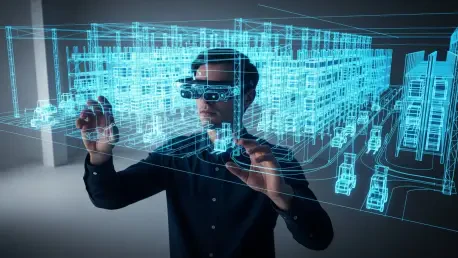
Forward-looking strategies in intralogistics increasingly involve the exploration of digital twins created with platforms like NVIDIA Omniverse. This technology allows for the creation of precise, physics-based virtual replicas of warehouse environments. These digital models represent a significant leap from current planning methods, which are often static and less dynamic. By simulating operations in a realistic virtual space, companies can test layouts, optimize workflows, and validate automation strategies before a single physical change is made.
The future potential of these virtual simulations extends beyond the planning phase to real-time fleet control and process optimization. A comparative analysis shows that while current methods rely on historical data and predictive models, the convergence of physical AI and digital twins will enable a fully adaptive system. In this model, the digital twin continuously learns from the real-world operation, allowing the system to self-optimize in response to changing conditions. This moves logistics from a predictive model to a truly autonomous one, where the warehouse itself can anticipate bottlenecks and reallocate resources dynamically.
Translating Vision into Practical Warehouse Strategy
The core takeaways from these industry developments are clear: customization, integration, and intelligence are the new pillars of efficient material flow. Warehouse managers looking to future-proof their operations should begin by evaluating their current processes for phased automation and digitalization opportunities. This does not necessarily mean a complete overhaul; instead, it involves identifying key areas where targeted technology can deliver the greatest impact, such as implementing RTLS+ for safety or adopting a data platform to monitor fleet efficiency. By taking actionable steps and leveraging integrated data platforms, managers can progressively enhance safety, reduce operational costs, and improve overall productivity.
The Future of Intralogistics Is Composed, Not Assembled
Ultimately, the insights gathered from across the industry reinforced a central conclusion: future-proof warehousing relies on a cohesive ecosystem rather than a collection of individual technologies. The enduring significance of a customer-centric model was highlighted as essential in an industry rapidly moving toward complex, interconnected systems that must be tailored to specific needs. This trend calls for a fundamental rethinking of material handling strategy, encouraging businesses to view their operations not as a set of assembled parts but as a dynamic, orchestrated composition designed for peak performance.