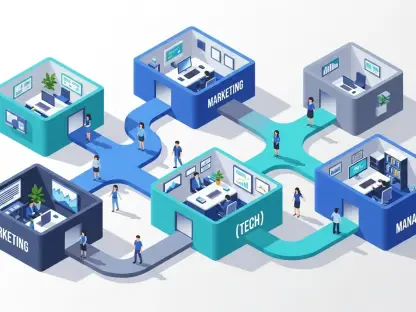

Strategic stagnation often stems not from a lack of ambition but from the widening chasm between visionary thinking and the granular reality of daily operations. In the current landscape of 2026, where market volatility is a constant and technological acceleration is the norm, a static document tucked away in a digital folder acts more as a relic than a roadmap. Organizations that thrive do so by treating their long-term strategy as a living, breathing ecosystem that informs every project, resource allocation, and team meeting. This approach requires a fundamental shift from viewing a five-year plan as a fixed destination to seeing it as a dynamic framework for continuous adaptation and growth. By integrating high-level aspirations with real-time work management, leaders can ensure that the momentum generated during the initial planning phase does not dissipate but rather intensifies as the organization moves toward its primary objectives.
Building a truly effective growth strategy necessitates a departure from traditional, siloed planning methods that often ignore the complexities of modern business environments. When strategic goals are disconnected from the tools and workflows used by employees on the ground, the result is a fragmented workforce pulling in different directions without a cohesive sense of purpose. A dynamic five-year plan bridges this gap by transforming abstract ideas into concrete milestones and actionable tasks that are visible across the entire organization. This visibility fosters accountability and allows for rapid course correction when internal or external conditions shift unexpectedly. Moving forward from 2026 to 2031, the ability to maintain this alignment will be the primary differentiator between companies that merely survive and those that define their respective industries through sustained innovation and operational excellence.
1. Establish Your Strategic North Star
Defining a strategic North Star serves as the foundational exercise that prevents an organization from drifting off course during periods of rapid expansion or market turbulence. This process begins with the articulation of a primary vision that transcends simple financial targets, focusing instead on the unique value proposition the company intends to provide over the next half-decade. Leadership teams must engage in rigorous debate to identify the core values that will govern decision-making and determine the specific market position the organization aims to occupy by 2031. This clarity ensures that when difficult choices arise regarding product development or market entry, there is a predefined ethical and strategic filter through which every option is passed. Without this guiding light, organizations risk chasing short-term gains that may ultimately undermine their long-term brand equity and operational stability.
The involvement of key stakeholders across various levels of the hierarchy is crucial during this initial phase to guarantee that the North Star is not just a C-suite mandate but a shared aspiration. When department heads and mid-level managers participate in shaping the long-term vision, they develop a sense of ownership that is vital for downstream execution. This collaborative effort helps in identifying potential blind spots and ensures that the objectives are grounded in the functional realities of the business. By the end of this stage, the organization should possess a unified destination statement that is simple enough to be understood by every employee yet comprehensive enough to guide complex strategic initiatives. This alignment acts as the ultimate reference point, providing a sense of continuity even as the specific tactics used to reach the goals evolve in response to the changing landscape of 2026 and beyond.
2. Evaluate Your Current Standing
Before any meaningful progress can be made toward a five-year objective, an organization must conduct a cold, calculated audit of its existing operational and financial health. This internal assessment requires moving beyond surface-level metrics to examine the underlying systems, talent pools, and technical debt that could either accelerate or hinder future growth. Analyzing the competitive landscape in 2026 reveals that advantages are often fleeting, making it imperative to understand exactly where the company stands in relation to both traditional rivals and emerging disruptors. This data-driven deep dive involves gathering insights from every corner of the enterprise, from frontline sales teams who understand customer friction points to IT departments managing the scalability of core infrastructure. Acknowledging these realities early on prevents the creation of a plan based on faulty assumptions or over-optimistic projections of current capacity.
This phase of evaluation also serves as a critical moment for identifying cultural or structural bottlenecks that might not be visible during high-level strategy sessions. For instance, a company aiming for aggressive global expansion may discover through this audit that its current localized supply chain or fragmented communication tools are inadequate for such a leap. By mapping out these limitations, leaders can prioritize foundational improvements that must occur in the first year of the plan to support later stages of growth. The transition from 2026 to 2027 should be viewed as a stabilization period where the gaps identified during the audit are bridged, creating a solid platform for the more ambitious phases of the strategic roadmap. This honest appraisal ensures that the subsequent targets are not merely aspirational but are built on a realistic understanding of the organization’s current starting point and its potential for rapid evolution.
3. Formulate Measurable Five-Year Targets
Translating a broad strategic vision into quantifiable five-year targets is where the plan gains its teeth and begins to drive real organizational behavior. These objectives must be carefully calibrated to push the boundaries of what is currently possible while remaining within the realm of feasibility to prevent widespread burnout or disillusionment. In the context of 2026, these targets should encompass a balanced mix of financial KPIs, such as recurring revenue growth and profit margins, alongside strategic qualitative markers like brand sentiment and market share within specific niches. Assigning direct ownership of these targets to specific departments creates a culture of accountability where every leader understands exactly what they are responsible for delivering by 2031. This granularity allows the organization to track progress with precision, ensuring that “growth” is not just a vague concept but a series of hit numbers and completed initiatives.
The process of setting these targets also provides an opportunity to harmonize the different facets of the business so they work in concert rather than in competition. For example, if the five-year goal involves a significant shift toward AI-driven service delivery, the targets for the HR department must include specific upskilling and recruitment milestones that mirror the technical requirements of the engineering team. This cross-functional synchronization prevents the common pitfall where one department achieves its goals at the expense of another’s resources or focus. As the plan moves through its lifecycle from 2026 forward, these targets should be viewed as the definitive success criteria for the entire enterprise. By making these goals public within the organization and linking them to performance incentives, leadership signals that the five-year plan is the primary driver of all corporate activity, rather than a secondary consideration to be addressed only during annual reviews.
4. Map Out Annual Benchmarks and Key Results
Large-scale strategic goals can often feel overwhelming if they are not deconstructed into smaller, more manageable yearly increments that serve as psychological and operational milestones. These annual benchmarks function as the building blocks of the five-year journey, providing the team with frequent “wins” that maintain morale and sustain momentum over a long duration. For the period spanning 2026 through 2030, each year should have its own distinct theme and set of deliverables that logically lead into the requirements for the following year. For instance, the first year might focus on infrastructure and talent acquisition, while the second year shifts toward product launch and market penetration. This sequential approach allows the organization to focus its resources on a specific set of priorities at any given time, reducing the risk of spreading capital and personnel too thin across too many competing initiatives.
Integrating quarterly reviews into this annual mapping process ensures that the link between yearly targets and daily operations remains tight and responsive to new information. These checkpoints act as a feedback loop, allowing leaders to assess whether the key results achieved in the previous three months are actually moving the needle toward the annual benchmark. If a particular strategy is failing to yield the expected results in 2026, the quarterly review provides a structured forum for analyzing why and pivoting before the entire year’s objectives are compromised. This layer of planning also accounts for dependencies between departments, ensuring that the marketing team isn’t planning a massive campaign for a product that the development team has pushed back by two quarters. By maintaining this level of detail, the five-year plan remains a practical guide for action rather than a distant and potentially ignored destination.
5. Organize Long-Term Resource Distribution
A strategic plan that is not backed by a rigorous allocation of human capital, financial investment, and technological resources is little more than a wish list. To ensure the success of a five-year growth strategy starting in 2026, organizations must project their resource needs across the entire timeline, identifying where significant outlays will be required well in advance. This foresight allows for more sophisticated financial planning, such as securing funding or reallocating budgets from declining business units to high-growth initiatives before a crisis occurs. For example, if the roadmap calls for a major digital overhaul in 2028, the procurement and IT teams should begin evaluating vendors and training existing staff in 2026. Proactive resource management prevents the operational paralysis that occurs when a company reaches a critical milestone only to realize it lacks the specialized talent or software required to execute the next phase.
Aligning resource distribution with the timing of specific milestones also requires a deep understanding of hiring cycles and the time needed for new technologies to reach full productivity. In the current labor market of 2026, finding and onboarding niche experts can take months, meaning that the “people” component of the plan must often lead the “project” component by a significant margin. Similarly, budget cycles must be synchronized with the strategic roadmap to ensure that funds are available exactly when they are needed for scaling operations or entering new markets. By documenting these requirements in a centralized work management platform, leaders can gain a real-time view of resource utilization and prevent bottlenecks. This level of organizational discipline ensures that the strategic plan is perpetually fueled and that the workforce has the tools and support necessary to turn high-level aspirations into tangible market advantages.
6. Establish a Rhythm for Quarterly Assessments
The speed at which global markets evolve in 2026 makes the traditional annual strategy review obsolete; instead, a more frequent and agile rhythm of quarterly assessments is required. These sessions are not merely progress reports but are critical strategic forums where the validity of the underlying assumptions of the five-year plan is tested against current market data. If a competitor introduces a disruptive technology or a geopolitical shift changes the cost of raw materials, the quarterly review allows the organization to adjust its tactics without abandoning its long-term North Star. This balance between steadfastness in vision and flexibility in execution is the hallmark of a resilient enterprise. By formalizing these reviews, leadership creates a recurring opportunity to celebrate successes, learn from setbacks, and refocus the entire team on the most high-impact activities for the upcoming months.
Beyond tactical adjustments, these quarterly rhythms foster a culture of transparency and continuous improvement that permeates every level of the organization. When employees know that progress is being measured and discussed every ninety days, it discourages the “set it and forget it” mentality that often dooms long-term initiatives. These assessments should involve a diverse group of voices to ensure that the feedback being used to adjust the plan is comprehensive and representative of the actual challenges faced on the ground. For the transition through 2026 and into the subsequent years, these reviews should also be used to evaluate the health of the planning process itself, refining how data is collected and how decisions are communicated. This iterative approach ensures that the five-year plan remains a dynamic asset that evolves alongside the organization, providing a reliable framework for navigating the complexities of modern strategic growth.
7. Connect High-Level Goals to Daily Operations
The ultimate success of a five-year plan depends on the ability of every individual contributor to see a direct line between their daily tasks and the organization’s most ambitious long-term objectives. When strategic goals are siloed within executive dashboards, the workforce often feels disconnected from the company’s mission, leading to decreased engagement and fragmented execution. To solve this, organizations in 2026 are increasingly utilizing sophisticated work management platforms to cascade high-level targets down into specific projects, tasks, and sub-tasks. By linking a coder’s sprint or a salesperson’s weekly outreach directly to a 2031 growth milestone, the organization provides context and meaning to everyday labor. This visibility empowers employees to prioritize their work effectively, as they can clearly distinguish between “busy work” and activities that genuinely move the needle for the enterprise.
Furthermore, this connection allows for a level of operational transparency that is essential for managing complex, multi-year initiatives across global teams. When a task in a specific project board is delayed, the system can automatically flag the potential impact on a related annual milestone or a five-year goal, allowing managers to intervene before the problem cascades. This real-time visibility transforms the five-year plan from a static document into an active engine for productivity and alignment. As the organization moves from 2026 through the end of the decade, this digital integration of strategy and execution becomes a competitive advantage, enabling faster decision-making and more efficient resource use. By closing the loop between what is decided in the boardroom and what is performed at the desk, leaders ensure that the collective energy of the organization is focused entirely on achieving sustained, strategic growth.
Actionable Strategies for Sustained Momentum
Successfully navigating the path toward 2031 requires more than just a well-drafted document; it demands a fundamental commitment to operational agility and cultural alignment. To maintain the momentum of a five-year plan, leadership should prioritize the deployment of centralized digital workspaces that serve as the single source of truth for all strategic initiatives. This eliminates the confusion caused by disparate spreadsheets and fragmented communication channels, ensuring that everyone from the C-suite to the newest recruit is operating from the same playbook. Additionally, investing in AI-driven analytics can provide predictive insights into project health, helping teams identify risks before they manifest as missed milestones. These technological investments, when paired with a clear strategic North Star, provide the necessary infrastructure to support rapid scaling and long-term stability.
Another critical next step involves the formalization of “strategy ambassadors” within each department whose role is to ensure the five-year plan remains at the forefront of local decision-making. These individuals can bridge the gap between high-level planning and departmental realities, facilitating smoother communication and faster problem-solving. As the organization progresses through the phases outlined in this guide, it is also essential to periodically revisit the foundational audit to account for newly acquired capabilities or shifting market dynamics. The conclusion of each year should be marked not just by a review of the numbers, but by a qualitative assessment of how the organization’s culture has evolved to support its long-term vision. By treating strategic growth as a continuous process of learning and adaptation, businesses can ensure they are not just reacting to the future but are actively shaping it in accordance with their most ambitious aspirations.