
With decades of experience in management consulting, Marco Gaietti is a seasoned expert in Business Management whose expertise spans strategic management, operations, and customer relations. In this discussion, he explores the transformation of social media from a creative outpost into a core operational discipline. Gaietti details the integration of cross-functional teams, the evolution of performance metrics from vanity to value, and the implementation of robust governance frameworks that allow for both speed and compliance.
The conversation covers the strategic alignment of marketing, legal, and HR departments to eliminate silos and the technical shift toward automation in sentiment analysis and content routing. Gaietti also provides a distinction between the operational backbone of social media management and the campaign-driven nature of social media marketing. Through concrete examples, he illustrates how centralized workflows and real-time dashboards can reduce response times and mitigate organizational risk.
When scaling social operations, how do you prevent silos between marketing, legal, and HR? What specific communication protocols ensure these teams stay aligned without slowing down approvals during a fast-moving campaign?
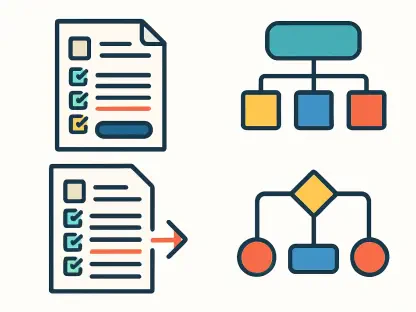
To prevent silos, you must move away from email chains and fragmented chats toward a centralized work management ecosystem where every stakeholder has a defined seat at the table. We start by establishing a “single source of truth” where the marketing team’s editorial calendar is visible to legal and HR in real-time, allowing them to see what is coming down the pipeline weeks in advance rather than minutes before a deadline. We implement automated notification triggers; for instance, when a content piece moves from the “Drafting” to “Compliance Review” stage, the legal team is instantly alerted with all the necessary context. This step-by-step approach—mapping the workflow, assigning clear ownership for each stage, and setting pre-agreed turnaround times—ensures that a fast-moving campaign doesn’t stall. By using role-based access and centralized asset libraries, we ensure that HR can verify employer branding and legal can sign off on regulatory requirements without the friction of manual handoffs.
Performance tracking has shifted from vanity engagement to metrics like response times and lead generation. How should enterprise teams design dashboards to reflect these priorities, and which metrics best demonstrate social media’s organizational value to leadership?
Dashboards must be designed to tell a story of operational efficiency and business impact rather than just counting “likes.” For an enterprise, the most compelling metrics for leadership are those that connect social activity to the bottom line, such as lead generation attribution and customer satisfaction scores. We prioritize tracking average response times, aiming to reduce them from several hours to just a few minutes, as this directly correlates with improved customer retention. Another vital metric is the “content production cycle,” which monitors the time from ideation to publication, proving that the team is becoming more agile and cost-effective. By integrating social data with CRM systems, we can show the C-suite exactly how many qualified contacts were generated, transforming social media from a perceived cost center into a documented revenue driver.
Regulated industries face unique challenges regarding compliance and speed. What are the essential steps for building a governance framework that allows for rapid engagement while maintaining strict audit trails? How do you manage the trade-offs between risk mitigation and brand responsiveness?
In regulated sectors like financial services, the framework must be built on the principle of “freedom within fences.” We establish clear authorization policies that define exactly who is permitted to post, coupled with multi-level approval hierarchies that vary based on the sensitivity of the content. To maintain speed, we create libraries of pre-approved response templates for common inquiries, which allows the community team to remain responsive without needing fresh legal sign-off for every interaction. The audit trail is handled automatically by the management platform, which timestamps every version, comment, and approval, ensuring that we are always prepared for a regulatory review. We manage the trade-off by categorizing content: low-risk engagement follows a fast-track path, while high-stakes announcements undergo rigorous, multi-departmental scrutiny to protect the brand’s long-term equity.
Social media management provides the operational backbone, while marketing focuses on campaign execution. How do you balance the long-term health of a brand’s ecosystem with the immediate pressure of conversion targets? What practical steps ensure these two functions support rather than hinder each other?
The balance is achieved by recognizing that management is a continuous operational discipline, whereas marketing is project-based and cyclical. While marketing is pushing for immediate conversion targets and ROI, the management side protects the ecosystem by maintaining consistent brand voice and handling the influx of customer service inquiries that campaigns inevitably trigger. Practically, we ensure these functions support each other by using shared data; for example, engagement trends gathered by the management team help marketing refine their messaging for the next big launch. We also align campaign timelines with operational capacity, ensuring that when marketing increases spend, the management team has the resources and automated routing in place to handle the spike in volume. This synergy prevents “campaign burnout,” where high growth leads to a breakdown in customer service quality or brand reputation.
Automation is now vital for sentiment analysis and content routing. How can teams implement these tools to reduce administrative friction, and what specific manual quality checks are necessary to protect the brand voice? Please provide a detailed example of a successful automated workflow.
Implementation begins by identifying the most repetitive manual tasks, such as sorting incoming messages or alerting specific departments to negative feedback. A successful automated workflow might look like this: an AI tool scans an incoming mention on LinkedIn, identifies it as a “technical support issue” through sentiment analysis, and automatically routes it to the customer service queue while notifying the social manager. To protect the brand voice, we never automate the final outgoing response for complex issues; instead, we use AI to generate “suggested replies” that a human editor must then review, personalize, and approve. These manual quality checks at the final stage ensure that we maintain the nuance and empathy that a machine cannot yet replicate. This combination of automated routing and human oversight reduces administrative friction by up to 30%, allowing the team to focus on high-value strategy.
What is your forecast for social media management?
I believe that by 2026, social media management will be fully recognized as a primary pillar of enterprise business operations, moving entirely out of the shadow of “marketing.” We will see a shift toward “hyper-integrated” ecosystems where social data feeds directly into product development and supply chain decisions in real-time. Organizations will stop viewing social platforms as mere distribution channels and instead treat them as the primary interface for customer intelligence and risk management. The winners in this space will be the firms that can marry the speed of AI-driven automation with a highly disciplined, cross-functional governance structure that ensures every single interaction adds measurable value to the brand.