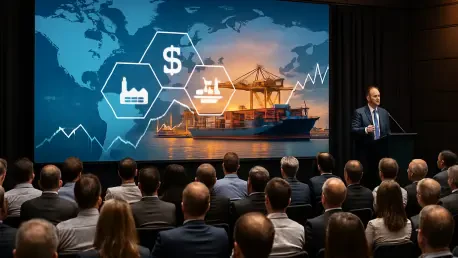

The global trade ecosystem currently faces a level of volatility that demands a radical departure from traditional logistics management and operational silos. In a landscape where geopolitical friction and economic fragmentation have become the standard, the ability to anticipate disruption is no longer just an advantage; it is a requirement for survival. The British International Freight Association (BIFA) National Conference serves as the vital junction where these challenges are dismantled and transformed into strategic roadmaps for the future.
Understanding the New Landscape of Global Freight Forwarding
The current state of international logistics is defined by its immense socio-economic weight, as every shipment now carries the burden of navigating complex diplomatic and environmental pressures. Freight forwarders are finding themselves at the center of a tug-of-war between major infrastructure stakeholders and political policy-makers who are rewriting the rules of engagement. This shifting landscape requires a nuanced understanding of how local port capacity and global legislative trends intersect to influence the movement of goods across borders.
Geopolitical instability has forced a rapid reshaping of traditional trade lanes, pushing the industry to identify more resilient corridors. BIFA plays a fundamental role in this transition by acting as a stabilizing force, providing the collective intelligence necessary to weather volatile periods. By synthesizing data from across the sector, the organization ensures that even the most sudden shifts in the global order do not leave forwarders without a clear path forward.
Mastering Industry Evolution and Economic Projections
Identifying Emerging Trends and Behavioral Shifts in Trade
Fluctuating tariff structures and intensified economic pressures are currently squeezing both manufacturers and consumers, leading to significant changes in purchasing behavior. As costs rise, the focus has shifted toward building supply chain resilience as a primary competitive advantage rather than just seeking the lowest price. This evolution signifies a move toward intelligence-driven logistics, where diverse sector perspectives are integrated to create a more responsive and adaptable business model.
Analyzing Market Performance and Growth Forecasts through 2026
Data-backed projections for the remainder of this decade suggest a market that favors agility over sheer scale. By reviewing performance indicators from the current cycle, experts can forecast logistics demand with greater accuracy, allowing firms to prepare for the long-term impact of trade disruptions. These forward-looking perspectives are essential for businesses that intend to remain profitable while the global economy continues its uneven recovery.
Overcoming Structural Hurdles and Operational Volatility
Navigating an unpredictable landscape requires more than just technical knowledge; it demands a strategy for managing the human element of logistics. High-level networking and professional development are the primary tools used to bridge gaps in operational expertise, ensuring that leadership can communicate effectively during a crisis. By fostering these connections, the industry creates a network of professionals capable of solving complex problems through collective experience.
Developing robust business models that can absorb sudden shifts in global trade policy is now a priority for every forward-thinking firm. These models rely on the ability to pivot operations quickly without sacrificing service quality or financial stability. Strengthening the internal structure of a company through better leadership and communication ensures that the organization remains steady even when the external environment is in chaos.
Deciphering the Regulatory Maze and Compliance Standards
Modern supply chains must operate within an evolving regulatory framework influenced by new international trade agreements and heightened security measures. Compliance is no longer a back-office administrative task but a critical component of maintaining fluid movement through customs. Understanding how upcoming legislative changes affect daily practices is essential for preventing bottlenecks that could derail entire distribution networks.
Establishing best practices for aligning corporate strategy with governmental and environmental mandates is now a prerequisite for growth. As sustainability becomes a legal requirement rather than a choice, forwarders must integrate these standards into their core operations. This alignment ensures that businesses stay ahead of enforcement trends while contributing to a more transparent and ethical global trading system.
Forecasting the Future of Logistics and Strategic Innovation
Disruptive technologies are currently streamlining freight management by providing unprecedented visibility into every stage of the journey. As consumer preferences continue to ripple through distribution networks, the ability to use real-time data to adjust strategy is becoming a baseline requirement. Strategic innovation also involves looking outside the industry for leadership lessons, such as those found in high-stakes sports management, where split-second decision-making is vital.
The potential for growth in emerging trade corridors and niche logistics markets offers a glimpse into a more diversified future for global commerce. By identifying these opportunities early, companies can secure their place in the next generation of trade. This forward-looking approach ensures that innovation is not just about adopting new tools, but about fundamentally reimagining how value is delivered in a changing world.
Securing Your Competitive Edge in the Future of Trade
The insights gained from peer-to-peer connection and technical sessions provided a clear advantage for those looking to lead in the coming years. Investment in professional development and active engagement with industry bodies proved to be the most effective way to future-proof operations. The discussions facilitated by the BIFA National Conference acted as a catalyst for innovation, ensuring that the logistics sector remained a resilient pillar of global commerce. These efforts established a foundation for sustained growth and strategic clarity.