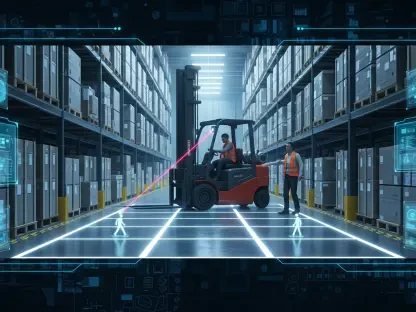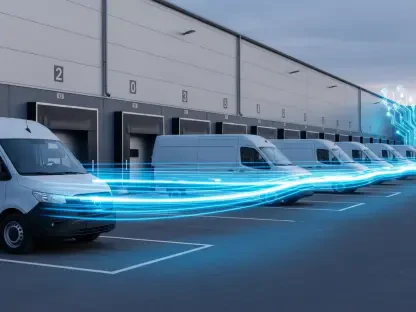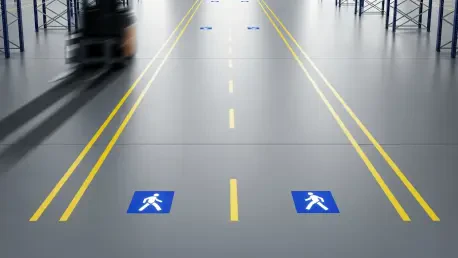

The constant vibration of heavy machinery and the relentless grind of industrial tires create a landscape where traditional safety measures often fail before they can even be fully implemented. In high-traffic industrial environments, conventional floor markings do not just fade over time; they effectively disappear under the weight of daily operations. This leaves significant safety gaps that traditional paint alone cannot bridge. As facilities strive for higher efficiency and lower accident rates, the shift from physical markings to light-based technology is transforming the warehouse floor from a static surface into a dynamic safety interface.
Beyond the Paint: A New Era of Visual Alerts
The modern warehouse is defined by a flurry of forklift traffic and the constant movement of pallets, yet the very lines meant to protect workers are frequently the first things to fail. When safety boundaries become illegible, the risk of human error increases exponentially. This evolution toward light-based signaling represents a fundamental change in how floor space is managed, moving away from permanent, deteriorating pigments toward adaptable, high-contrast illumination.
Dynamic visual alerts provide a level of clarity that physical tape or paint cannot sustain. By projecting clear, bright boundaries directly onto the concrete, facilities ensure that the message remains consistent regardless of the environment. This shift allows safety managers to rethink the layout of their floors without the permanent commitment of chemical applications, making the industrial space more responsive to changing operational needs.
The High Cost of Maintaining Visibility
Safety managers often find themselves locked in an expensive cycle of repainting lines and replacing vinyl tape, which frequently requires significant downtime and labor costs twice a year. Beyond the immediate logistical headache, the gradual degradation of these signs creates a dangerous grey zone where warnings are barely legible. This lack of clarity significantly increases the risk of collisions and potential regulatory violations in environments where every second of visibility counts.
With thousands of forklift-related injuries occurring annually across the industry, there is an urgent need for solutions that remain vibrant despite heavy abrasion and chemical spills. Traditional materials struggle to withstand the relentless wear of industrial tires, leading to a hidden cost of safety that includes both material expenses and the potential for workplace accidents. Investing in a permanent light source effectively removes the recurring labor burden associated with floor maintenance.
Why Projected Light Outperforms Physical Markings
Unlike paint or stickers, LED gobo projections exist entirely as light, which makes them completely immune to the physical friction that destroys traditional signage. A high-performance projector maintains a crisp, high-visibility warning for several years, bypassing the maintenance schedules that plague conventional markings. This durability ensures that the safety message remains as clear on its thousandth day as it was on its first.
The human brain is naturally wired to ignore static stimuli, a psychological hurdle known as sign blindness where workers stop noticing permanent warnings. Projected signage breaks this desensitization by providing high-contrast, vivid imagery that remains sharp and visually stimulating. Furthermore, by integrating projectors with motion sensors, warehouses can deploy active signage that only illuminates when a hazard is present, creating a sense of urgency that static paint can never replicate.
Evidence From the Field: Durability and Psychological Impact
Safety experts and warehouse operators report that the transition to projected imagery significantly reduces the background noise of the industrial environment. Case studies indicate that when a warning light flashes only in response to a specific hazard, worker compliance increases because the signal feels relevant to the moment. This situational awareness is critical in preventing accidents in areas where pedestrians and heavy machinery must coexist.
The longevity of LED projectors proves to be a superior financial investment compared to the cumulative costs of paint and tape. Modern hardware often lasts for tens of thousands of hours, providing a consistent return on investment through reduced material waste and improved safety outcomes. By focusing on the psychological impact of light, facilities have successfully reduced the frequency of near-miss incidents in high-risk zones.
Implementing Projected Signage: A Strategic Framework
A successful rollout began with identifying high-traffic hotspots and blind corners where physical signs failed most frequently, such as loading docks and intersections. Mapping these zones allowed for the strategic placement of projectors where they had the highest impact on traffic flow and pedestrian safety. Selecting the right hardware involved choosing LED projectors capable of cutting through high ambient lighting to ensure the message stayed legible.
Facilities then calibrated their projected signs to work in tandem with existing safety protocols and facility workflows. This included the installation of exclusion zones that activated during specific shifts or the use of motion-triggered walkway projections to guide workers away from active machinery. These advanced systems ensured that the technological transition supported a more responsive and protected industrial workforce.