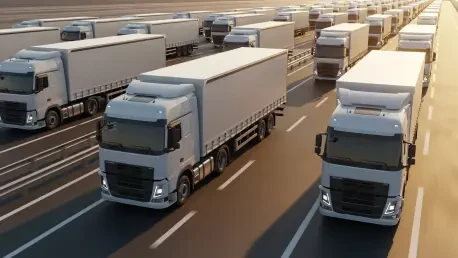

A New Dawn for Financial Security in Freight?
In the fast-paced, high-stakes world of logistics, cash flow is king, and for carriers, the thin line between profitability and insolvency is often defined by the reliability and speed of payments. For decades, the industry has been plagued by a persistent and costly problem: payment risk. The threat of delayed invoices or outright defaults has not only strained businesses but has also created artificial capacity shortages and stifled growth. But what if this fundamental risk could be neutralized? This article explores the emergence of innovative payment guarantee services that are challenging the status quo. By examining how these new models are reengineering trust between shippers and carriers, we will analyze whether we are witnessing a genuine turning point that could finally bring financial stability to the volatile freight market.
The Lingering Shadow of Default: Why Payment Delays Paralyze the Supply Chain
Payment risk is not a new issue in logistics; it is a foundational challenge woven into the fabric of the industry. Historically, carriers have operated on long payment cycles—often 30, 60, or even 90 days—which puts immense pressure on their working capital. This financial strain is magnified when working with new or international partners where trust has not yet been established. The fear of non-payment forces carriers, especially small and medium-sized enterprises, to be highly selective, often declining lucrative loads from unknown forwarders. This reluctance is a primary driver of perceived capacity shortages. The issue isn’t always a lack of available trucks; it’s a lack of willingness to assume financial risk, particularly on high-demand, cross-border routes, such as those connecting Western Europe with the burgeoning economies of Poland, Romania, and the Czech Republic. This deficit of trust creates a bottleneck, preventing the efficient flow of goods and leaving significant revenue opportunities on the table.
A Fundamental Shift in Transactional Trust
Unlocking Carrier Capacity: The Power of Guaranteed Payments
For transportation companies, payment guarantee services represent a seismic shift from a high-risk to a de-risked operational model. By removing the threat of default, these systems empower carriers to engage with a much broader range of clients. They can confidently accept loads from unfamiliar companies or expand into new international markets without fear of financial loss. This newfound security directly translates into greater operational flexibility and revenue potential. Industry leaders note that the era of choosing between growth and security is over. By leveraging platforms that offer such guarantees, carriers can focus on what they do best—transporting goods—and pursue high-growth lanes with confidence. This transforms risk management from a carrier’s burden into a platform’s responsibility, unlocking previously hesitant capacity and injecting much-needed liquidity into the market.
Building Instant Credibility: A Competitive Edge for Load Givers
From the perspective of shippers and freight forwarders, a payment guarantee is more than a safety net; it’s a powerful tool for attracting reliable transportation partners. In a crowded digital marketplace, a “payment guaranteed” badge acts as an immediate signal of trust and reliability. This credential serves as a magnet for carriers, significantly increasing the visibility and appeal of freight offers. As a result, load givers with this status receive more responses, secure capacity faster, and gain access to a wider pool of carriers, particularly the vast and often difficult-to-access fleets in key regions like Eastern Europe. This solves a critical business challenge: how to quickly and reliably secure transport in a volatile market. By undergoing a platform’s verification process to earn this status, load givers differentiate themselves as premium partners, building a reputation that precedes them in every transaction.
The Mechanics of Trust: How Digital Platforms Are Reengineering Financial Security
The effectiveness of these new models lies in their simple yet robust mechanics, which are seamlessly integrated into digital freight platforms. The process typically begins when both parties confirm a transaction within the system, creating a secure, verifiable record. Carriers operate with zero upfront risk, often under a pay-on-claim model where no fees or subscriptions are required to be covered. If a shipper defaults on payment after services are rendered, the carrier can submit a request electronically with standard documentation—such as the invoice, transport order, and proof of delivery. The platform then steps in to ensure the carrier is paid. This ecosystem is sustained by a rigorous vetting process for load givers, ensuring only financially sound and trustworthy companies can offer guaranteed loads. This creates a virtuous cycle: trustworthy shippers attract more carriers, carriers operate with confidence, and the entire platform becomes a more secure and efficient environment for conducting business.
The Future Trajectory: From Guarantees to Automated Payments
The rise of payment guarantees is a critical evolutionary step, but it is likely a precursor to even more advanced financial solutions in logistics. The next frontier will involve leveraging the vast datasets generated by these platforms to offer integrated financial services, such as instant payments upon proof of delivery or dynamic invoice factoring. As technology advances, we can expect to see the integration of smart contracts on blockchain platforms, which could automate the entire payment process, releasing funds automatically once predetermined conditions—like a successful GPS-verified delivery—are met. While payment guarantee services are solving today’s trust deficit, these future innovations promise to eliminate the payment process as a point of friction altogether, creating a truly seamless and financially secure supply chain.
Strategic Imperatives for Navigating the New Landscape
The key takeaway is that payment risk in logistics is no longer an unavoidable cost of doing business. For carriers, the strategic imperative is to leverage platforms offering these guarantees to de-risk operations and confidently expand their client base and geographical reach. It means prioritizing partners who offer this security. For shippers and forwarders, the goal should be to achieve “guaranteed” status to become a preferred client, thereby gaining a competitive advantage in securing reliable capacity. Adopting these tools is no longer just about mitigating risk; it is about actively positioning your business for growth, efficiency, and enhanced credibility in an increasingly digital and interconnected marketplace.
A Turning Point for a More Resilient Supply Chain
The introduction of robust payment guarantees marks a pivotal moment for the logistics industry. By directly confronting the deep-seated issue of financial mistrust, these solutions are dismantling long-standing barriers to efficiency and growth. They are transforming the relationship between carriers and shippers from a transactional gamble into a secure partnership. While this may not be the absolute end of all financial risk, it represents a fundamental move toward a more stable, transparent, and resilient ecosystem. The ultimate call to action for all stakeholders is to embrace this evolution, as the future of logistics will be defined not just by who can move freight the fastest, but by who can build the most trusted network.