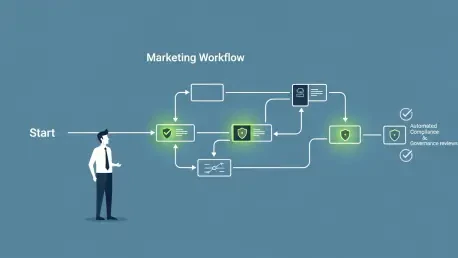

The tightrope walk of a finance marketing leader involves balancing audacious creative campaigns with the unyielding gravity of regulatory compliance and stringent ROI expectations. In this high-stakes environment, the operational software underpinning marketing efforts is not merely a tool for efficiency; it is the central nervous system that dictates whether a strategy succeeds or becomes a costly compliance liability. When every message is scrutinized and every dollar spent requires justification, the generic project management platforms that serve other industries often reveal critical weaknesses, lacking the specialized guardrails and analytical depth that the financial sector demands.
This frequent ask and question article is designed to navigate this complex landscape. It provides a structured guide for marketing executives in finance who are evaluating their current technology stack or considering a new investment in marketing operations software. The objective is to move beyond feature lists and technical jargon to explore the fundamental capabilities that separate an adequate tool from a truly transformative one. Readers can expect to gain a clear understanding of what defines finance-ready software, how to implement it strategically, and the most effective ways to measure its profound impact on both operational agility and the bottom line.
Foundational Concepts in Marketing Operations for Finance
How Does Marketing Operations Software Differ From General Project management Tools
General project management tools are designed with a universal focus on tasks, deadlines, and resource allocation, making them proficient at organizing work across a wide array of industries. They excel at breaking down complex projects into manageable components and tracking their progress toward a defined endpoint. However, their generic nature becomes a significant limitation within the specialized context of marketing, particularly in the finance sector. These platforms typically lack the nuanced understanding of the marketing lifecycle, which extends far beyond simple task completion to encompass strategic planning, creative development, multi-channel campaign execution, and intricate performance analysis.
In contrast, marketing operations software is purpose-built to manage this entire end-to-end workflow. It integrates modules specifically designed for campaign planning, complete with visual timelines that map dependencies across multiple initiatives. Crucially, it provides sophisticated, automated approval workflows that are essential for navigating the complex legal, brand, and regulatory reviews inherent in financial marketing. Furthermore, these platforms are designed to connect directly with the marketing and sales technology stack, enabling them to pull performance data and translate operational efforts directly into measurable business outcomes like lead generation, customer acquisition cost, and marketing-attributed revenue, providing a level of insight that generalist tools cannot match.
What Makes a Platform Genuinely Effective for Enterprise Finance Teams
The genuine effectiveness of a marketing operations platform in an enterprise finance setting is determined less by an exhaustive list of features and more by its ability to be seamlessly adopted and integrated into the daily fabric of the organization. If a system is cumbersome, unintuitive, or rigid, teams will inevitably develop workarounds, leading to the re-emergence of data silos and a complete loss of visibility for leadership. Therefore, the primary driver of success is user adoption, which is fostered by an intuitive interface, flexible and customizable workflows that can adapt to specific team needs without heavy IT intervention, and a design that empowers users rather than restricting them.
This principle of adoption underpins a major strategic shift occurring within enterprise marketing teams: the move away from a fragmented patchwork of specialized, disconnected tools toward a single, unified system of record. Instead of juggling separate platforms for strategic planning, creative asset management, campaign execution, and performance analytics, a unified system brings these functions together. This consolidation is a game-changer for how work gets done. It eliminates the friction and manual data transfer between systems, ensures that everyone from the creative team to the compliance officer is working from the same information, and provides leadership with a real-time, holistic view of the entire marketing portfolio. This unified visibility is what allows for smarter, data-driven decisions and transforms the marketing function from a cost center into a provable engine for growth.
Core Capabilities and Features to Prioritize
What Are the Essential Features for Large Financial Marketing Teams
For large marketing teams operating within the demanding financial industry, certain platform capabilities are not just beneficial; they are essential for maintaining control, ensuring compliance, and driving performance at scale. The first critical area is campaign planning and execution, which requires software that offers more than simple task lists. Visual campaign timelines are necessary to see dependencies and milestones across hundreds of concurrent projects, while highly configurable approval workflows are non-negotiable for automatically routing materials through legal, compliance, and brand reviews, complete with a full audit trail. Moreover, the ability to standardize campaign structures through templates ensures consistency and efficiency for recurring initiatives while still allowing for customization.
Resource management and capacity planning represent another vital pillar. As teams grow, ad-hoc work assignments become unsustainable and lead to bottlenecks and burnout. An effective platform must provide real-time workload visualization, offering a clear view of team capacity against project timelines. This should be augmented with skills-based allocation, which allows managers to assign tasks based on specific expertise rather than just availability. The most advanced systems also offer predictive capacity planning, using historical data to forecast future resource needs, enabling leadership to make proactive staffing and project prioritization decisions. This foresight prevents resource crunches and ensures that the most critical campaigns are always adequately supported.
Equally important are real-time reporting and dashboards that give leadership instant access to performance data without the need for manual compilation from disparate sources. These dashboards must be fully customizable to track the key performance indicators that matter to the business, such as customer acquisition cost, marketing-qualified lead conversion rates, and overall campaign return on investment. The system should also support automated reporting to generate executive-ready summaries on a recurring schedule. To facilitate deeper analysis, these dashboards must offer drill-down capabilities, allowing a leader to move seamlessly from a high-level portfolio view down to the granular details of a single campaign’s performance.
Finally, integration and automation form the connective tissue that makes the entire operation run smoothly. A marketing operations platform cannot exist in a vacuum; it must connect seamlessly with the organization’s existing technology ecosystem. This requires a rich library of native integrations with key systems like CRM platforms, marketing automation tools, analytics suites, and digital asset management systems. For any proprietary or specialized internal tools, a flexible and well-documented API is crucial for building custom integrations. This connectivity, combined with powerful workflow automation that eliminates repetitive manual tasks like status updates, data entry, and project handoffs, frees up the team to focus on strategic, high-value work.
What Advanced Capabilities Are Needed for Scaling Marketing Operations
As marketing operations mature and expand, teams inevitably outgrow basic workflow management and require advanced capabilities to handle increasing complexity without sacrificing speed or control. Artificial intelligence is at the forefront of this evolution, transforming from a novel concept into a practical tool for optimization. AI-powered features move beyond simple automation to perform sophisticated analyses that once consumed countless hours. For instance, AI can automatically categorize and route incoming marketing requests, analyze vast datasets from past campaigns to surface hidden insights, and summarize complex project updates into concise, actionable recommendations for leadership. Advanced systems employ background processes, sometimes called digital workers, to continuously monitor portfolio health, flag potential risks before they escalate, and even suggest resource reallocations based on real-time performance data.
Cross-functional orchestration is another critical capability for scaling success, as marketing campaigns rarely succeed in isolation. Effective execution requires tight coordination with sales, product development, legal, and finance departments. An advanced operations platform serves as a central hub where these disparate teams can collaborate effectively within a shared workspace, eliminating the need to toggle between different applications and communication channels. This is facilitated by features like automated handoffs that trigger tasks for other departments at key milestones, as well as sophisticated permission-based access and role-specific views. Such features ensure that every stakeholder has access to the information they need to do their job without being overwhelmed by irrelevant details, fostering alignment and accelerating execution across the entire organization.
Furthermore, scaling requires a shift from reactive to proactive planning, which is enabled by predictive forecasting capabilities. While traditional tools can show current resource allocation, advanced platforms leverage historical data to build predictive models. These models can forecast future resource requirements based on the upcoming project pipeline, identify recurring seasonal demand patterns, and even project likely campaign outcomes based on their current trajectory against past performance benchmarks. This foresight empowers marketing leaders to make more strategic decisions about hiring, engaging freelancers or agencies, and prioritizing projects, ensuring the department is always prepared for what lies ahead rather than constantly reacting to immediate demands.
Implementation and Measurement Strategy
How Should a Finance Marketing Team Approach Implementation
A successful deployment of marketing operations software within a finance team requires a strategic and methodical approach that prioritizes governance and stakeholder alignment over sheer speed. The journey should begin with a comprehensive audit of all current marketing workflows. This involves mapping out existing processes from campaign ideation to final reporting, meticulously documenting every approval chain, and identifying the bottlenecks and manual handoffs that currently impede efficiency. This foundational analysis is crucial because it provides the detailed blueprint needed to configure the new platform in a way that solves real-world problems and aligns with the organization’s specific operational and compliance needs.
With a clear understanding of existing processes, the next and most critical step is to configure the platform’s compliance and governance frameworks. Before any creative or project management workflows are built, the system’s automated approval routing, escalation protocols, and audit trail capabilities must be set up to meet all regulatory requirements. This “compliance-first” approach builds immediate trust with legal and risk management teams and ensures that the necessary guardrails are in place from day one. Only after this governance structure is solidified should the team proceed with integrating the broader marketing technology stack, connecting the platform to CRM, analytics, and financial systems to create a unified flow of data.
The final phases of implementation focus on demonstrating value and driving adoption. This involves building real-time executive dashboards that visualize the metrics that matter most to leadership, such as campaign ROI, pipeline contribution, and budget adherence. These dashboards replace manual spreadsheets and provide an immediate, tangible benefit. The rollout to the wider team should then be handled methodically, starting with pilot groups to create success stories and internal champions. Standardized templates and role-specific training are used to scale adoption across departments and regions, with a continuous feedback loop established to refine and optimize workflows based on actual usage data, ensuring the platform evolves with the organization’s needs.
What Are the Most Common Implementation Challenges and How Can They Be Overcome
One of the most frequent obstacles encountered during the implementation of new marketing operations software is internal resistance to changing established processes. Teams often become comfortable with their existing tools and workflows, even if they are inefficient, and may perceive a new system as a disruption rather than an improvement. The most effective solution to this challenge is to start small and demonstrate clear value. By launching the platform with a willing pilot group or a single influential team, the project leaders can create a powerful case study. Showcasing early wins, such as a significant reduction in approval times or the elimination of a tedious manual reporting task, provides concrete proof of the platform’s benefits and helps build positive momentum that can overcome skepticism across the wider organization.
Another significant challenge lies in the technical and organizational complexity of data migration. Attempting to move years of historical campaign data from multiple legacy systems into a new platform can quickly become a daunting and resource-intensive task. A practical approach is to prioritize the migration strategically. Instead of attempting a massive, all-encompassing data transfer, focus first on migrating active campaigns and the most recent and relevant historical data. Older, archival information can often be stored separately and migrated on an as-needed basis. This phased approach reduces the initial technical burden, accelerates the time to value, and allows the team to start using the new platform for current work much faster.
Finally, organizations often struggle to find the right balance between standardization and flexibility. Marketing teams require consistent processes to maintain efficiency and compliance, yet they also need the creative freedom and agility to respond to changing market dynamics. The solution lies in designing workflows and templates that are modular. A well-configured system can enforce critical, non-negotiable steps, such as a final compliance review, while allowing for customization and flexibility in the creative development and strategic planning stages. Using managed templates allows leadership to propagate best practices and essential updates across the organization without overwriting the custom elements of active projects, thereby achieving a balance that satisfies both governance requirements and the creative needs of the marketing team.
How Can the Success and Return on Investment Be Measured
Measuring the success and return on investment of marketing operations software requires a dual-focus approach that tracks both internal operational improvements and their direct connection to tangible business outcomes. The first category of metrics revolves around operational efficiency, which often provides the quickest and most demonstrable wins. These metrics quantify time and resource savings, showing exactly how the platform is making the team more productive. Key indicators to track include campaign launch velocity, which measures the reduction in time from project brief to market launch; approval cycle time, which captures the hours or days saved in review processes; and the percentage of manual tasks that have been successfully automated, freeing up valuable team hours for more strategic work.
While efficiency gains are important, the most compelling case for ROI is made by connecting these operational improvements to high-level business impact measurements that resonate with financial leadership. This involves translating faster campaign launches and streamlined workflows into results that affect the bottom line. The primary metric in this category is often marketing-attributed revenue, where improved data integration and tracking accuracy from the new platform provide a clearer picture of marketing’s contribution to sales. Other critical business metrics include resource utilization rates, which show the percentage of team capacity being deployed on high-value versus administrative work; improvements in overall campaign performance against key objectives; and a measurable reduction in compliance-related issues or delays, which represents significant risk mitigation for the firm.
Security and Compliance Considerations
What Security Certifications Are Non Negotiable for Marketing Software in Finance
When selecting marketing operations software for a financial institution, certain security and compliance certifications serve as a non-negotiable baseline for ensuring data protection and regulatory adherence. At a minimum, the platform must hold SOC 2 Type II certification, which attests to its controls over security, availability, processing integrity, confidentiality, and privacy over an extended period. Additionally, ISO 27001 certification is critical, as it demonstrates a systematic approach to managing sensitive company information to ensure it remains secure. Given the global nature of finance, compliance with regulations like the General Data Protection Regulation (GDPR) is also essential for handling customer data properly.
Beyond these foundational certifications, the unique regulatory environment of the financial services industry demands a deeper level of security controls built directly into the software. The platform must offer robust identity and access management features, including mandatory single sign-on (SSO) integration with the company’s existing identity provider. Comprehensive, immutable audit trails are also crucial, providing a detailed log of all actions taken within the platform for regulatory review. Furthermore, advanced controls such as IP address restrictions, which limit access to authorized locations, and highly granular, role-based permissions are necessary to enforce the principle of least privilege and ensure that users can only access the specific data and functions required for their roles.
Can This Software Integrate Securely With Proprietary Financial Systems
Leading enterprise-grade marketing operations software is designed with the understanding that many organizations, particularly in finance, rely on proprietary, in-house systems for core functions. The ability to integrate with these systems securely is a critical requirement, and this is typically achieved through a robust and well-documented open Application Programming Interface (API). A powerful API serves as a secure bridge, allowing the marketing platform to communicate and exchange data with internal tools, such as custom-built financial reporting systems or legacy customer databases, without compromising the security of either system.
This integration capability extends beyond a simple API. A mature platform will provide extensive developer documentation, software development kits (SDKs), and dedicated support resources to assist an organization’s internal IT teams in building secure, reliable, and bidirectional integrations. These custom connectors can be designed to handle sensitive data according to the company’s specific security protocols, ensuring that information flows between the marketing platform and proprietary systems are encrypted and access-controlled. This flexibility ensures that the new software can become a deeply embedded part of the existing technology ecosystem rather than creating yet another isolated data silo, thereby maximizing its value and utility.
Practical Timelines and Adoption
What Is a Realistic Timeline for Implementation and Achieving ROI
The timeline for implementing marketing operations software and realizing a return on investment varies based on organizational complexity, but a realistic framework can be established. An initial deployment, which typically involves configuring core workflows and onboarding a pilot team, can often be completed within four to twelve weeks. A broader, organization-wide rollout across multiple departments or regions naturally takes longer, generally occurring over a three to six-month period as more teams are trained and workflows are refined. Platforms known for their intuitive interfaces and strong customer support tend to accelerate this timeline, as users can become proficient more quickly.
The return on investment often begins to materialize in parallel with this implementation schedule. Initial ROI, driven primarily by immediate efficiency gains, can typically be demonstrated within the first three to six months of use. These early wins come from the automation of repetitive tasks, streamlined approval cycles, and reduced time spent on manual reporting. A deeper, more strategic ROI, linked to business impact metrics like increased marketing-attributed revenue and improved resource utilization on high-value projects, may take longer to measure accurately, often becoming clearly visible after six to twelve months as more historical performance data is collected within the new system.
How Can High User Adoption Be Ensured Across Large Distributed Teams
Ensuring high user adoption for a new platform across large, and often geographically distributed, marketing teams is a challenge that requires a deliberate change management strategy, not just a technical rollout. The foundation of this strategy is selecting a platform that is inherently user-friendly. A system with a high user satisfaction rating and an intuitive, visually appealing interface will face far less resistance than a complex, clunky one. The technology choice itself is the first and most critical step in paving the way for widespread adoption, as no amount of training can fully compensate for a poorly designed user experience.
Beyond the software itself, a structured and empathetic onboarding process is essential. This involves developing role-specific training programs that focus on how the platform will make each user’s specific job easier, rather than generic, one-size-fits-all sessions. Identifying and empowering internal champions within different teams can create a network of peer support and enthusiasm that is often more effective than top-down mandates. Finally, it is crucial to communicate and celebrate early successes. When the broader organization sees tangible examples of how the new platform helped a team launch a campaign faster or eliminate a frustrating bottleneck, it transforms the perception of the tool from a mandatory chore into a valuable asset, building momentum that drives organic adoption.
Summarizing the Path Forward
The modern financial marketing landscape demands an operational infrastructure that is as robust and compliant as it is agile and creative. Success is no longer achievable with a collection of disconnected tools; it requires a unified operational system that serves as the single source of truth for all marketing activities. This system must provide clear visibility for leadership, enforce compliance without stifling creativity, and connect every action directly to a measurable business outcome.
The key takeaways from this discussion reinforce a clear strategic direction. The selection of a platform should prioritize unified workflows over point solutions. Features must be evaluated based on their ability to handle enterprise complexity, especially in areas like automated compliance routing and resource capacity planning. The implementation process itself needs to be strategic, with a “compliance-first” approach and a phased rollout designed to secure quick wins and build momentum. Ultimately, the goal is to leverage this technology to generate data-driven insights that not only optimize marketing performance but also prove its strategic value to the entire organization in the unambiguous language of finance.
Final Considerations
The organizations that successfully navigated this technological shift found that the decision to invest in a true marketing operations platform was a strategic imperative, not merely a software upgrade. The process required a fundamental re-evaluation of how their teams worked, collaborated, and measured success. It was a commitment to breaking down the silos that had long existed between the creative, analytical, and governance functions of marketing.
This transformation equipped them with the infrastructure needed to operate with newfound speed and precision. The investment was ultimately validated not by the features of the software, but by the business outcomes it enabled. Marketing teams evolved from being perceived as a cost center into a demonstrably proactive and accountable driver of business growth. They were finally able to prove their value consistently, backed by auditable data that spoke directly to the priorities of the C-suite: quantifiable return on investment, operational efficiency, and unwavering compliance.